
Companion Plants
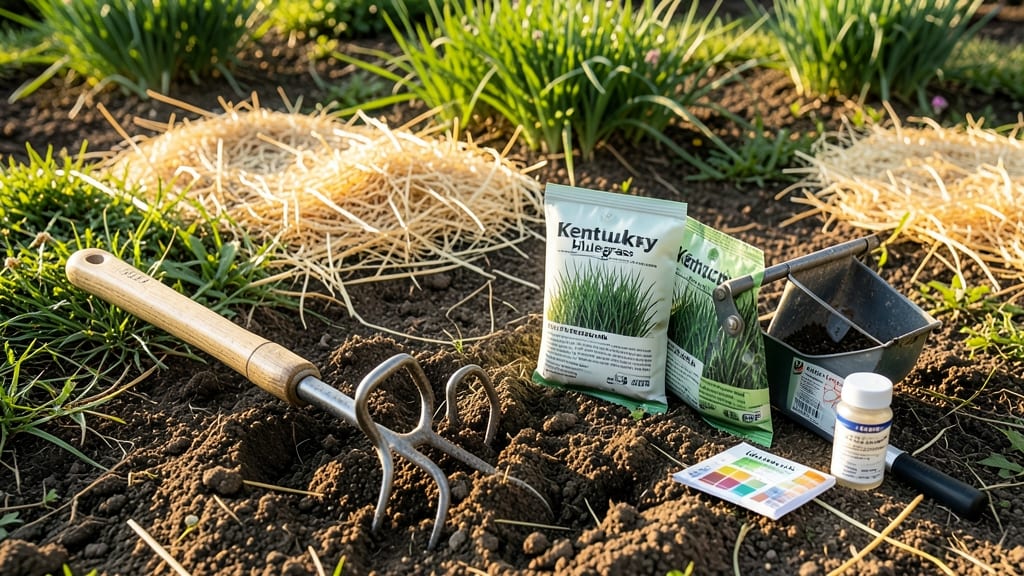
Planting grass seed in Michigan at the right time means the difference between a lush lawn by summer and months of patchy, struggling growth.
Picture this: you’ve spent $100 on seed and topsoil, only to watch frost nip your tender sprouts or weeds choke out your progress. The good news? Michigan’s 5b-6b zones give you two prime windows—early spring and late summer—if you time it just right.
Cool-season grasses like Kentucky bluegrass thrive when soil temps hit 40°F+, while warm-season types need 65°F+. Miss the window, and you’re stuck waiting another year. Below, I’ll break down the exact frost-free dates by zone, soil prep tricks, and how to avoid the most common mistakes.
Ready to skip the guesswork? You’ll learn how to read your local frost dates, test soil warmth like a pro, and choose the best month for your lawn’s long-term health.
Michigan grass planting calendar by hardiness Zone (USDA 4-6)
Michigan’s USDA hardiness zones 4-6 create distinct planting windows for grass seed, where timing directly impacts germination success. Cool-season grasses like Kentucky bluegrass and tall fescue thrive in spring and fall, while warm-season types such as Bermuda prefer summer.
Understanding your zone’s average last frost date (mid-April to early May) and soil temperature (40°F+ for cool-season, 65°F+ for warm-season) is critical for avoiding wasted seed and slow establishment.
In Zone 4 (northern Michigan), your planting window is shorter—focus on early May to mid-September—while Zone 6 (southern Michigan) allows for a more flexible schedule, including late March or October plantings. Soil prep (removing debris, aerating, and testing pH) is just as important as timing, but mastering the calendar ensures your grass gets a head start before weeds take over.
Here’s how Michigan’s zones break down for optimal grass planting, including ideal soil temps, frost-free windows, and the best grass types for each region:
| Zone & Region | Best Planting Months | Soil Temp Requirement | Grass Types | Frost-Free Window |
|---|---|---|---|---|
| Zone 4 (Upper Peninsula, Northern MI) | May–June, September | 40–50°F (cool-season) | Kentucky bluegrass, tall fescue, fine fescue | May 15–October 15 |
| Zone 5 (Central MI: Grand Rapids, Lansing) | April–May, September–October | 45–55°F (cool-season), 65°F+ (warm-season) | Tall fescue, perennial ryegrass, Bermuda (summer) | April 20–October 30 |
| Zone 6 (Southern MI: Detroit, Ann Arbor) | March–April, September–November | 50–60°F (cool-season), 70°F+ (warm-season) | Kentucky bluegrass, zoysia, centipede (summer) | March 20–November 15 |
For Zone 4, prioritize late spring (May–June) to avoid early frost damage, while Zone 6 gardeners can extend planting into late fall (October–November) for a head start in spring. Cool-season grasses like tall fescue germinate best when soil temps are 40–50°F, while warm-season Bermuda needs 65°F+—wait until late May or June for southern Michigan.
Pro tip: Use a soil thermometer to confirm readiness—planting too early in cold soil delays germination by 2–4 weeks.
In Zone 5, for example, aim for April 20–May 10 for cool-season grass, but delay Bermuda until June 1 when soil warms consistently. Fall plantings (6 weeks before first frost) are ideal for cool-season grass, giving roots time to establish before winter.
Michigan’s microclimates (urban heat islands vs. rural areas) can shift planting windows by 1–2 weeks. For example, Detroit (Zone 6) may see earlier soil warming than rural Jackson County.
Check your local Michigan State University Extension frost date maps for precise adjustments. Overseeding in fall is another smart move for Zone 5–6—plant perennial ryegrass in September–October to fill gaps and outcompete weeds.
If you’re planting warm-season grass like Bermuda, time it for late May–June in Zone 5–6, but avoid July plantings—summer heat can stress young seedlings. Cool-season grasses, however, can handle fall plantings until early November in Zone 6, as long as soil temps stay above 40°F.
Always check seed packet instructions for regional varieties, as some blends are formulated for Michigan’s climate.
Remember: Preparing the soil (aerating, amending with compost) is just as critical as timing. Test your soil pH (ideal: 6.0–7.5 for most grasses) and adjust with lime or sulfur before planting.
In Zone 4, add a thick layer of mulch in fall to protect new grass from early frosts. With the right timing and prep, you’ll see germination in 7–14 days and a lush lawn in 6–12 months.
For urban lawns, consider shade-tolerant mixes (e.g., fine fescue) if your yard gets less than 4 hours of sun. In Zone 5–6, these blends can
How to check soil temperature before planting grass seed in Michigan
Before you scatter that expensive grass seed, checking your soil temperature is the secret to avoiding a lawn that takes forever to grow—or worse, never sprouts at all. Michigan’s unpredictable spring weather can fool you: one day it’s 60°F, the next it’s 32°F overnight.
Cool-season grasses like Kentucky bluegrass need soil temps of at least 40°F, while warm-season types like Bermuda grass demand 65°F+. Without testing, you might plant too early and risk frost damage—or too late and let weeds steal your plot.
Don’t guess—measure! A simple soil thermometer (or even a reliable weather app) can save you weeks of frustration. I’ll walk you through the exact steps, from where to dig to how to adjust your planting date if the soil’s too cold.
Pro tip: Test in the morning when temps are lowest, and repeat for 3-5 days to spot trends. This small step ensures your grass seed wakes up in the perfect conditions to thrive.
🌱
- 🌡️ Step 1: Choose Your Tool
Use a soil thermometer (digital or analog) or check local weather data from Michigan State University Extension. - 📍 Step 2: Test in Full Sun
Dig 4-6 inches deep in the area you’ll plant—this mimics where seeds will germinate. - ⏰ Step 3: Check Morning Temps
Soil is coldest in the morning; aim for 40°F+ for cool-season grass or 65°F+ for warm-season. - 📅 Step 4: Wait for Consistency
Test for 3-5 days—soil temps should stay above your grass type’s minimum for at least a week. - 🔄 Step 5: Adjust Your Date
If temps fluctuate, delay planting until conditions stabilize. Early spring? Wait for consistent warmth.
For early spring plantings, aim to start 4-6 weeks before your area’s average last frost date (typically mid-April to early May in Michigan). If you’re planting in late summer/fall, shoot for 6 weeks before the first frost (usually mid-October).
Pro move: Use a seed packet’s recommended window as a backup—most list ideal soil temps right on the label.
What if your soil is too cold? No need to panic. Warm it up by covering bare soil with black plastic mulch for 1-2 weeks before planting. This trick adds 5-10°F to soil temps and speeds up germination.
Just remember to remove the plastic right before seeding to avoid overheating the seeds. For warm-season grasses, this method is a game-changer in Michigan’s cooler zones.
Don’t overlook microclimates—your yard might have warmer or cooler spots based on sun exposure, slope, or nearby buildings. Test multiple areas to find the fastest-warming spots for planting. Once you’ve confirmed the right temps, pre-moisten the soil to 1 inch deep and scatter your seed evenly.
With the right soil temperature, you’ll see sprouts in just 7-21 days!
💧