
Planting
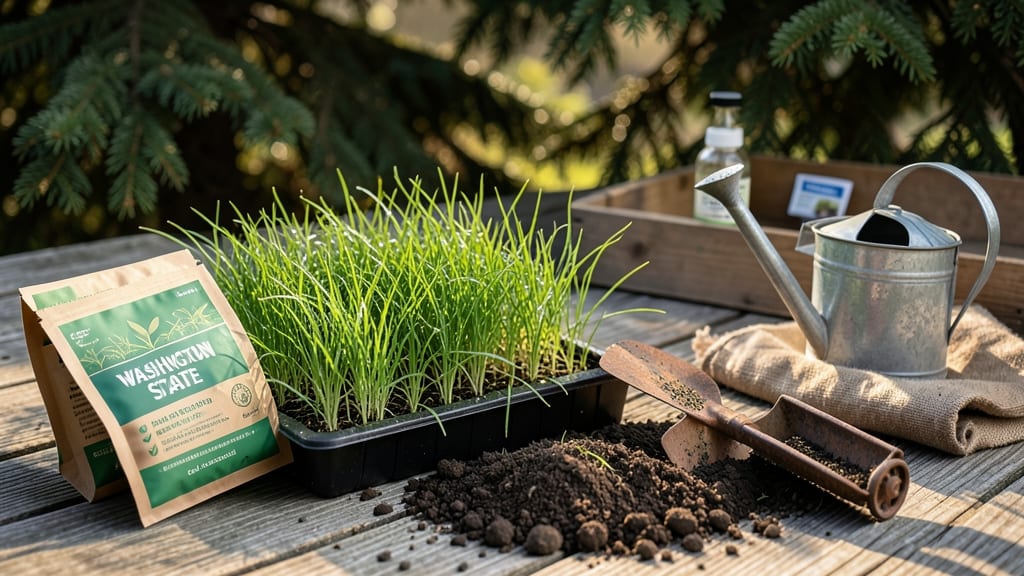
To plant grass seed in Washington State at the right time means catching the 60-day frost-free window when soil warms to 50-65°F—a narrow margin that separates thriving lawns from wasted seed.
Timing your grass seed planting in Washington State can mean the difference between lush green lawns and patchy, weak growth—especially with the state’s unpredictable coastal and inland climates. One week too early, and frost will kill tender sprouts; too late, and summer heat stresses young roots before they establish.
Western WA’s milder zones (7b-9a) get a spring window from March to early May and a fall window from August to September, while Eastern WA’s colder zones (4b-6a) shift those dates back by 4-6 weeks.
Coastal areas like the Puget Sound can plant up to 2 weeks earlier than inland Spokane or Yakima.
Below, I’ll break down the exact frost dates by region, the best grass varieties for WA’s climate, and how to prep soil for maximum root growth—even in the rainy season.
Best planting windows by Washington State zones: coastal vs inland frost dates
Washington State’s diverse climate creates two distinct planting realities: coastal areas with milder winters and inland regions with harsher frost. Understanding these differences is critical for grass seed germination and root establishment.
The USDA zones 5-8 across WA mean your last frost dates can vary by 6+ weeks, directly impacting when you should plant.
In coastal zones (7b-9a), like Puget Sound, you’ll see earlier spring planting (March-April) and later fall windows (September-October) thanks to the Pacific Ocean’s moderating effect.
Meanwhile, inland zones (4b-6a), such as Eastern WA, face colder nights and later last frosts (May-June), pushing ideal planting to late April-early June or August-September.
Here’s the key difference: coastal areas offer 200+ frost-free days, while inland zones have 120-150 days. This means fall planting works better inland—seeds establish roots before winter—while coastal gardeners can plant into early October without risk.
| Zone Type | USDA Zone | Last Frost Date | First Frost Date | Best Spring Planting Window | Best Fall Planting Window | Soil Temp for Planting |
|---|---|---|---|---|---|---|
| Coastal (Puget Sound, Olympia) | 7b-9a | March 15 - April 15 | October 15 - November 15 | March 1 - April 15 | August 15 - October 1 | 50-65°F (10-18°C) |
| Inland (Spokane, Wenatchee) | 4b-6a | May 1 - June 1 | September 15 - October 15 | April 15 - June 1 | August 1 - September 15 | 55-65°F (13-18°C) |
| Western WA (Seattle, Bellingham) | 7b-8a | March 20 - April 10 | October 20 - November 10 | March 10 - April 10 | August 20 - September 20 | 50-65°F (10-18°C) |
| Eastern WA (Yakima, Moses Lake) | 5b-6b | May 1 - May 15 | September 20 - October 5 | May 1 - June 1 | August 15 - September 10 | 55-65°F (13-18°C) |
*Soil temperature is critical—plant when it consistently stays above 50°F for coastal zones and 55°F for inland zones.
For coastal gardeners, the March-April window is ideal because soil warms quickly, and fall planting extends to October thanks to the ocean’s warmth. In contrast, inland areas should wait until after May 1 to avoid late frosts that can kill young seedlings.
I’ve seen Kentucky Bluegrass fail spectacularly when planted too early in Spokane—always check your local frost dates!
Pro tip: Use a soil thermometer to confirm 50-65°F soil temps before planting.
Coastal zones hit this by mid-March, while inland zones may not reach it until late April or May. Cool-season grasses like Fescue and Ryegrass thrive in these conditions, but warm-season grasses (like Bermuda) are rare in WA and need soil temps above 65°F.
Another critical factor is rainfall timing. Coastal WA gets consistent moisture year-round, so overwatering is less risky than inland, where drought stress can occur in summer. Inland gardeners should plant in fall to take advantage of autumn rains for root establishment before winter dormancy.
If you’re in Zone 8a (e.g., Vancouver), you can plant grass seed year-round with minimal risk, but spring and fall remain optimal. For Zone 5b (e.g., Colville), fall planting is your best bet—seeds establish roots before September frosts hit.
I once tried planting Tall Fescue in Zone 6a (Walla Walla) in late May, and it struggled with heat stress—stick to the early windows!
Remember: Grass seed needs 4-6 weeks to establish roots before winter. If you plant too late in fall, cold snaps can stunt growth. Coastal gardeners have 6+ weeks of growing time in fall, while inland gardeners should finish by September 15 to avoid risk.
For best results, align your planting with local microclimates. A south-facing slope in Eastern WA warms faster than a north-facing yard, so adjust your timing accordingly. And always test your soil pH—WA’s acidic soils often need lime amendments for optimal grass growth.
How to choose the right grass seed type for washington’s climate and soil
Washington’s diverse microclimates—from the mild coastal rainforests to the drier inland valleys—require careful grass seed selection. Cool-season grasses dominate here, thriving in WA’s 50-65°F soil temperatures, while warm-season grasses struggle outside summer.
The right choice depends on your sun exposure, soil drainage, and water access.
For Western WA’s wetter zones (like Seattle or Bellingham), fine fescue and Kentucky bluegrass blends excel—they tolerate shade and consistent moisture. In Eastern WA’s drier areas (like Wenatchee or Yakima), tall fescue or buffalo grass handle lower rainfall and hotter summers better.
Shade-tolerant mixes (like creeping red fescue) work under large trees or dense foliage.
- 🌱 Coastal WA (Zones 7b-9a): Fine fescue + Kentucky bluegrass (shade-tolerant, drought-resistant)
- 🌡️ Inland WA (Zones 4b-6a): Tall fescue or buffalo grass (heat/drought-tolerant, low-maintenance)
- 🌳 Shady Lawns: Creeping red fescue (thrives in <4 hours of sun)
- ☀️ Sunny Lawns: Kentucky bluegrass (needs 6+ hours of sun for vibrant growth)
- 💧 Drought-Prone Areas: Mix tall fescue with 10% white clover (natural drought buffer)
Test your soil drainage first—WA’s clay-heavy soils (common in Eastern WA) need amendments like sand or compost to prevent waterlogging. Sandy soils (coastal areas) drain too fast; mix in peat moss to retain moisture. pH matters too: Most WA grasses prefer 6.0-7.0; test with a $10 soil kit from garden centers.
Avoid warm-season grasses (like Bermuda or Zoysia) unless you’re in southern WA’s Zone 8+—they go dormant in winter and need full sun, which isn’t typical here. Instead, opt for cool-season blends with 20-30% perennial ryegrass for quick germination (critical in WA’s short frost-free windows).
For high-traffic areas, add 10% hard fescue to your mix—it’s tougher than Kentucky bluegrass and recovers faster from foot traffic. In low-maintenance lawns, tall fescue alone works well; it stays green longer in fall and bounces back from drought better than bluegrass.
Pro tip: Pre-wet your seed before planting in WA’s rainy season—it helps seeds stick to soil and germinate faster. Use a light mulch (straw, not wood chips) to protect seeds from heavy rains that can wash them away.