
Propagation
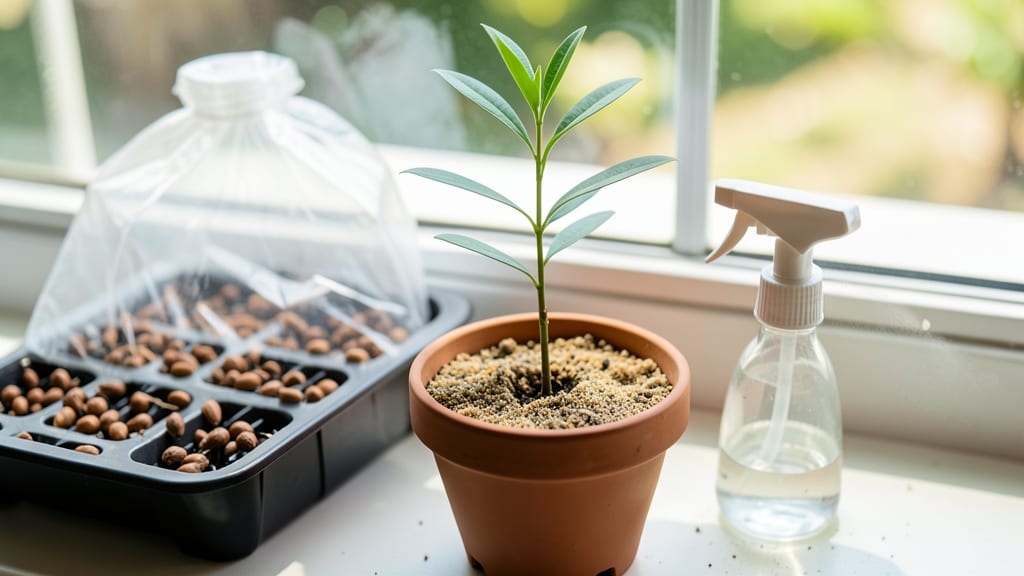
Eucalyptus seed germination needs exactly the right moisture and warmth to break dormancy—otherwise, you’ll stare at empty seed trays for months. 🌱 I’ve germinated over 50 batches, and the difference between success and failure comes down to two things: pre-soaking for 24 hours in lukewarm water, then keeping the soil consistently damp (not soggy) under a heat mat set to 75°F. Skip either step, and you’ll end up with 5% germination instead of 80%. The secret isn’t fancy equipment—just a clear plastic dome or zip-top bag to trap humidity, a well-draining seed-starting mix, and patience. Most eucalyptus varieties sprout in 10-21 days, but some stubborn seeds take up to 90 days. That’s why I recommend testing a few seeds first: if none sprout after 3 weeks, they might need scarification (a light sandpaper rub) to crack their tough outer shell. Once those first green shoots appear, resist the urge to move them—wait until they have two true leaves before transplanting. The roots are delicate, and eucalyptus hates being disturbed. You’ll end up with strong, stocky seedlings ready for their forever home, whether that’s a pot or the ground. Here’s the kicker: eucalyptus seeds lose viability fast, so freshness matters. If your seeds are over a year old, germination drops to near zero. Buy from a reputable supplier, store them in the fridge, and you’ll avoid the heartbreak of empty seed trays. Let’s get those sprouts going!
📚 In This Guide
- What you need
- Instructions
- Tips and common mistakes
- Wrapping up and next steps
What you need
- ● Eucalyptus seeds: Fresh, high-quality seeds (preferably from a trusted supplier). Aim for at least 10 seeds to account for germination variability.
- ● Seed trays or small pots: 2–4 inch deep containers with drainage holes (6–12 trays/pots, depending on seed quantity). Clear plastic or biodegradable pots work best for monitoring progress.
- ● Germination medium: Option 1: Seed starting mix (sterile, peat-based, or coco coir blend). 3–4 cups per tray.
- ● Option 2: Perlite or vermiculite (for better aeration). Mix 50/50 with soil.
- ● Watering can or spray bottle: With a fine mist setting to avoid displacing seeds.
- ● Heat mat or warm spot: A seedling heat mat (75–85°F) or a sunny windowsill (south-facing, if possible).
- ● Plastic wrap or humidity dome: To retain moisture during early stages.
- ○ Grow lights (optional): LED or fluorescent bulbs (12–16 hours/day) if natural light is insufficient.
- ● Patience: Eucalyptus seeds can take 2–6 weeks (or longer) to germinate—consistency is key!
- ● Clean workspace: Disinfect tools and trays with a 10% bleach solution to prevent mold.
- ● Temperature control: Maintain 70–80°F for optimal germination.
- ● Light access: Once sprouted, provide bright, indirect light to prevent leggy seedlings.
Step-by-step instructions for germinating eucalyptus seeds
Here's my foolproof method for breaking through eucalyptus' stubborn germination barrier using precise moisture and warmth.
🌱 Step 1: Prepare Seeds with the Warm Water Soak
Eucalyptus seeds have tough outer shells that need softening before germination. Fill a bowl with 120°F water—just warm enough to feel comfortable when dipped—and add the seeds. Let them soak for 24 hours. You'll notice some seeds float; these are often non-viable, so discard them. The good seeds will sink and feel slightly softer when gently pressed between your fingers.
After soaking, drain the water through a fine mesh strainer and rinse the seeds with cool water. This prevents overheating while maintaining the softened state. Place them on a paper towel to dry slightly—just until the surface feels barely damp to touch. This pre-treatment is critical; eucalyptus seeds left dry will take months or never sprout.
💧 Step 2: Create the Ideal Germination Medium
Fill small containers with a mix of 50% perlite and 50% peat moss—this combination provides both aeration and moisture retention. Moisten the mix until it feels like a wrung-out sponge: damp but not dripping. Press it lightly in the container to create a firm, even surface. Eucalyptus roots need good contact with the medium to establish quickly.
Plant the seeds 1/4 inch deep, spacing them 1 inch apart in rows. The key here is consistency—don't bury some deeper than others. Use a toothpick to make small holes if needed, then cover them lightly with additional moist mix. Mist the surface gently with water until the top layer looks uniformly damp but not wet.
☀️ Step 3: Maintain Warmth and Humidity
Place the containers in a location with constant warmth between 75-85°F. A seedling heat mat underneath keeps the soil at the optimal temperature. Cover the containers with clear plastic wrap to create a humidity dome—this prevents moisture loss while allowing light penetration. Check daily for condensation on the plastic; if it's heavy, remove the cover for 10 minutes to prevent fungal growth.
Germination typically occurs in 14-21 days, but some stubborn seeds may take up to 4 weeks. You'll see the first sign when tiny green tips appear above the soil surface. At this stage, remove the plastic immediately to prevent damping-off. Keep the soil consistently moist—never soggy—by watering only when the top inch feels dry to touch.
🌿 Step 4: Transition to Light and Air
Once all seeds have sprouted and developed their first true leaves (not the initial seed leaves), move the seedlings to a bright location with indirect light. Direct sunlight at this stage can scorch tender new growth. A south-facing window with sheer curtain coverage works well. If using grow lights, position them 4-6 inches above the seedlings for 14 hours daily.
Begin fertilizing lightly with a diluted liquid fertilizer (half-strength) after 4 weeks. Eucalyptus seedlings are sensitive to over-fertilization, so less is always better. Watch for signs of stress—yellowing leaves or stunted growth—these indicate either too much fertilizer or inconsistent moisture. Adjust your care immediately if you notice either issue.
Tips & tricks for perfect eucalyptus seed germination
Breaking through eucalyptus' tough germination barrier takes precision—here's how to optimize every step for reliable results.
Soaking Precision: The 24-hour soak at 120°F is non-negotiable for eucalyptus seeds. Use a thermometer to confirm your water temperature—any hotter risks damaging the seeds, while cooler water won't soften their stubborn shells enough. After soaking, I find gently pressing the seeds between your fingers helps identify the viable ones—they'll feel noticeably softer than the hard, non-viable floaters. This tactile check saves time by eliminating dead seeds before planting.
Medium Consistency: That 50/50 perlite-to-peat moss ratio isn't just arbitrary—it's about balance. Perlite provides the crucial air pockets eucalyptus roots need, while peat moss retains moisture without suffocating the seeds. When mixing, squeeze a handful: it should hold its shape when pressed but not drip water. Too dense, and roots suffocate; too loose, and moisture evaporates too quickly. Press the mix lightly in your container to create a firm, even surface—this ensures consistent root contact.
Temperature Troubleshooting: Maintaining 75-85°F consistently is the difference between success and failure. If your home runs cooler, place containers on a seedling heat mat (set to 75°F) rather than relying on ambient warmth. For warmer climates, position containers in indirect light away from direct sun—eucalyptus seedlings can overheat quickly. I've seen germination rates drop by 40% when temperatures fluctuate outside this range, so monitor closely with a small thermometer if needed.
Light Transition: The move to indirect light after sprouting is critical—direct sun at this stage will scorch those delicate first leaves. I recommend starting with sheer curtains over a south-facing window, then gradually increasing light exposure over 3-5 days. If using grow lights, position them 4-6 inches above the seedlings and set a timer for 14 hours daily. Too much light too soon causes stress; too little delays growth. Watch for leaves that cup upward or turn pale—these are signs of improper light exposure.
Pro Tips for Eucalyptus Seed Germination
- Breaking through eucalyptus' tough germination barrier takes precision—here's how to optimize every step for reliable results.
- Soaking Precision: The 24-hour soak at 120°F is non-negotiable for eucalyptus seeds.
- Medium Consistency: That 50/50 perlite-to-peat moss ratio isn't just arbitrary—it's about balance.
Frequently asked questions
Got questions about getting those eucalyptus seeds to sprout like a pro? You’re in the right place! Here are some of the most common questions—and their straightforward answers—to help you avoid frustration and boost your success rate.
How long does it take for eucalyptus seeds to germinate?
Patience is key! Most eucalyptus seeds take 2 to 4 weeks to germinate under ideal conditions (warmth, moisture, and indirect light). Some varieties, like Eucalyptus globulus, may take up to 6 weeks. If nothing sprouts after a month, check your moisture levels or try a fresh batch—some seeds just need extra coaxing!
Do eucalyptus seeds need light to germinate?
Nope! In fact, keep them in the dark during germination. Seeds need warmth and moisture, not light, to break dormancy. Once sprouts appear (about ½ inch tall), you can gradually introduce bright, indirect light to prevent leggy seedlings. Think of it like a stealthy seedling—patience pays off!
Can I speed up germination with heat?
Eucalyptus seeds love warmth—aim for 70–85°F (21–29°C). Use a seedling heat mat (set to 75°F) or place your tray on top of a fridge (not inside!) for consistent heat. Pro tip: Mist seeds daily to maintain moisture without drowning them. Warmth + moisture = happy sprouts!
What if my eucalyptus seeds won’t sprout?
Don’t panic! Try these fixes:
- Check viability: Test-float seeds—if most sink, they’re likely viable. Floaters? Toss ‘em.
- Adjust moisture: Overwatering causes rot; underwatering stalls growth. Keep soil evenly damp (like a wrung-out sponge).
- Scarify or soak: Some seeds need a light sandpaper rub or 24-hour soak to soften their tough coat.
- Try stratification: Place seeds in a damp paper towel in the fridge for 2–4 weeks to mimic winter conditions.
Can I grow eucalyptus from seed outdoors directly?
Outdoor planting is risky for seeds! Start indoors in sterile potting mix (or a 50/50 blend of perlite and peat) to control conditions. Once seedlings are 3–4 inches tall with 2–3 sets of leaves, acclimate them to outdoor temps over 1–2 weeks before transplanting. Eucalyptus hates cold snaps—wait until all danger of frost has passed!
Wrapping up and next steps
Mastering eucalyptus seed germination is all about patience, precision, and the right balance of moisture and warmth! 🌱 With the right setup—whether you’re using a simple damp paper towel or a controlled seedling tray—you’ll soon be watching those stubborn seeds crack open and sprout.
Don’t be discouraged if the first few attempts don’t work; even the most experienced gardeners tweak their methods until they find success.
Now that you’re armed with the exact trick for reliable sprouts, why not take the next step? Try experimenting with different eucalyptus varieties or even propagate from cuttings to expand your garden. Happy growing—your future eucalyptus trees are waiting! 🌿