
Companion Plants
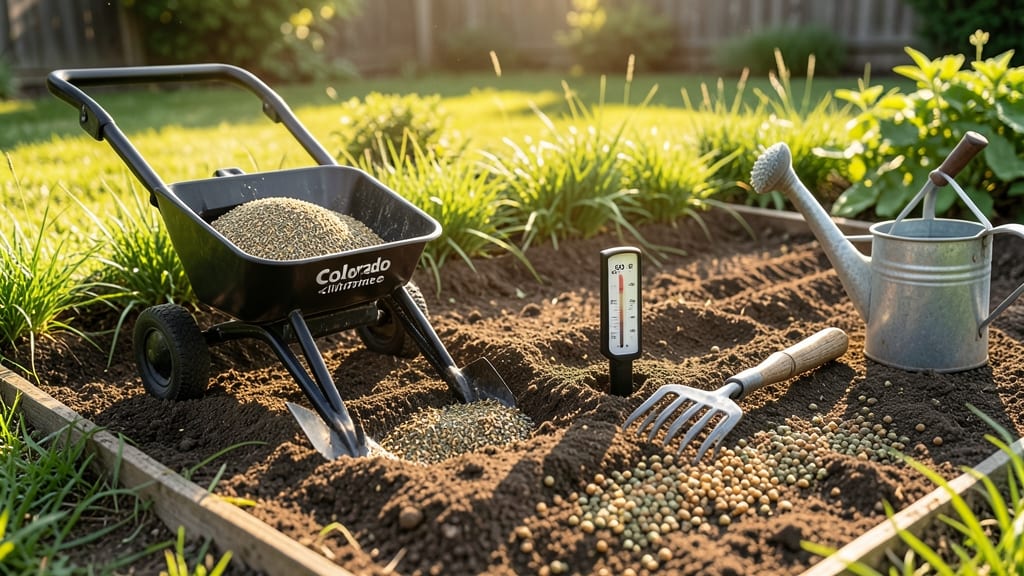
Planting grass seed in Colorado at the right time means the difference between a thick, green lawn and a frustrating, patchy mess.
Colorado’s dramatic elevation changes and unpredictable weather can turn grass seeding into a high-stakes guessing game—but timing it right means the difference between lush green lawns and patchy disappointment.
Most gardeners in USDA zones 5-7 should aim for early spring, just after the last frost (around mid-April for the Front Range), or fall, when temperatures start cooling in September. But altitude shifts everything: at 6,000 feet, wait for soil to warm to 55°F.
Below, I break down the exact frost-free windows by region, soil prep secrets, and how to adjust for microclimates—so you can finally get that even, vibrant lawn you’ve been dreaming of.
Colorado’s grass planting zones: frost-free dates by elevation
Colorado’s elevation-driven climate creates wildly different planting windows—what works in Denver (5,280ft) fails at Telluride (8,750ft). Understanding your USDA zone and microclimate is non-negotiable for successful grass seeding. Below, I break down the optimal planting windows by region, including last-frost averages and soil temperature thresholds critical for seed germination.
For Front Range cities like Denver, Colorado Springs, and Fort Collins (USDA Zones 5-6), your last frost date typically falls between April 15–May 1, with soil warming to 50°F+ by early May.
This makes late April to early June your primary planting window. However, fall planting (September–October) often yields better results due to cooler temps and reduced weed competition.
At mountain elevations (6,000–9,000ft), such as in Estes Park or Breckenridge (USDA Zone 5), frost lingers longer—expect last frosts between May 15–June 1. Soil may not reach 55°F until late May or early June, pushing your ideal window to June–July.
Warm-season grasses like Bermuda thrive here, but cool-season blends need earlier fall prep (August–September) to establish before winter.
High Plains regions (e.g., Lamar, Sterling, USDA Zone 6) have earlier frost-free dates (April 1–April 15) and hotter summers, allowing March–April and August–September planting. These areas benefit from drought-tolerant grasses like Buffalo grass or tall fescue blends, which handle the short, intense growing season better than Kentucky bluegrass.
🌱
| Region | Elevation (ft) | USDA Zone | Avg. Last Frost | Optimal Planting Window | Soil Temp Threshold |
|---|---|---|---|---|---|
| Front Range (Denver, Colo. Springs) | 5,000–6,500 | 5–6 | April 15–May 1 | Late April–June or September–October | 50°F+ |
| Mountain Towns (Estes Park, Breckenridge) | 6,000–9,000 | 5 | May 15–June 1 | June–July or August–September | 55°F+ |
| High Plains (Lamar, Sterling) | 3,500–5,000 | 6 | April 1–April 15 | March–April or August–September | 45°F+ |
| Western Slope (Grand Junction, Durango) | 4,500–7,000 | 5–7 | April 10–May 10 | Late April–June or September–October | 50°F+ |
Microclimates complicate timing further. South-facing slopes warm 2–3 weeks earlier than north-facing yards, while urban heat islands (like downtown Denver) can push frost dates back by 10+ days. Always check local weather stations and monitor soil temperature at 4-inch depth—this is more reliable than air temps.
A soil thermometer ($15 at garden centers) is your best friend.
For high-altitude gardens (above 8,000ft), such as Leadville or Aspen, planting may not occur until late June or July due to lingering snow and cold soils. Here, fast-germinating seeds like perennial ryegrass are essential, as the growing season shrinks to just 100–120 frost-free days.
Fall planting is risky—seedlings may not establish before winter’s early arrival.
Pro tip: Adjust for snowmelt timing. In mountain regions, wait until soils are workable and free of ice—even if frost dates suggest readiness. Packed, icy soil suffocates seeds.
Test with your thumb: if it sinks 1 inch without resistance, it’s safe to plant. Never seed on frozen ground, even if the calendar says it’s spring.
🌿
Remember, fall planting (September–October) is often superior in Colorado because cooler temps reduce weed competition and water stress. Grass seedlings establish roots before winter, emerging stronger in spring. For Front Range lawns, aim to plant 6–8 weeks before first frost (mid-September). In mountain zones, shift to late August–early September to avoid early snow.
If you’re seeding in May or June, prioritize shade tolerance and drought-resistant varieties like fine fescue or tall fescue. These handle Colorado’s hot, dry summers better than Kentucky bluegrass, which wilts without daily deep watering.
Pair your seed choice with the right planting window—this combo is your ticket to a thick, resilient lawn.
Critical factors that shift your planting timeline in Colorado
Colorado’s elevation gradients and microclimates create wildly different planting conditions—what works in Denver (5,280ft) fails in Telluride (8,750ft). The soil temperature must reach 50°F at 5,000ft but waits until 55°F at 6,000ft or higher. Even a 1,000ft elevation gain can delay your planting window by 2-3 weeks.
Snowmelt timing is another game-changer. In mountain regions, lingering snowpack can keep soil too cold until late May or June, while Front Range areas often see viable conditions by mid-April.
Always check USDA Plant Hardiness Zone maps for your exact location—Colorado spans Zones 4-7, and each zone has its own frost-free window.
⚠️ callout warning ⚠️
Grass seed won’t germinate in cold, wet soil below 45°F. If you plant before soil warms, seeds risk rot or fungal diseases. Use a soil thermometer—wait until 50°F+ at 4” depth for cool-season grasses like Kentucky bluegrass.
Even after snowmelt, altitude-specific growing degrees matter. At 7,000ft+, the growing season shrinks by 30-40 days compared to 5,000ft. This means fall planting (ideal for Colorado) must start by mid-August at high elevations but can extend to late September in lower zones.
Don’t rely on calendar dates—track soil conditions instead. Early spring planting succeeds when daytime temps stay above 60°F and nights dip no lower than 40°F. For fall seeding, aim for 6-8 weeks before first frost—this gives grass time to establish 2-3 inch roots before winter.
Pro tip: Test your soil’s moisture before planting. Colorado’s dry climate can fool you—soil may feel dry on top but stay saturated below. Grass seed needs consistent moisture but hates waterlogged conditions. Use a moisture meter or the squeeze test: if soil clumps but crumbles, it’s ready.
Microclimates add another layer. A south-facing slope warms 10°F faster than a north-facing yard, while urban heat islands in Denver can push soil temps up 5-10°F higher than rural areas. Adjust your timeline by 1-2 weeks if your yard has unique sun exposure or wind patterns.
For high-altitude areas (6,500ft+), consider hardy grass varieties like fine fescue blends, which tolerate cooler soils and shorter growing seasons. At 5,000ft or below, Kentucky bluegrass or tall fescue thrive with proper timing.
Always acclimate seed to your zone—northern-grown seed struggles in southern Colorado’s heat, and vice versa.