
Companion Plants
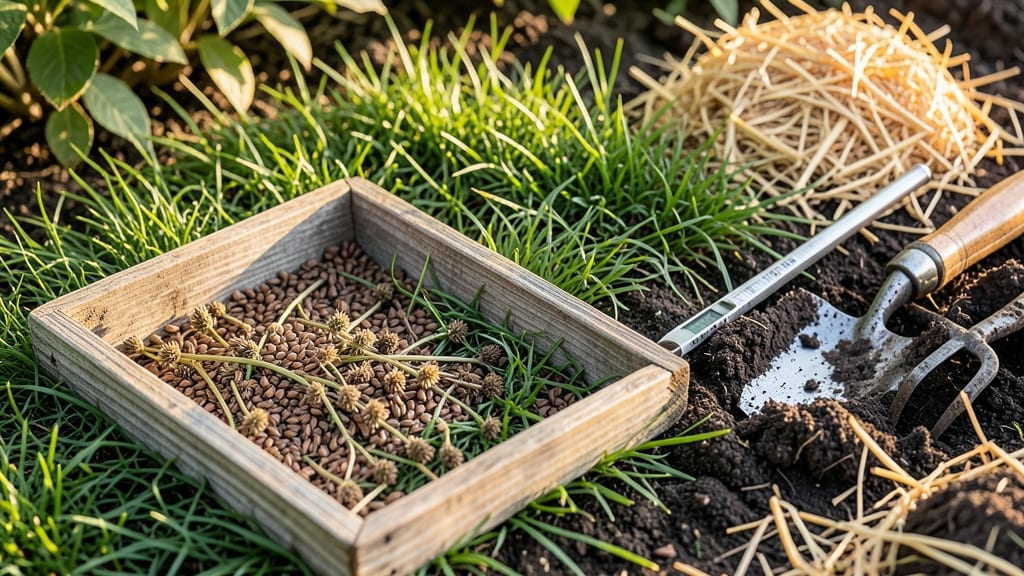
Planting Bermuda grass seed in Texas after the last frost—when soil hits 65°F—sets the stage for a thick, drought-resistant lawn that thrives in the heat.
Too early, and a surprise frost wipes out your progress. Too late, and the scorching summer sun stunts germination before it even starts. This is why late spring to early summer is your golden window—April to June—but the exact timing depends on where in Texas you live.
North Texas lawns need to wait until May, while South Texas can start as early as April. The key? Soil temperature, not just calendar dates.
I’ll break down the best months by region, plus how to prep your soil for success—because even the hardiest grass needs the right foundation.
By the end, you’ll know exactly when to plant, how deep to sow those seeds, and the watering schedule that keeps your Bermuda grass lush and resilient through Texas summers.
Best months to plant Bermuda grass seed in Texas (by region)
Texas’ diverse climate means the perfect time to plant Bermuda grass seed varies by region. In North Texas, cooler springs delay planting, while South Texas can start earlier due to warmer soils. Soil temperature—not air temperature—is your true guide: aim for 65°F+ (18°C+) at 4 inches deep.
Plant too early, and frost zaps seedlings; too late, and summer’s intense heat stresses young grass. Let’s break down the ideal planting windows by Texas region to maximize your lawn’s resilience.
Bermuda grass thrives in USDA Zones 8a-10b, but microclimates within Texas create big differences. For example, El Paso’s high desert (West Texas) has cooler nights than Houston’s humidity (South Texas). Each region’s last frost date and summer onset dictates when to sow seeds.
Pro tip: Use a soil thermometer—not a weather app—to confirm readiness. April through June is the prime window for most of Texas, but fine-tuning by region avoids common mistakes like seedling burnout or slow germination.
| Region | Best Planting Months | Soil Temp Threshold | Last Frost Date | Key Prep Tip |
|---|---|---|---|---|
| North Texas (Dallas/Fort Worth) | Late April – Early June | 65°F+ (18°C+) | Mid-March | Test soil pH (6.0–7.5); amend with lime if needed |
| Central Texas (Austin) | Mid-April – Late May | 68°F+ (20°C+) | Late February | Aerate compacted clay soil before planting |
| South Texas (Houston/San Antonio) | Early April – Early June | 70°F+ (21°C+) | Early March | Irrigate daily post-planting (high humidity = fungal risk) |
| West Texas (Lubbock/El Paso) | Late May – Early July | 72°F+ (22°C+) | Late March | Use shade cloth if planting in June (avoid midday sun stress) |
In North Texas, where Dallas and Fort Worth experience cooler springs, wait until late April to plant. The soil temperature must stay above 65°F (18°C) for 7+ days to ensure germination. Use a soil thermometer to monitor—air temperature can be misleading.
If you plant in May, prioritize morning watering to prevent seed desiccation from afternoon heat. June plantings are risky but possible if you use shade cloth temporarily to protect seedlings.
Central Texas, including Austin, offers a slightly longer window due to its warmer microclimate. Start in mid-April when soil hits 68°F (20°C). The clay-heavy soils common here need aeration before planting to improve water drainage and root penetration.
Pro tip: Mix compost into the top 2 inches of soil to boost organic matter. Avoid planting after late May, as summer’s 100°F+ (38°C+) heat can shock young grass.
For South Texas—think Houston and San Antonio—the humid, subtropical climate allows earlier plantings. Begin in early April when soil reaches 70°F (21°C). The high humidity here increases fungal disease risk, so water
Signs your Texas soil is ready for Bermuda grass seed (and how to fix it)
Your Texas soil is ready for Bermuda grass seed when it hits 65°F (18°C) at least 6 inches deep—a critical threshold for germination. Use a soil thermometer to check, especially in North Texas where cooler springs delay planting.
If your soil is still below this temperature, wait another week or two before sowing.
Another key sign is moisture balance. Bermuda grass thrives in well-drained soil, but it needs consistent moisture to sprout. Stick your finger 2 inches into the soil—if it feels dry, water deeply before planting. Sandy soils dry out faster, while clay-heavy areas may need amending to prevent waterlogging.
🌱
Don’t overlook soil pH, which should ideally fall between 6.0 and 7.5 for Bermuda grass. Test your soil with a kit or send a sample to your local Texas A&M AgriLife Extension.
If your pH is too low (acidic), add lime 2-3 months before planting. For high pH (alkaline), mix in sulfur or peat moss to adjust it gradually.
⚠️ callout warning ⚠️
Texas clay soils or low-lying areas can trap water, suffocating seeds. Before planting, improve drainage by:
- 🔹 Adding compost (2-3 inches) to break up compacted clay
- 🔹 Creating slight slopes (1-2%) to redirect water
- 🔹 Installing French drains in problem areas
Test drainage now: Dig a 6-inch hole, fill with water, and time how long it takes to drain. If it takes more than 6 hours, amend your soil immediately.
If your soil is sandy, it drains too quickly and lacks nutrients. Mix in organic matter like compost or aged manure to retain moisture and improve fertility.
Aim for a 30% sand, 30% silt, and 40% clay balance—this gives Bermuda grass the ideal texture to spread and thrive.
Finally, clear debris and level the planting area. Bermuda grass seeds need direct soil contact to germinate, so rake the surface lightly after sowing. Avoid heavy foot traffic or equipment for at least 7-10 days to prevent displacing seeds or disturbing the soil.
With the right soil prep, your Bermuda grass will germinate in 10-14 days and establish a dense, heat-resistant lawn by summer. Keep an eye on moisture levels—consistent watering is key during the first 30 days to encourage strong root development.
☀️