
Lawn
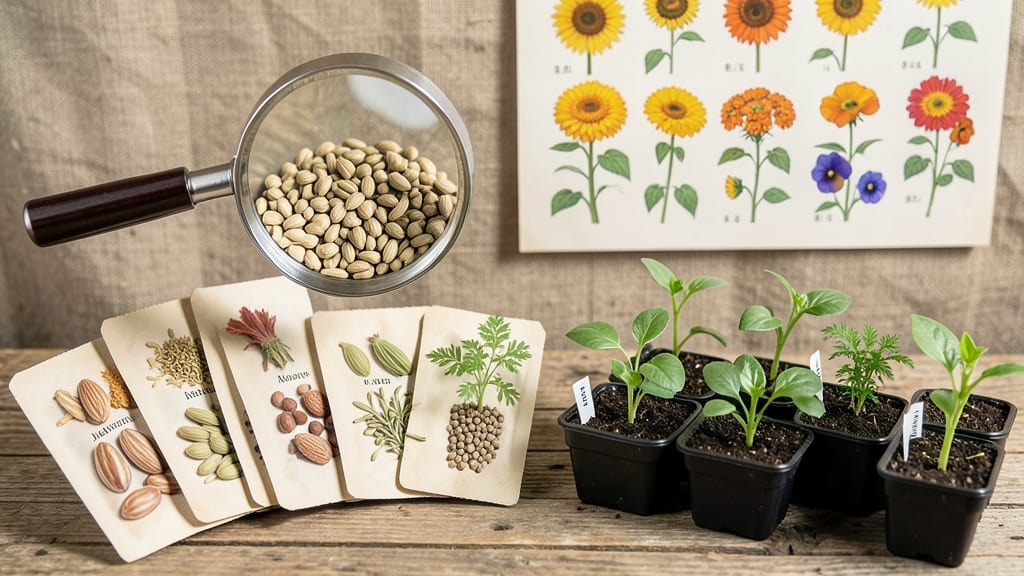
Mastering common flower seed identification means the difference between a garden full of surprises and one packed with exactly what you planted. 🌻 I've spent years sorting through seed packets, catalogs, and wildflower mixes—only to realize that tiny photos and vague descriptions rarely tell the whole story. The wrong seed in your garden leads to disappointment, but knowing these visual clues transforms seed shopping from guesswork into confidence. Shape and texture are your first clues: sunflower seeds are large and striped, while cosmos seeds look like delicate, feathery dandelion puffs. Color matters too—marigold seeds are tiny and papery white, while nasturtium seeds are plump and orange. I keep a small magnifying glass handy when I'm comparing seeds, because the details that separate a wildflower mix from a cultivated variety often hide in plain sight. Once you learn these markers, you'll spot them instantly: the ridged edges of poppy seeds, the fuzzy coating of milkweed, or the elongated shape of hollyhock seeds. This isn't just about avoiding mistakes—it's about curating a garden that thrives on intention. A well-chosen seed packet becomes the first step toward blooms that match your vision, not someone else's. The payoff comes when you're holding a packet and thinking, "I know exactly what this will grow." That moment of recognition turns seed shopping from a chore into a creative choice—one that shapes your garden's story before the first sprout even appears. Let's dive into the visual details that make all the difference.
📚 In This Guide
- What you need
- Instructions
- Tips and common mistakes
- Wrapping up and next steps
What you need
- ● Seed samples: 50+ common flower seeds (wild or cultivated) for comparison—collect from local gardens, nurseries, or online suppliers like blank">Burpee or blank">Etsy.
- ● Magnifying glass: 10x magnification (for inspecting fine details like seed texture or markings).
- ● Ruler or caliper: Measuring tape or digital caliper (precision: 0.01 inches) to gauge seed size.
- ● White or light-colored tray: 12" x 12" (for arranging seeds against a neutral background).
- ● Labeling supplies: Index cards or sticky labels (50+).
- ● Fine-tip black marker (for clear, permanent labels).
- ● Field guide or reference book: 1 copy of “The Seed Identification Guide” by blank">Thomas Elpel or a digital app like blank">iNaturalist.
- ● Notebook or digital notes app: For recording observations (e.g., shape, color, size).
- ○ Small paintbrush (optional but helpful): Soft-bristle brush (for handling delicate seeds without damage).
- ● Seed dissection kit: Tweezers, scalpel, and petri dish (for examining internal structures).
- ● Macro photography setup: Smartphone with a macro lens attachment (e.g., blank">OlliClip) or a basic DSLR with a close-up lens.
- ● Humidity-controlled environment: Small terrarium or sealed container (to observe seed germination patterns).
- ● Seed storage bags: Paper or breathable fabric bags (to preserve samples for future reference).
- ● Online community access: Subscription to forums like blank">GardenWeb or Reddit’s r/whatsthisplant for crowdsourced ID help.
How to identify common flower seeds: key visual clues
Here's how I break down flower seed identification—focus on shape, size, and texture first.
🌱 Step 1: Examine Seed Shape and Size
Start by comparing seeds to common objects. A sunflower seed is roughly the size of a kidney bean, flat and oval, with a papery husk that peels away easily. Marigold seeds, on the other hand, are tiny—about the width of a grain of rice—and irregularly shaped, often with a slight curve.
Hold seeds up to a bright light or use a magnifying glass to spot subtle features. For example, lupine seeds have a distinctive "winged" appearance, while poppy seeds are round and smooth with a glossy finish. I always keep a ruler nearby to measure seeds against known sizes—this eliminates guesswork when comparing to photos.
🌿 Step 2: Check for Surface Texture and Color
Texture is your next clue. Zinnia seeds have a rough, almost sandpaper-like surface, while cosmos seeds feel smooth and slightly oily to the touch. Run your thumb over a handful—if it feels gritty, you're likely dealing with a seed like nasturtium, which has a coarse, bumpy exterior.
Color matters too. Sweet pea seeds are typically a deep brown with a faint marbled pattern, whereas hollyhock seeds are black and shiny. I keep a small white piece of paper handy to drop seeds on—this makes color differences pop against a neutral background. If seeds are pale or lack distinct markings, they might be wildflower mixes or immature.
☀️ Step 3: Look for Attachments or Seed Pods
Some seeds arrive still attached to their pods or stems. Peony seeds often cling to a leathery, red pod that splits open when dry, while foxglove seeds emerge from long, slender capsules that resemble tiny sausages. If you see seeds still in pods, note the pod's shape—this narrows it down significantly.
For seeds that’ve been cleaned, check for remnants like chaff (seed husks) or winged structures. Dill seeds, for instance, have delicate, feathery attachments that catch light differently. I save a few seed pods in a small jar labeled by location—this helps me track patterns over time.
⏰ Step 4: Compare to Known Seed Charts
After observing, cross-reference with a seed identification chart. I print out high-resolution images of seeds side by side and circle the ones that match your findings. Pay attention to scale bars in reference images—many seeds look identical until you see their actual size.
If you’re still unsure, focus on the seed coat pattern. Larkspur seeds have a net-like texture, while columbine seeds have a smooth, almost waxy surface. I keep a digital folder of seed photos organized by category—this lets me quickly rule out mismatches. When in doubt, I start with a small test batch of seeds to confirm germination habits.
Tips & tricks for mastering flower seed identification
These practical tricks will help you become a confident seed detective—no green thumb required.
Lighting is Everything: Natural daylight is your best friend for seed identification. Place seeds on a clean white surface near a window or use a bright LED desk lamp to eliminate shadows. I've caught subtle color variations and textures that disappeared under indoor lighting—especially important for distinguishing between similar seeds like larkspur and columbine. For tricky cases, try backlighting by placing seeds between two light sources to see through translucent seed coats.
Create a Reference Kit: Build your own seed identification kit with these essentials: a magnifying glass (10x magnification works perfectly), a small white tray, tweezers for handling tiny seeds, and a ruler with millimeter markings. I keep mine in a small plastic box with compartments—this makes it easy to grab and go when identifying seeds in the field. The tweezers are especially helpful for seeds like foxglove that are delicate and easy to crush.
Seasonal Timing Matters: Collect seeds at their peak identification window. Most wildflower seeds are easiest to identify when fully mature but before they've had time to dry out completely. For example, peony seeds are most distinctive when they first emerge from their red pods in late summer, while dill seeds are most recognizable when their feathery attachments are still intact. I mark my calendar with peak seed-collection dates for my region—this saves hours of frustration trying to identify immature or over-dried specimens.
Test for Germination: When you're still unsure about an identification, perform a simple germination test. Place a small sample of seeds between damp paper towels in a sealed container for 3-5 days. Different seeds germinate at different rates and in distinctive ways—sunflower seeds sprout quickly with visible radicles, while lupine seeds take longer but develop distinctive winged cotyledons. This practical test often reveals characteristics that visual inspection alone might miss.
Pro Tips for Common Flower Seed Identification
- These practical tricks will help you become a confident seed detective—no green thumb required.
- Lighting is Everything: Natural daylight is your best friend for seed identification.
- I keep mine in a small plastic box with compartments—this makes it easy to grab and go when identifying seeds in the field.
Frequently asked questions
Got questions about flower seed identification? You’re not alone! Here are answers to the most common queries to help you grow with confidence.
How do I tell the difference between wildflower and cultivated flower seeds?
Wildflower seeds often have irregular shapes, rough textures, or natural color variations (like Black-eyed Susan or Milkweed). Cultivated seeds are usually uniform in size, shape, and color (e.g., Marigold or Zinnia). Check seed packets—wildflower mixes often list "native" or "wild" varieties.
When is the best time to plant flower seeds?
Timing depends on your climate and flower type. Cool-season flowers (like Pansies) thrive when planted in early spring or fall, while warm-season blooms (e.g., Sunflower) need soil temps above 60°F. Always follow the seed packet’s guidelines or local planting charts for accuracy.
What should I do if my flower seeds aren’t germinating?
First, check moisture—seeds need consistent dampness (not soggy!). Ensure proper light exposure (some need darkness to sprout). Test seed viability by soaking a few in water; if they sink, they’re likely good. If issues persist, try fresh seeds or adjust your soil mix for better drainage.
Can I identify flower seeds by their leaves alone?
Yes! Leaf shape, arrangement, and texture are key clues. For example, Lavender has narrow, gray-green leaves, while Snapdragons feature fuzzy, lance-shaped foliage. Use a field guide or app like PictureThis to compare leaves with known varieties before planting.
Are there any easy-to-identify flower seeds for beginners?
Start with Sunflower (large, striped seeds), Marigold (round, orange/red seeds), or Zinnia (small, oval seeds). These are hard to misidentify and fast-growing, making them perfect for first-timers. Plus, their bold blooms make mistakes hard to hide!
Wrapping up and next steps
Mastering common flower seed identification is your first step toward creating a vibrant garden or restoring wild beauty! 🌸 Whether you're a beginner or a seasoned gardener, recognizing these seeds unlocks endless possibilities for color, fragrance, and biodiversity.
Start small—pick one or two varieties to grow this season, and let your curiosity bloom!
Ready to take the next step? Grab a seed packet, sketchbook, or gardening app to document your findings. Share your discoveries with fellow plant lovers, or dive deeper into local seed-saving techniques to preserve rare varieties. Your green thumb is waiting—what will you grow first?