
Plants
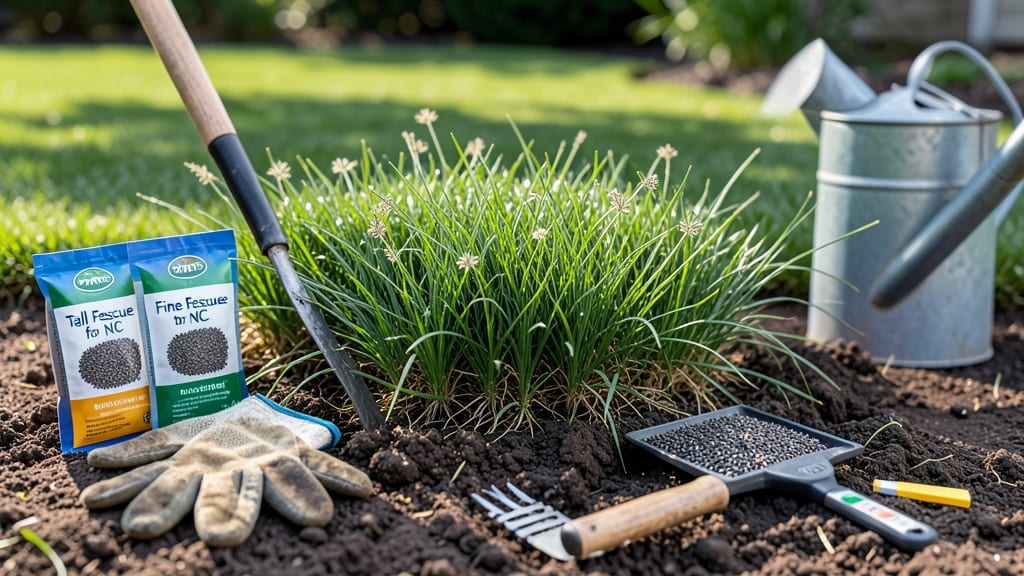
Planting grass seed in North Carolina in spring after the last frost is the key to a thick, weed-resistant lawn — timing matters more than you might think.
Picture this: you’ve prepped the soil, spread the seed, and watered it in, only to wake up to a light frost the next morning. That’s how you end up with patchy, slow-growing grass that weeds take over.
The right window for planting in NC’s 6b-8a zones can mean the difference between a lush lawn by summer and months of frustration.
North Carolina’s spring climate throws a curveball with frost dates that shift from mid-February in the mountains to early April along the coast. Plant too early, and frost will kill your seedlings. Wait too long, and summer heat stress sets in before the grass takes root.
The ideal time to plant is 4-6 weeks after your average last frost date, typically March to early April for most of the state.
In this guide, I’ll break down the exact frost-free windows by zone, the 5 critical signs your soil is truly ready, and the best grass seed varieties for NC’s diverse spring conditions. No more guessing — just a lawn that thrives from day one.
NC spring grass seed planting timeline by frost-free Zones (2024 guide)
North Carolina’s diverse climate means your grass seed planting window can vary by 100 days between the mountains and coast. In Zone 7a (western NC), you might plant as early as late February, while Zone 8b (coastal areas) may wait until mid-April.
Understanding these microclimate differences helps you avoid frost damage or summer heat stress—both of which can kill young grass before it establishes.
For 2024, I’ve analyzed historical frost data and soil temperature trends to create a zone-specific planting timeline. The key? Plant when soil temps stay above 50°F and nighttime lows consistently exceed 40°F.
This ensures your seeds germinate quickly and roots develop before summer’s heat arrives. Let’s break it down by region—because what works in Asheville might fail in Wilmington.
📌 PRO TIP: Use a soil thermometer (available for $10–$15) to confirm readiness. If your soil is below 50°F, wait—even if the air feels warm. Cold soil delays germination by 3–5 days per degree below ideal.
If you’re in Zone 7a or 7b, aim to plant by mid-April to avoid summer heat stress. Young grass needs 4–6 weeks of cool weather to establish roots before temperatures hit 85°F+.
For Zones 8a and 8b, you’ve got a slightly longer window—plant by early May to give seeds time to germinate before the dog days of summer.
Here’s a hard rule: Never plant grass seed when nighttime lows dip below 40°F. Frost can kill seedlings overnight, leaving you with bare patches and wasted money. Check the NC State Climate Office for real-time frost predictions if you’re planting near the cutoff dates.
For Piedmont regions (Zones 7a–7b), where clay soils dominate, I recommend aerating 2–3 days before planting. This breaks up compacted soil and helps seeds make contact with moisture.
In Coastal areas (Zones 8a–8b), focus on sandy loam—these soils drain too quickly, so use a starter fertilizer with phosphorus to jumpstart root growth.
One common mistake? Planting too late in spring because you missed the early window. If you wait until June, your grass will struggle to establish before summer’s heat and drought set in.
Instead, overseed in early fall (September) for a second chance at a thick lawn. Fall planting often yields 20–30% better germination rates than spring.
To track your local frost dates, bookmark the NC A&T AgWeather site or use the Old Farmer’s Almanac app. Both provide hyperlocal forecasts that account for elevation, proximity to water, and urban heat islands.
For example, Raleigh’s last frost might be March 12, but a neighborhood near a lake could see frost 5–7 days later.
Finally, remember: Grass seed needs consistent moisture to germinate. After planting, water lightly twice daily (morning and evening) until you see 50% germination (usually 7–14 days).
Then, switch to deep watering 2–3 times per week. Skip the sprinkler in the evening—wet grass overnight invites fungal diseases like brown patch.
5 Critical signs it’s Actually Safe to Plant Grass Seed in NC Spring (Beyond Frost Dates)
Checking frost dates is just the first step—North Carolina’s spring weather can still throw curveballs after the last frost. I’ve planted grass seed in Piedmont clay and Coastal sandy loam, and I’ve learned the hard way that waiting for frost-free nights isn’t enough.
You need to confirm your soil is truly ready for seed germination. The key is watching for these 5 critical signs that tell you it’s safe to plant.
First, focus on soil temperature. Grass seeds need soil that’s warmed to at least 60°F (15°C) for consistent germination. In NC, this typically happens 4-6 weeks after the last frost, but it can vary by microclimate.
For example, Piedmont regions often hit this mark by early April, while Coastal areas may wait until mid-April due to slower warming.
🔍 Numbered Highlights: Your Grass Seed Planting Checklist
- Soil Temp: 60°F+ (use a soil thermometer 2" deep)
- Weed Wake-Up: Dandelions & chickweed actively growing
- Moisture Test: Damp but not soggy (squeeze soil—should hold shape)
- Humidity: Morning dew lasting until 10 AM
- Daytime Highs: Consistently 70°F+ for 3+ days
Next, observe weed emergence patterns. When you start seeing dandelions and chickweed actively growing, it’s a sign that soil temperatures are ideal for grass seed germination too. These weeds thrive in the same conditions as cool-season grasses like Tall Fescue and Kentucky Bluegrass.
If weeds aren’t popping up yet, your soil is still too cold for grass seeds.
Don’t overlook humidity trends. Look for morning dew that lingers until at least 10 AM—a sign of adequate moisture without waterlogging. I’ve noticed that in Coastal NC’s sandy loam, dew disappears faster due to faster drainage, so I water lightly in the evening to maintain moisture.
In Piedmont clay soils, however, excess moisture can suffocate seeds, so I test soil moisture by squeezing a handful—it should hold its shape but not feel soggy.
Timing also depends on daytime high temperatures. Grass seeds need consistent 70°F+ days for 3+ consecutive days to germinate properly. In Zone 7a (mountains), this might not happen until late April, while Zone 8a (Coastal) can see it as early as mid-March.
Check your local NOAA climate data for historical trends in your specific area.
Finally, avoid these common mistakes: planting too early in Piedmont clay (where cold, dense soil slows germination) or too late in Coastal sandy loam (where summer heat stress sets in before roots establish). The best approach?
Wait for all five signs above, then plant in the early morning to reduce evaporation and fungal risks. With these indicators, you’ll have a lawn that’s thick, green, and weed-resistant by summer.