
Plants
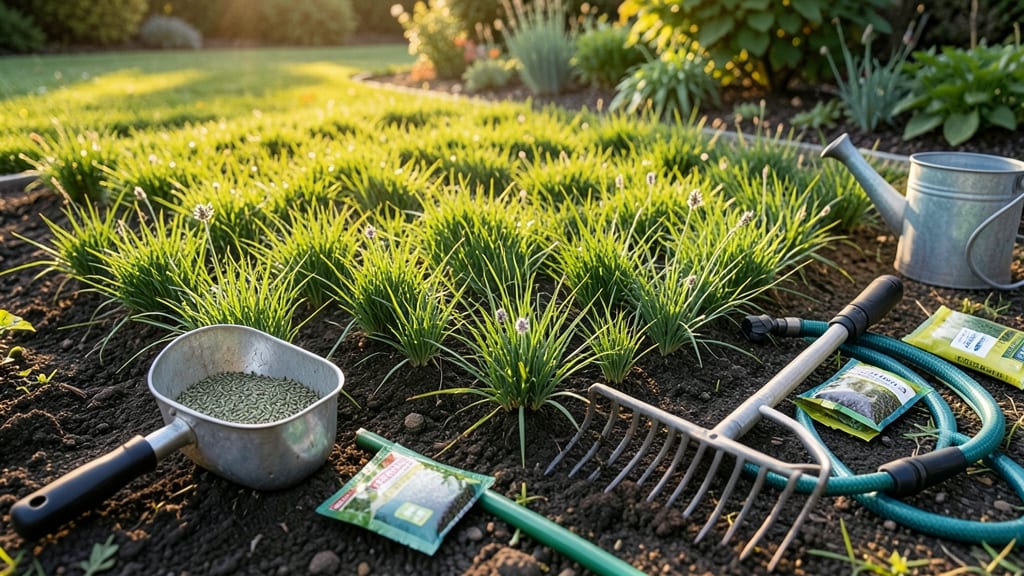
Planting grass seed in Minnesota at the right time means the difference between a thick, green lawn and a patchy, frost-bitten mess.
Minnesota’s short growing season can make timing your grass seed planting critical—plant too early and face frost, too late and miss the ideal frost-free window. Get it right, and you’ll enjoy a lush lawn by summer.
Cool-season grasses like Kentucky bluegrass and fine fescue thrive when planted in early spring, as soon as the soil warms to 50°F and stays frost-free. Meanwhile, warm-season varieties like tall fescue prefer late summer planting for a head start before winter.
Below, I break down the exact frost-free windows for Zones 3-4A, soil prep tips for Minnesota’s clay-heavy soils, and how to adjust for microclimates—so you never waste seed again.
Minnesota grass planting calendar: best months by Zone 3-4A
Timing your grass seed planting in Minnesota’s USDA Zones 3-4A is all about avoiding frost while maximizing germination. The state’s short growing season means you have just two prime windows: early spring for cool-season grasses and late summer for warm-season varieties.
Miss these windows, and you risk weak growth or wasted seed.
Cool-season grasses like Kentucky bluegrass and fine fescue thrive when planted 4-6 weeks before the last frost, typically in March or early April.
Warm-season grasses such as Bermuda or Zoysia need 60-70 days of warm weather to establish, so aim for late July to early August in northern Minnesota.
Minnesota’s climate extremes—from -30°F winters to 90°F summers—demand precision. Planting too early risks frost damage, while late planting may leave your lawn vulnerable to weeds or winter kill. Let’s break down the exact frost-free windows for each zone and grass type to help you plan like a pro.
Key takeaway: Always check your local last frost date (usually mid-May) and adjust by 4-6 weeks backward for cool-season grasses or forward for warm-season types. Use this zone-specific calendar to avoid common timing mistakes that stifle germination.
For Zone 3 gardeners, the March 15 - April 15 window is critical for cool-season grasses. If you plant Kentucky bluegrass in Zone 3 after April 15, germination slows dramatically due to rising soil temperatures. Meanwhile, Zone 4A
How to prepare Minnesota soil for grass seed success
Minnesota’s clay-heavy soils and sandy patches can make grass seed germination a challenge if not properly prepared. The key to success lies in creating an ideal seedbed—one that’s loose, nutrient-rich, and free of weeds. Without this prep, seeds may struggle to break through compacted soil or compete with invasive grasses.
Start by testing your soil’s pH level. Most grass varieties thrive in a range of 6.0 to 7.0. Minnesota’s natural acidity often skews soils toward 5.0 or lower, which can stunt root growth.
A simple home pH test kit (available at garden centers) will give you the data you need to adjust with lime or sulfur.
Next, clear the area of existing vegetation. Use a broadleaf herbicide for weeds or manually remove them with a garden rake. Don’t skip this step—competition from dandelions or clover can rob your new grass of water and nutrients.
For organic gardeners, a corn gluten meal pre-emergent works well to suppress weeds naturally.
Step-by-Step Soil Prep for Minnesota Grass Seed
- Test Soil pH – Aim for 6.0-7.0. Adjust with lime if too acidic or sulfur if too alkaline.
- Remove Weeds – Use herbicide or manual removal. Let soil dry for 24 hours before tilling.
- Till Soil Depth – Loosen top 4-6 inches with a rototiller or broadfork.
- Add Organic Matter – Mix in 2-3 inches of compost or well-rotted manure.
- Level the Surface – Rake to create a smooth, firm seedbed with no clumps.
- Apply Starter Fertilizer – Use a high-phosphorus blend (e.g., 5-10-10) to boost root growth.
Tilling is where many gardeners go wrong. Minnesota’s clay soils can become gummy when wet, making deep tilling difficult. Instead, focus on breaking up the top 4-6 inches—enough to allow roots to penetrate without disturbing deeper layers.
For sandy soils, till lightly to avoid creating a powdery surface that won’t hold moisture.
After tilling, enrich the soil with organic amendments. Spread a 2-3 inch layer of compost or well-rotted manure over the area and work it into the top 2 inches.
This improves soil structure, retains moisture, and provides essential nutrients. For clay soils, adding peat moss or coconut coir can help aerate the heavy texture.
Finally, level the soil with a bow rake to create a smooth surface. Press down lightly to ensure good seed-to-soil contact—a critical step for germination. Avoid compacting too hard, as this can create a crust that prevents young seedlings from emerging.
Once prepped, your soil is ready for seeding, and you’ll see faster, more uniform germination.
With these steps, your Minnesota lawn will have the perfect foundation for thick, healthy grass—no matter whether you’re planting cool-season or warm-season varieties. 🌱