
Plants
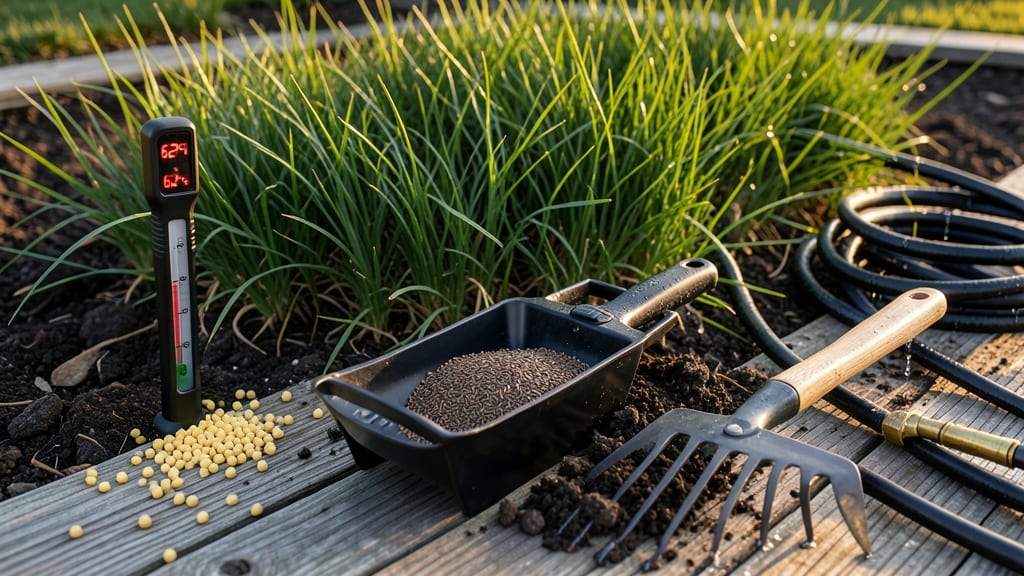
Planting grass seed in Kansas spring means timing it right—soil temps between 50°F and 65°F and after the last frost, or you risk weak germination or wasted seed.
Picture this: you’ve spent hours spreading seed, only to watch it bake in the sun or freeze under a late frost. That’s why knowing your exact USDA Zone 5b-7a planting window is the difference between a lush lawn and a patchy disappointment.
Kansas’ spring weather swings from icy mornings to scorching afternoons, and grass seed needs steady moisture and warmth to sprout. Too early, and frost zaps your progress; too late, and summer heat dries out the soil before roots take hold.
Below, I’ll break down the ideal March-April planting window, how to prep your soil for success, and the one trick that keeps weeds from stealing your lawn’s spotlight.
Kansas spring planting timeline: exact soil temperatures & frost-free dates
Planting grass seed in Kansas requires precision—getting the timing wrong can mean wasted seed, weak germination, or even total failure.
The key lies in understanding soil temperatures (not just air temps) and your USDA hardiness zone, which can vary dramatically from eastern Kansas (Zone 6a) to western Kansas (Zone 7a).
Most cool-season grasses like tall fescue and Kentucky bluegrass need soil temps between 50°F and 65°F to sprout reliably.
While the average last frost date in Kansas hovers around April 15, your exact window depends on elevation and microclimates. For example, Wichita (Zone 7a) can plant 2-3 weeks earlier than Topeka (Zone 6a).
Always check the National Weather Service or Kansas State University Extension for your county's 3-year frost averages—2024 may bring earlier or later frosts than usual.
| Kansas Region | USDA Zone | Ideal Planting Window | Soil Temp Threshold | Avg Last Frost | 2024 Risk Factor |
|---|---|---|---|---|---|
| Eastern KS (Topeka, Lawrence) | 6a (-5°F to -10°F) | Late March–April 15 | 50°F–58°F | April 15 (±5 days) | Moderate (clay soils retain cold) |
| Central KS (Salina, Manhattan) | 6b (-5°F to 0°F) | Early April–May 1 | 55°F–62°F | April 5 (±7 days) | Low (warmer microclimates) |
| Western KS (Wichita, Dodge City) | 7a (0°F to 5°F) | March 15–April 1 | 58°F–65°F | March 25 (±5 days) | High (dry winds delay frost) |
| Southeast KS (Pittsburg, Joplin) | 6b (-5°F to 0°F) | Late March–April 10 | 52°F–60°F | April 10 (±4 days) | Moderate (humidity affects temps) |
To pinpoint your exact planting window, start by checking your USDA hardiness zone using the Kansas State University Extension map. Then, use a soil thermometer ($15 at garden centers) to confirm temps—surface temps can be 10°F warmer than 2 inches deep, where seeds actually germinate.
Aim for 55°F at 2-inch depth for most grass varieties; cool-season grasses like tall fescue tolerate slightly cooler soils (50°F), while warm-season grasses (like Bermuda) need 65°F+.
Historical frost data shows Kansas can have late frosts into May—especially in elevated areas like Cherokee County. For example, Pittsburg has seen frost as late as May 10 in 2020, while Hays typically warms up faster.
If you plant too early and hit a late frost, your seedlings will brown and die within days. Use row covers or straw mulch if you're pushing the limits of your zone.
For 2024 specifically, monitor the NOAA Climate Prediction Center for El Niño/La Niña patterns
How to prepare Kansas soil for grass seed planting (step-by-step)
Before planting grass seed in Kansas, I always start with a soil test—this tells me exactly what my lawn needs. Kansas soils often have a pH between 5.5-7.0, but grass thrives best at 6.0-7.5.
If your test shows lower pH, I add pelletized lime 2-3 months before planting to adjust it gradually. For higher pH, sulfur or peat moss works wonders. Don't skip this step—poor pH means poor germination!
Next, I tackle weed control because weeds compete fiercely with young grass seedlings. I use a non-selective herbicide like glyphosate on stubborn weeds 2 weeks before planting, then switch to pre-emergent herbicide after seeding to prevent new weeds.
For organic gardeners, I recommend vinegar spray or corn gluten meal—both work well when applied correctly.
Traditional vs. No-Till Methods for Kansas Clay Soils
- Pros: Breaks up clay compaction, mixes in organic matter deeply
- Cons: Disrupts soil microbes, can bring up weed seeds
- Pros: Preserves soil structure, reduces erosion risk
- Cons: Requires pre-emergent herbicides, may need manual weed removal
*Best for Kansas clay: Light tilling (2-3 inches) or no-till with cover crops like clover
For tilling, I use a rototiller set to 2-3 inches deep—this is perfect for breaking up Kansas' dense clay without going too deep. If I'm using the no-till method, I focus on adding a 2-inch layer of compost or well-rotted manure instead.
Both methods work, but I've found that no-till with compost gives me the best long-term soil health while reducing erosion.
After tilling or amending, I rake the soil smooth to create a fine seedbed. I aim for a firm but crumbly texture—this helps seeds make good contact with the soil.
For clay-heavy areas, I mix in sand or perlite to improve drainage. Pro tip: Walk on the soil after raking—if it springs back, it's ready for seeding!
Finally, I level the area using a lawn roller or by hand. Grass seed needs to be planted in a flat, even surface to ensure uniform germination. I always water the soil thoroughly 24 hours before planting to help the seeds establish faster once they're down.
This step is crucial—dry soil can cause seeds to dry out before they even sprout.
For Kansas gardeners, remember: soil prep takes time, but it's the foundation of a healthy lawn. Whether you choose traditional tilling or no-till methods, focus on pH balance, weed control, and proper drainage.
Your grass will thank you with thick, vibrant growth all season long! 🌱