
Plants
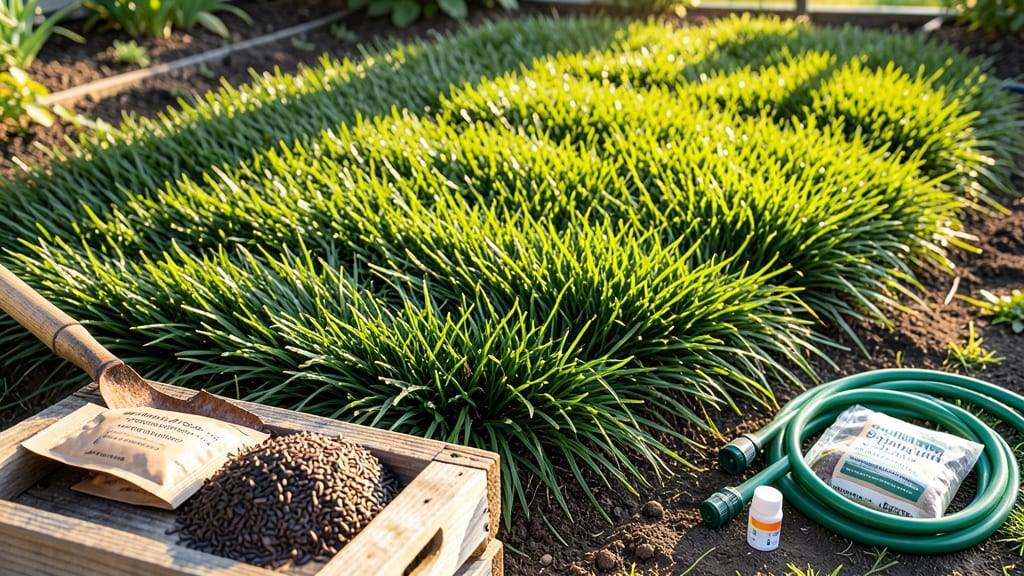
Planting Bermuda grass seed in Arkansas demands precise timing to outrun the state’s brutal summer heat and ensure strong root growth before the real challenges begin.
You’ve got about a 6-week window each year where the soil warms enough for germination, but miss it by even a few days, and your seed could bake in the sun or get smothered by weeds.
Arkansas’s 7a-8b climate means late April to early June is your best bet—after the last frost but before the mercury climbs past 85°F.
Why does this matter? Bermuda grass is a high-maintenance grass that thrives on heat but chokes if planted too early.
The key is getting the seed in the ground when soil temperatures hit 65°F+, which typically aligns with late spring’s fast root growth phase—before the summer drought sets in.
Below, I’ll break down the exact planting schedule by region, how to prep your soil for fast germination, and the watering tricks that keep your new lawn from drying out before it takes hold.
Optimal planting windows for Bermuda grass seed in Arkansas (late spring heat tolerance guide)
Arkansas’s late spring heat and variable rainfall demand precise timing when planting Bermuda grass seed. The ideal window spans late April to early June, aligning with soil temperatures of 65°F+ and avoiding early-season frost risks.
This heat-tolerant grass thrives when established before summer’s peak intensity, but timing mistakes can lead to poor germination or heat stress.
Bermuda grass seeds require consistent warmth to sprout, making April–June the sweet spot for Arkansas’s USDA zones 7a–8b. North Arkansas’s cooler microclimates may benefit from late April plantings, while the Delta region can start as early as mid-April.
Missing this window risks seed dormancy or fungal growth from prolonged moisture.
Here’s a region-specific breakdown of optimal planting windows, soil temperature thresholds, and heat tolerance factors to ensure your Bermuda grass takes root before summer’s relentless sun:
For North Arkansas, aim for late April when daytime highs consistently hit 70°F+. This timing ensures seeds germinate before summer’s peak heat, which can stress young seedlings. Use a soil thermometer to confirm 65°F+ depths of 2–4 inches—this is non-negotiable for Bermuda grass.
In Central Arkansas, the mid-April to late May window offers the best balance. The region’s moderate humidity and warmer soils accelerate germination to 5–10 days, but avoid planting after early June—seeds may dry out before sprouting. Mulch lightly with straw to retain moisture without smothering seeds.
The Delta region’s earlier window (early April) capitalizes on its warmer microclimate, but watch for drought conditions. Bermuda grass is drought-tolerant once established, but seeds need consistent moisture for the first 2–3 weeks. Irrigate early morning to minimize evaporation and fungal risks.
If you miss spring, a fall backup window of late August–early September works for all regions. Soil temps must stay above 70°F, and seeds should sprout before the first frost (mid-November in most zones). This method avoids summer’s intense heat but requires vigilant weed control.
Pro tip: Test soil moisture daily during germination. Bermuda grass seeds need constant contact with damp soil—never let the top inch dry out. Use a sprinkler on a gentle setting to avoid displacing seeds.
Once established, Bermuda grass handles Arkansas’s 100°F+ summers like a champ, but getting it there starts with perfect timing. Plant in the optimal window, and you’ll enjoy a lush, heat-resistant lawn all season long.
How to prepare your Arkansas lawn for Bermuda grass seed (soil, sun, and timing checklist)
Before you even think about scattering Bermuda grass seed across your Arkansas lawn, proper prep work is non-negotiable. This grass demands perfect conditions—too much shade, the wrong soil pH, or inconsistent moisture, and your seed will fail to germinate.
I’ve learned the hard way that rushing this step means weeks of wasted effort and money. Let’s fix that by tackling three critical areas: soil health, sunlight exposure, and timing for irrigation.
First, focus on your soil pH. Bermuda grass thrives when the pH hovers between 6.0 and 7.0.
Test your soil with a kit from your local garden center—if it’s off, amend it with lime (to raise pH) or sulfur (to lower pH) at least 4-6 weeks before planting. This gives the soil time to adjust and prevents shock to your new seeds.
Don’t skip this step—even a slight pH imbalance can stunt root growth by up to 30%.
Next, assess your lawn’s sunlight exposure. Bermuda grass is a full-sun lover, requiring at least 6-8 hours of direct sunlight daily. Walk your yard at different times of day to map out sun patterns.
If you spot areas with less than 4 hours of sun, consider planting shade-tolerant alternatives there—Bermuda grass will yellow and thin out, leaving bare patches that weeds love to invade.
Now, let’s talk timing for irrigation. The 7-14 day germination window is when your seeds are most vulnerable to drying out. Before planting, water your lawn deeply for 3-4 days to saturate the soil.
Then, set up a light sprinkler system or schedule your irrigation to deliver ¼ inch of water twice daily—once in the early morning (5-7 AM) and again in the late afternoon (4-6 PM). This mimics natural rainfall and keeps the soil consistently moist without drowning the seeds.
🌱 Bermuda Grass Prep Checklist
- ☑️ Test soil pH (aim for 6.0-7.0)
- ☑️ Amend soil with lime/sulfur if needed (4-6 weeks before planting)
- ☑️ Clear shade obstacles (prune trees, remove structures blocking sun)
- ☑️ Water deeply for 3-4 days before planting
- ☑️ Set up irrigation for twice-daily watering (¼ inch each session)
- ☑️ Rake soil to create a fine, seed-friendly texture (no clumps!)
Don’t overlook the importance of seed-to-soil contact. After amending your soil and setting up irrigation, rake the area lightly with a bowl-shaped rake to create a smooth, fine texture. This ensures seeds make direct contact with the soil, which is crucial for consistent germination.
Avoid tilling too deeply—Bermuda grass seeds are tiny and only need to be ¼ inch below the surface.
Finally, time your planting to align with Arkansas’s late spring heat tolerance window. Aim to plant between late April and early June when soil temperatures consistently stay above 65°F. This gives your grass 6-8 weeks of warm weather to establish roots before summer’s intense heat arrives.
If you miss this window, consider a fall planting in late August, but be prepared to protect young seedlings from early frosts.
With these steps, your Bermuda grass will have the perfect foundation to thrive in Arkansas’s climate. Stay consistent with watering and avoid walking on the new lawn until the grass reaches 3-4 inches tall—this protects those delicate roots and ensures a lush, durable lawn all summer long. 🌿