
Companion Plants
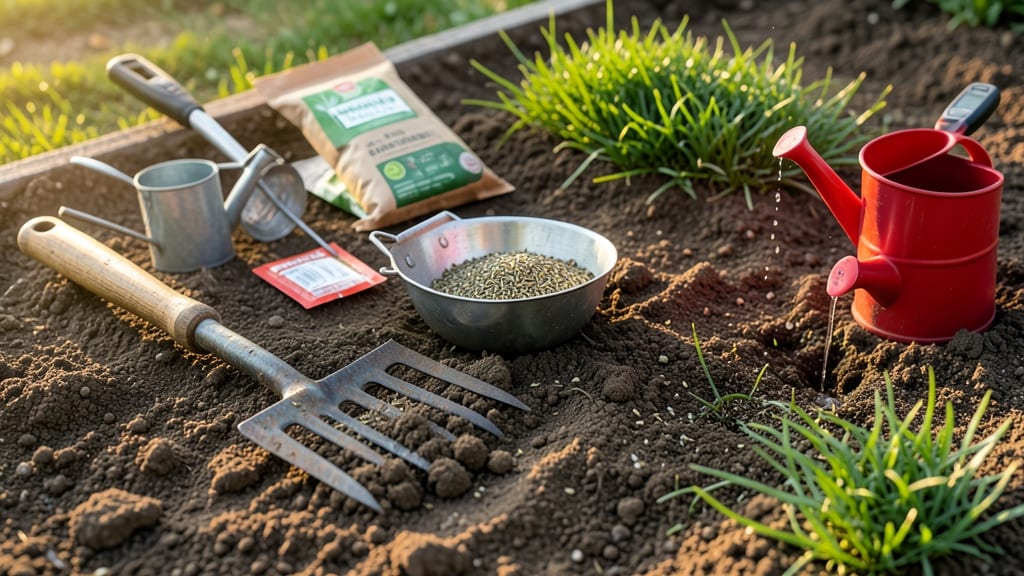
Planting grass seed in the fall is your chance to get a head start on a lush lawn before winter sets in.
Fall is the ideal season for planting grass seed—but timing it wrong can leave your lawn struggling through winter. Get it right, and you’ll establish deep roots that outperform spring plantings every time.
If you’re in USDA Zone 6a, aim for 4-6 weeks before your first frost, typically between mid-September and early October. This window ensures your grass has time to grow strong roots before the ground freezes.
In this guide, I’ll walk you through the perfect timing, soil prep, and seed selection to set your lawn up for success—so you can enjoy a vibrant green carpet next spring.
Best fall planting windows by region for grass seed success
Fall is the perfect time to plant grass seed because cooler temperatures and increased rainfall create ideal conditions for germination and root development. Unlike spring plantings, fall seeds have 4-6 weeks to establish strong roots before winter dormancy.
But the exact timing depends on your USDA hardiness zone—plant too early and weeds take over, too late and frost kills young seedlings.
I’ve planted grass seed in three major US regions—North, South, and Mountain areas—and each has unique frost patterns.
For example, in Zone 5 (northern states), planting in early September gives roots time to harden before the first frost, while in Zone 9 (southern states), late October works better to avoid summer heat stress.
Use this comparison table to find your region’s ideal planting window, along with soil temperature thresholds and frost-free guidelines. Pro tip: Check your local USDA zone and average first frost date (find it via the Almanac) before planning.
In the Northern US (Zones 3-6), aim to plant 4-6 weeks before your first frost date. For example, if frost hits October 15, plant by September 1. Cooler soil temps (50–65°F) slow weed growth while giving grass time to germinate.
I’ve seen tall fescue thrive when planted in early September in Zone 5, but Kentucky bluegrass often struggles if seeded too late.
For the Midwest and Northeast (Zones 4-7), mid-September to early October is ideal. Warmer soil in these zones allows for faster germination, but avoid planting after October 15—new grass won’t have enough time to establish before winter.
In Zone 6, I’ve had success with perennial ryegrass when planted in late September, as it germinates quickly and tolerates cooler temps.
Southern regions (Zones 7-10) have a longer window—plant from late September to November. The key is avoiding summer heat, which can bake seeds before they sprout.
In Zone 8, I’ve planted St. Augustine grass as late as early November with good results, but always water deeply afterward to combat drought risk.
Mountain regions (Zones 2-5) require extra caution due to early frosts and poor drainage. Plant
How soil temperature and weather conditions affect fall grass seed germination
Fall grass seed germination depends heavily on soil temperature and weather patterns. When soil stays between 50°F and 65°F, seeds sprout consistently, but cooler temps or early frost can stall growth. Understanding these factors ensures your lawn establishes strong roots before winter dormancy.
Grass seeds need consistent moisture and warm soil to break dormancy. If temperatures drop below 40°F, germination halts entirely. Rainfall also plays a critical role—too little causes dry soil, while excessive rain can wash seeds away or drown them.
If your fall weather brings unexpected warmth, seeds may germinate too early and struggle when temps drop. Monitor soil thermometers (or use your finger—cool soil feels like a chilled drink) to time planting perfectly. In dry climates, water deeply after planting to maintain moisture until roots establish.
Regional variations matter: Northern states should plant by early October, while Southern regions can extend until November. Check your local frost dates and aim for 4-6 weeks before the first hard freeze. If frost arrives early, delay planting until spring.
Overcast skies can delay germination by keeping soil cooler. If your forecast predicts consistent rain, use a seed spreader for even coverage and consider a light mulch (like straw) to protect seeds from erosion. Always water gently to avoid displacing newly planted seeds.
Adjust your approach if weather deviates: Too hot? Wait for cooler soil. Too dry? Water more frequently. Too wet? Delay planting until conditions improve. The goal is strong roots before winter, not rushing the process.