
Planting
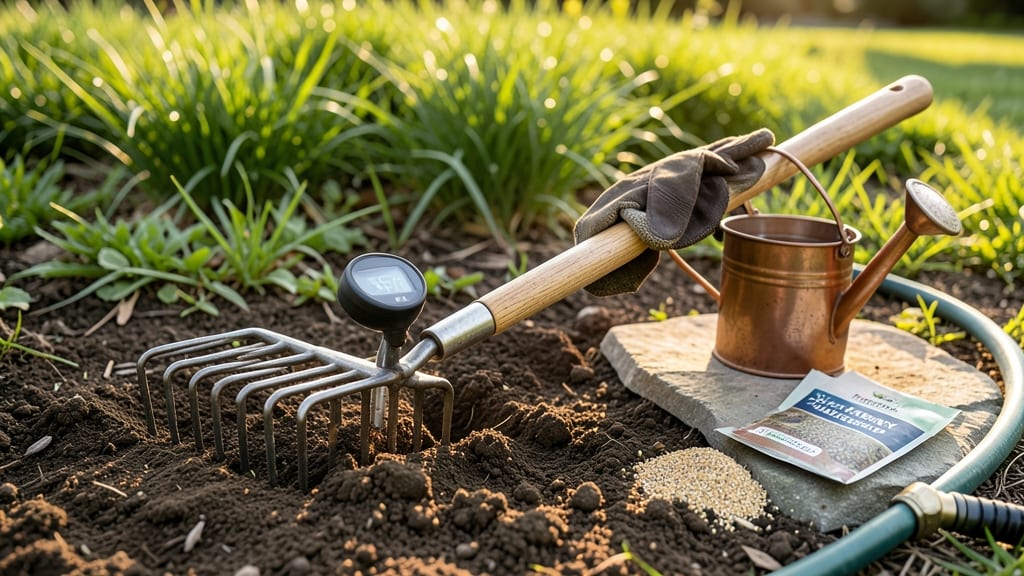
You can plant grass seed in Massachusetts when soil temperatures hit 50°F (10°C) and stay above freezing—typically mid-March to April for spring or September to October for fall.
Timing your grass seed planting in Massachusetts can mean the difference between a lush, green lawn and a patchy, slow-growing disappointment—especially with the state’s unpredictable spring frosts. One late freeze and your newly sown seeds could be wiped out before they even take root.
Most of the state falls in USDA zones 5b-6b, where frost lingers until mid-April. That means waiting until after the last frost is critical—rushing it risks your 🌱 grass seed sitting on cold, damp soil and rotting before it germinates.
Below, I’ll break down the exact frost-free windows for each zone, how to prep your soil for success, and the best grass seed types to outlast Massachusetts’ hot summers and cold winters.
Massachusetts grass seed planting deadlines by hardiness zone (2024 guide)
Getting your grass seed in the ground at the right time is crucial in Massachusetts, where spring frosts can linger well into April and fall freezes arrive early.
The state spans USDA Zones 5a-7a, meaning your planting window varies depending on whether you're in western MA (warmer) or coastal areas (cooler). Missing these deadlines can lead to slow germination, weak root systems, or even seed washout from heavy rains.
For consistent results, I recommend planting either in early spring (March-April) or early fall (September-October). Spring planting gives seeds time to establish before summer heat, while fall planting avoids drought stress and takes advantage of cooler temperatures.
However, local microclimates—like urban heat islands or protected valleys—can shift these windows by 2-3 weeks in either direction.
To find your exact last frost date, check the Massachusetts Climate Normals from NOAA or use your local Cooperative Extension office. For example, Boston (Zone 6b) typically sees its last frost around April 15, while Springfield (Zone 6a) may experience late frosts until May 1.
Always plant 4-6 weeks before your expected last frost to account for temperature fluctuations.
Comparison Table: Massachusetts Grass Seed Planting Deadlines by Zone
If you're planting in early spring, aim for a soil temperature of 50°F (10°C) or higher to
How to prepare your Massachusetts lawn for grass seed success
Massachusetts’ clay-heavy soils and variable rainfall make proper lawn prep essential for grass seed success. If you skip this step, your new seeds will struggle to break through compacted soil or compete with weeds.
Start by testing your soil’s pH level—ideal for grass is between 6.0 and 7.0. Most MA soils lean acidic, so you may need to add lime to adjust it.
Next, clear the area of debris and weeds. Use a lawn rake or dethatching tool to remove dead grass and thatch layers thicker than ½ inch.
This prevents smothering your new seedlings. For stubborn weeds, apply a pre-emergent herbicide 2 weeks before seeding to block weed growth without harming grass.
⚠️ callout warning ⚠️
⚠️ MA Soil Warning
Clay soils in Massachusetts can become waterlogged after heavy rain, suffocating new grass roots. Before planting, till the top 4-6 inches of soil to improve drainage. Mix in 2-3 inches of compost or sand to break up clay particles and create a looser, seed-friendly bed.
Pro Tip: Test soil moisture by squeezing a handful—if it forms a tight ball, it’s too compact. Aim for a crumbly texture like a damp sponge.
After loosening the soil, level the surface with a garden rake to create a smooth, even seedbed. Fill low spots with a mix of topsoil and compost to prevent water pooling.
For large areas, consider renting a landscaping rake to save time and effort. Once leveled, lightly drag the area again to create micro-grooves for seeds to nestle into.
Moisture management is critical in Massachusetts’ unpredictable spring rains. Water the prepared soil 1-2 days before seeding to ensure it’s damp but not soggy. After sowing, maintain consistent moisture by watering lightly twice daily for the first week.
Use a sprinkler with fine mist to avoid displacing seeds. Aim for ½ inch of water per week once germination begins.
Finally, apply a starter fertilizer with a high-phosphorus content (e.g., 5-10-5) to promote root development. Spread it evenly over the seeded area, then lightly rake it into the top ¼ inch of soil.
Avoid over-fertilizing, as excess nutrients can burn tender seedlings. Mulch with straw (not wood chips) to retain moisture and protect seeds from drying out.
With these steps, your Massachusetts lawn will have the perfect foundation for dense, healthy grass—ready to outlast the state’s hot summers and cold winters. 🌱