
Plants
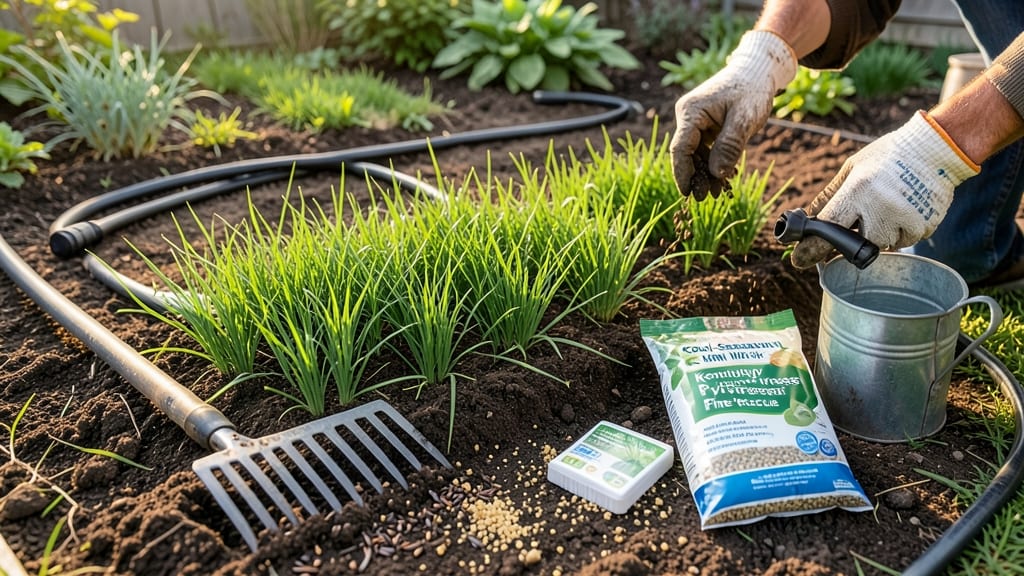
Planting grass seed in Massachusetts spring means timing it right—between late April and early June when soil warms to 50°F and stays frost-free.
Timing is everything when planting grass seed in Massachusetts—plant too early and frost will kill your efforts, too late and summer heat will stress young shoots. Get it right, and you’ll have a lush lawn by fall.
Most of the state’s 5b-6b zones see last frosts around mid-April, but soil temperature is the real signal. Wait until the ground stays above 40°F at night—that’s when seeds sprout reliably.
Below, I’ll break down the exact frost-free timeline by region, how to check soil warmth, and the 3-step prep that keeps your new grass thriving through summer.
Massachusetts spring planting timeline: frost-free dates & soil temperature guidelines
Getting your grass seed in the ground at the right time is critical for Massachusetts gardeners. The state’s USDA zones 5b-6b mean frost can linger until mid-April, while soil temperatures must reach 50-55°F for optimal germination.
Plant too early, and frost will kill tender sprouts; too late, and summer heat stresses young roots.
I’ve broken down the critical planting windows by region—Boston, Worcester, and Springfield—plus soil temperature guidelines to help you time your project perfectly. Pro tip: Always verify local conditions using the USDA Plant Hardiness Zone Map and your local weather forecast before seeding.
🌱 Key Rule: Plant 4-6 weeks before your area’s average last frost date when soil temps consistently stay between 50-65°F during the day and above 40°F at night. This ensures your grass establishes strong roots before summer heat arrives.
For Boston gardeners, aim to plant between March 20 and April 10 when soil temperatures consistently reach 55-65°F during the day.
The USDA Zone 6b classification means frost can still bite, so always check your local 10-day forecast before seeding. Kentucky bluegrass and fine fescue are top choices for this region due to their cold tolerance and quick establishment.
In Worcester (Zone 6a), the window shifts slightly later—March 25 to April 15—with slightly cooler soil requirements (50-60°F). Tall fescue and perennial ryegrass thrive here, offering better drought resistance once established.
I recommend testing soil moisture daily during germination; young grass needs consistent moisture to avoid stress.
Southern Massachusetts, including Springfield (Zone 5b), has the latest frost dates (April 25), so plant between April 1 and April 20.
Soil temperatures here can lag, so wait until they hit 48-55°F during the day. Fine fescue and creeping red fescue are ideal for their shade tolerance and slow growth, which reduces mowing frequency.
To verify your local conditions, use the USDA Plant Hardiness Zone Map (planthardiness.ars.usda.gov) and check the National Weather Service for your nearest city. I also recommend using a soil thermometer ($10 at garden centers) to confirm temperatures before planting—this small investment saves hours of guesswork.
One common mistake I see is planting too early in hopes of beating the frost. If soil temps dip below 40°F at night, germination slows or stops entirely. Conversely, planting too late (after May 1) risks summer heat drying out young grass.
For best results, seed in early spring when days are cool but warming, and nights stay above freezing.
Pro Tip: If you’re unsure about your exact frost date, err on the side of planting earlier rather than later. Cool-season grasses like Kentucky bluegrass can handle light frosts once established, but tender sprouts won
Step-by-step pre-planting prep for Massachusetts lawns (soil test to seed selection)
Before you even think about scattering grass seed across your Massachusetts lawn, proper pre-planting prep is non-negotiable. Skipping this step means poor germination, weak grass, or even total failure.
Think of it like laying a foundation for a house—if it’s weak, everything above it suffers. Cool-season grasses like Kentucky bluegrass and fine fescue thrive in our climate, but they need the right conditions to take root.
Start by testing your soil pH—the ideal range for Massachusetts lawns is 6.0 to 7.0. Most garden centers sell affordable test kits, or you can send a sample to a local cooperative extension office for a detailed analysis.
If your soil is too acidic or alkaline, you’ll need to adjust it before planting. For example, sulfur lowers pH, while lime raises it, and both take time to work.
🌱 Step List: Pre-Planting Prep for Massachusetts Lawns
- 🔍 Test Soil pH – Use a test kit to check if your soil is between 6.0 and 7.0. Adjust with lime (to raise pH) or sulfur (to lower pH) if needed, allowing 2-3 months for changes to take effect.
- 🌿 Choose the Right Grass Seed – Opt for cool-season grasses like Kentucky bluegrass (durable, spreads well) or fine fescue (shade-tolerant, low-maintenance). Mixes like tall fescue blends offer drought resistance.
- 🌱 Loosen Compacted Soil – Use a rake or aerator to break up 1-2 inches of topsoil, improving seed-to-soil contact. Focus on areas with foot traffic or heavy clay.
- 💧 Amend Soil Fertility – Spread 2-3 inches of compost or a balanced starter fertilizer (10-10-10) over the area. Work it into the topsoil with a rake for even distribution.
- 🌞 Level the Ground – Fill low spots with topsoil and rake the entire area smooth. Bumps create uneven growth, while depressions trap water and invite weeds.
- 🛠️ Remove Debris – Clear rocks, roots, and weeds. Even small weeds can steal nutrients from your new grass. A stiff rake or dethatching tool works best.
Once your soil is prepped, selecting the right grass seed variety is key. Massachusetts’ climate—with its hot summers and cold winters—demands resilient choices. Kentucky bluegrass is a top pick for its durability and ability to recover from damage, while fine fescue excels in shadier spots and requires less water.
For high-traffic areas, consider a tall fescue blend, which handles foot traffic better than other types.
Don’t overlook the power of compost or starter fertilizer. These add essential nutrients to depleted soil, giving your grass a strong start. Work in 2-3 inches of compost or apply a high-nitrogen starter fertilizer (like 10-10-10) before seeding.
This isn’t just about feeding the grass—it’s about creating an environment where roots can grow deep and strong from day one.
Finally, take time to level and smooth the soil. Uneven surfaces lead to thin spots where water pools or soil erodes. After raking, walk over the area to check for dips or mounds—your future lawn’s uniformity depends on this step.
Once everything’s prepped, you’re ready to seed with confidence, knowing your grass has the best possible foundation to thrive.
With the right prep, your Massachusetts lawn will germinate faster, resist weeds better, and stand up to our unpredictable weather. Now, all that’s left is to choose your seed and get planting—your lush, green lawn starts here! 🌱