
Companion Plants
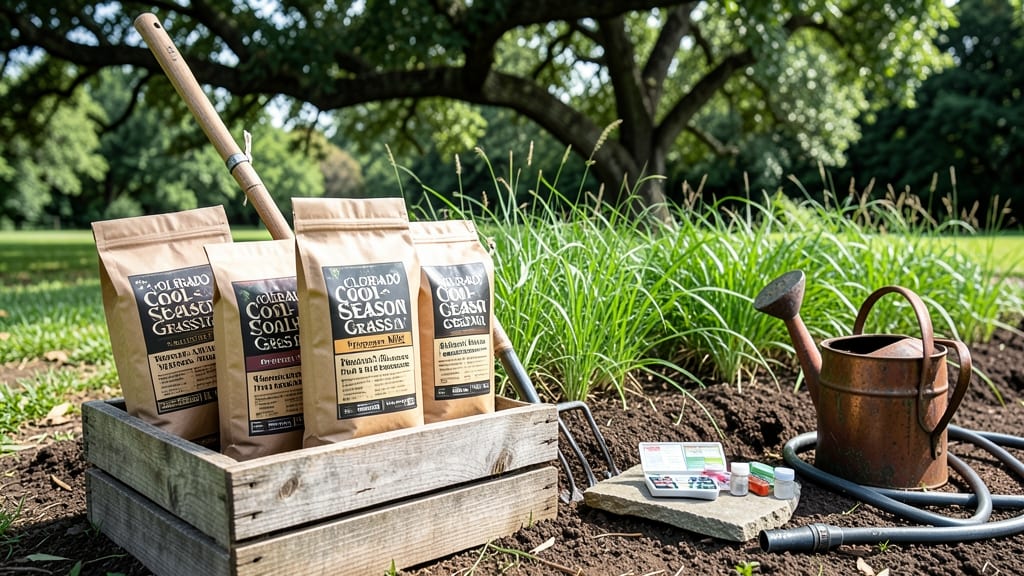
Planting grass seed in Colorado depends on timing your sowing to avoid frost damage and summer heat stress — aim for late August through early October or early April to mid-May for the best results.
Colorado’s diverse climate—from high-altitude mountains to arid plains—means your grass seed planting window depends on elevation. Get it wrong, and you’ll face frost damage or stunted growth. Here’s the exact timing for each zone to ensure a lush, weed-free lawn.
Cool-season grasses like Kentucky bluegrass and fescue thrive when soil temperatures hover between 50°F and 65°F, which aligns perfectly with Colorado’s fall and spring windows.
In Denver’s Zone 5b, for example, early April or late September is ideal, while higher-elevation areas like Colorado Springs (Zone 6a) can extend into October.
Below, I’ll break down the best planting months by region, how to prep your soil for germination, and why avoiding summer heat is critical for seed survival. Plus, I’ll share local resources to track frost dates and adjust your schedule.
Colorado’s frost-free planting zones: when to plant grass seed by elevation
Colorado’s dramatic elevation shifts—from the Front Range’s 5,000 feet to mountain regions above 10,000 feet—create wildly different frost-free windows for grass seed. Cool-season grasses like Kentucky bluegrass and tall fescue thrive when planted at the right time, but timing wrong means weak germination or winter kill.
Let’s break down the exact windows by elevation to maximize your lawn’s success.
For Front Range cities (Denver, Boulder, Fort Collins) at 5,000–6,500 feet, your frost-free window spans April 15–May 15 in spring and August 20–October 10 in fall. These zones have 120–140 frost-free days, giving grasses enough time to establish roots before winter.
Higher elevations (7,000+ feet) shrink this window significantly, while lower desert areas (like Pueblo at 4,700 feet) can extend it slightly.
| Elevation Zone | Last Frost Date | First Frost Date | Ideal Planting Window | Soil Temp Threshold (°F) | Grass Variety Notes |
|---|---|---|---|---|---|
| Front Range (5,000–6,500 ft) | April 15–May 15 | October 10–20 | April 20–May 10 / Sept 1–Oct 15 | 50–65°F | Kentucky bluegrass, fine fescue |
| Foothills (6,500–8,000 ft) | May 1–15 | September 20–October 5 | May 10–June 1 / Aug 20–Sept 15 | 45–60°F | Tall fescue, hard fescue |
| Mountains (8,000–10,000 ft) | May 15–June 1 | September 10–15 | May 20–June 10 / Aug 1–Aug 20 | 40–55°F | Alpine bluegrass, creeping red fescue |
| High Desert (4,000–5,000 ft) | April 1–10 | October 25–Nov 5 | April 10–May 5 / Sept 15–Oct 10 | 55–70°F | Buffalo grass, drought-resistant blends |
Spring planting in Colorado hinges on soil temperature, not just calendar dates. Use a soil thermometer to confirm temperatures hit 50°F–65°F—below 45°F, seeds may rot.
In Denver’s Zone 5b, this typically aligns with late April to early May, but high-elevation areas like Estes Park (7,500 ft) may need to wait until mid-May.
Fall planting offers a longer window but requires 6–8 weeks of warm soil before the first frost. For Colorado Springs (Zone 6a), aim for late August to mid-October, while mountain towns like Breckenridge (9,000 ft) should plant by early August to avoid early snows.
Seedlings need time to develop 3–4 inches of roots before winter dormancy.
Cool-season grasses like Kentucky bluegrass germinate best in 55°F–65°F soil, while tall fescue tolerates slightly cooler 45°F–55°F conditions. If your area experiences late spring frosts (common in the San Juan Mountains), opt for hard fescue or creeping red fescue, which handle colder soils better.
Pro tip: Test your soil’s moisture before planting—Colorado’s clay-heavy soils in the Front Range can bake dry by summer. Water deeply 2–3 days before sowing to create the ideal moist, loose seedbed. In drought-prone areas like the Western Slope, consider drought-resistant buffalo grass blends for easier establishment.
For high-altitude gardens (above 8,000 feet), extend your window with frost blankets or row covers to protect young seedlings. These tools add 5–10°F protection, letting you plant 2–3 weeks earlier in spring or later in fall. Just remove covers during the day to avoid overheating.
Timing isn’t just about frost—it’s also about weed competition. Planting too late in fall leaves seeds vulnerable to cheatgrass and crabgrass, while spring planting after May 15 risks summer drought stress. Stick to the recommended windows above, and your grass will outcompete weeds naturally.
Need a local reference? Check the Colorado State University Extension’s frost date maps for your specific county, as microclimates (like urban heat islands
How to adjust planting timing for Colorado’s microclimates and soil types
Colorado’s urban heat islands and clay-heavy soils can throw off your grass seed planting schedule by weeks. In Denver, pavement and buildings trap heat, delaying spring frost dates by 10-14 days compared to rural areas.
Meanwhile, clay soils in the San Luis Valley stay cold longer, pushing your planting window later into spring or earlier into fall.
For drought-prone areas like the Western Slope, aim to plant 4-6 weeks before the first hard frost to give seeds time to germinate. In high-elevation zones (7,000+ ft), use frost blankets to extend the window by 2-3 weeks in early spring or late fall.
These adjustments ensure your grass establishes roots before winter dormancy sets in.
- 🌡️ Urban Areas: Plant 2 weeks earlier in spring (mid-April) due to heat retention.
- 🏔️ High Elevation (7,000+ ft): Extend fall window to mid-October with frost blankets.
- 💧 Clay Soils: Amend with compost to improve drainage before planting.
- ☀️ Drought Zones: Water deeply 2x/week for 4 weeks post-planting.
- 🌿 Shady Spots: Choose fine fescue and plant in late August.
If your soil tests clay-heavy, mix in 2-3 inches of compost or sand before sowing. This improves drainage and helps seeds stay moist during Colorado’s dry spells.
For sandy soils common in the Eastern Plains, add peat moss to retain moisture and prevent seeds from drying out too quickly.
Mulch isn’t just for flowers—it’s a game-changer for grass seed. Apply a ¼-inch layer of straw mulch after planting to protect seeds from wind and erosion.
In high-elevation zones, use lightweight frost blankets (like row covers) to shield new seedlings from late spring frosts or early fall chills. Remove them once soil temps stay above 50°F for 5 consecutive days.
Timing also depends on your grass seed variety. Tall fescue, a drought-tolerant choice, can handle late summer planting (July-August) in cooler mountain regions, while Kentucky bluegrass thrives with fall planting (September-October) in Front Range cities.
Always check the seed packet for optimal soil temperature ranges—most cool-season grasses need 50-65°F for germination.
Pro tip: Use a soil thermometer to monitor temps before planting. If your soil runs hotter than 70°F, wait until evening to sow seeds to avoid heat stress. In drought-prone areas, water deeply twice a week for the first month to encourage root growth.
With these adjustments, your Colorado lawn will establish strong roots regardless of microclimate challenges. 🌱