
Pests and Diseases
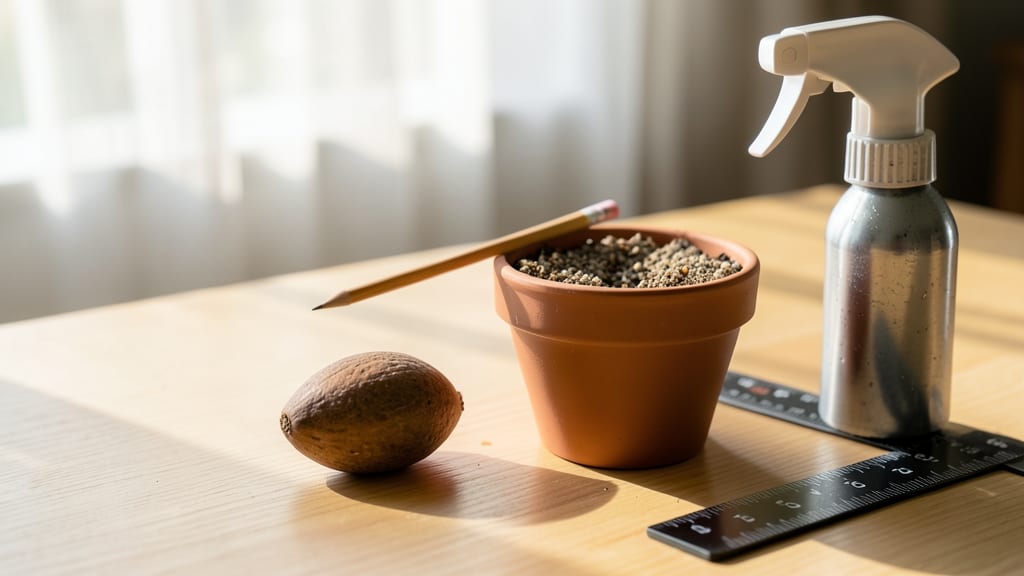
The pointed side of a mango seed must face down to sprout 🥭 — a detail that makes the difference between a thriving seedling and a wasted effort.
Planting a mango seed might seem simple, but getting the orientation right is the secret to successful germination—yet most beginners get it wrong, wasting weeks waiting for sprouts that never come.
Here’s the key: the seed’s natural shape and texture reveal which end belongs underground. A slightly tapered or curved side? That’s your root. A smoother, flatter end? That’s where the shoot will emerge.
Below, I’ll walk you through how to spot the right side, avoid the three biggest mistakes that kill germination, and set up your seed for the best chance at growing a healthy mango tree.
How to identify the correct side of a mango seed for planting
Planting a mango seed with the right orientation is crucial for successful germination. Unlike many seeds, mango seeds don’t have obvious indicators like a tiny hole or notch, but they do have subtle clues.
The pointed end must face downward to encourage root growth, while the flatter side should remain upward. Ignoring this can lead to weeks of waiting for sprouts that never appear—or worse, moldy seeds that rot in the soil.
First, examine your mango seed closely. Most seeds have a slightly pointed tip on one end and a broader, flatter side on the other. This isn’t always obvious, so I recommend holding the seed between your fingers to feel the difference in texture.
The pointed end is often smoother and more tapered, while the flat side may feel slightly rounded or curved—this is where the shoot will emerge.
The hilum, or the small scar where the seed was attached to the fruit, is another key indicator. This scar is usually located on the flatter side of the seed and marks the top.
Think of it like the "belly button" of the seed—it tells you which way is up. If you can’t see it clearly, gently rub your thumb along the seed’s edges until you feel a slight ridge or indentation near the flat side.
Here’s a quick trick: Place the seed on a flat surface and observe its natural curvature. Most mango seeds have a slight concave shape on the flat side, almost like a shallow bowl.
This concave area is where the shoot will push out, so it should face upward. The pointed end, which is more convex, will naturally angle downward when placed correctly.
🌱
If you’re still unsure, try the "float test." Place the seed in a bowl of water—most mango seeds will naturally float with the pointed end downward and the flat side upward. This mimics how the seed would orient itself in moist soil.
Once you’ve confirmed the correct orientation, plant the seed with the pointed end facing down, about 1 inch deep in warm, well-draining soil.
Another helpful tip is to compare your seed to a reference image or diagram. Many gardening resources online show mango seeds with clear labels for the root and shoot sides.
If you’re planting multiple seeds, label them with a toothpick or marker to avoid confusion. Consistency is key—even a slight misalignment can delay germination or prevent it altogether.
Once you’ve planted the seed correctly, maintain a warm environment (around 70-85°F) and keep the soil consistently moist but not soggy. Germination can take anywhere from 2 to 4 weeks, so patience is essential.
If you notice mold or foul odors, your seed may be rotting due to overwatering or incorrect planting depth.
🌿
Remember, every mango seed is unique, so don’t stress if yours doesn’t fit the "typical" description perfectly. The key is to trust your observations and act confidently. With the right orientation, your mango seed will have the best chance to sprout into a thriving young tree.
Once it does, you’ll be rewarded with lush green leaves and, eventually, the promise of sweet, tropical fruit.
✂️
Common mistakes that kill mango seed germination (and how to fix them)
Even after you’ve correctly identified the pointed end of your mango seed, germination can still fail due to common oversights. The three biggest killers of mango seed sprouts are planting depth, moisture imbalance, and environmental stress.
Each mistake creates conditions where the seed either suffocates or dries out before breaking dormancy.
Most gardeners bury mango seeds too deep, thinking "out of sight, out of mind" will protect them. But seeds need air and light to trigger germination—burying them more than 1 inch deep suffocates the emerging root.
I’ve seen seeds planted 2 inches down take months to sprout, if they ever do, because the root struggles to push through compacted soil.
Another frequent error is assuming "more water is better." While mango seeds need consistent moisture, overwatering causes rot before the sprout even appears. The soil should stay damp but never soggy—think of a wrung-out sponge.
Too much water cuts off oxygen, leading to mold or a seed that simply rots in place.
🌱Pro Tip: Cover your pot with plastic wrap to retain humidity without drowning the seed. Poke a few tiny holes for airflow, and remove the wrap once sprouts appear.
🚨
The pointed end must face downward—this is the root side. If planted upside-down, the seed will either fail to sprout or grow a twisted, weak root system. Fix it: Dig up the seed, reorient it correctly, and replant at 1-inch depth with the flat side up.
Visual Clue: The pointed end often has a slight curve or the hilum scar (attachment point) near the base. This is your root indicator.
Temperature is another silent killer. Mango seeds need soil that stays between 70°F and 90°F to germinate. If your home is cooler, place the pot near a heat mat or in a warm spot like above the fridge.
I once left a seedling in a 65°F room—it took 3 months to sprout, and the seedling was leggy and weak.
Slow germination isn’t always a failure—it could signal dormancy or poor conditions. If your seed hasn’t sprouted in 4-6 weeks, check for these red flags: mold (fix with fungicide), shriveled seed (too dry), or no cracks (still dormant).
Soak the seed in warm water for 24 hours to break dormancy if needed.
Finally, patience is key. Mango seeds can take 2-4 weeks to sprout, but rushing the process by overwatering or moving the pot too soon will backfire. Once you see a tiny shoot, reduce watering slightly and move the seedling to bright, indirect light to strengthen its stem before transplanting.