
Lawn
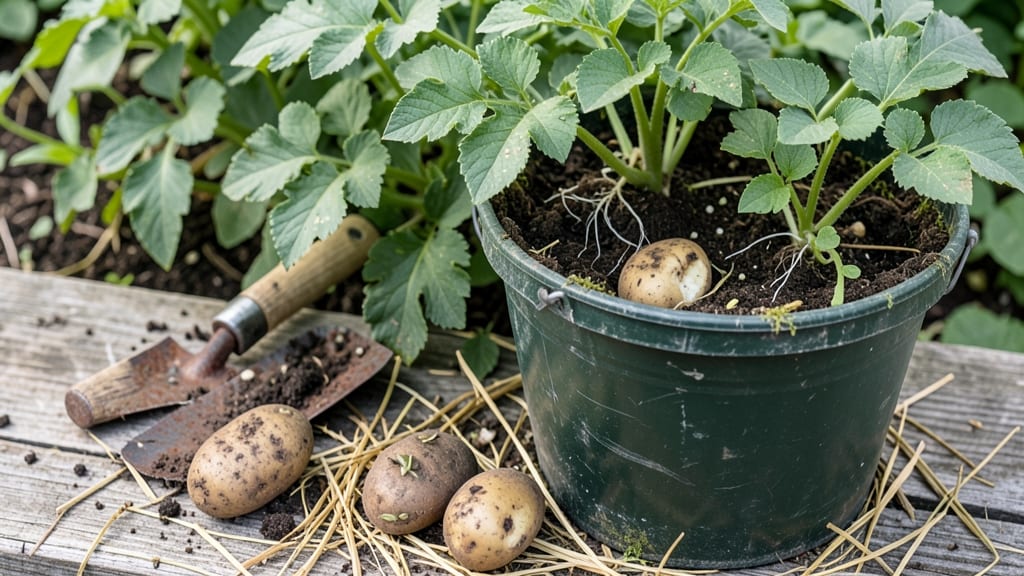
Planting how many seed potatoes per 5-gallon bucket is the sweet spot for a bountiful harvest—but get the spacing wrong, and your 🥔 yield will shrink faster than a wilting plant in the afternoon sun.
I’ve seen gardeners pack buckets like sardines, only to watch their tubers fight for space and end up stunted. The secret? Treating each seed potato like a tiny king or queen of its own domain—3 to 4 inches of elbow room per plant.
That’s how you turn a plastic bucket into a high-rise apartment complex for potatoes.
Why does this matter? Because overcrowding isn’t just a space issue—it’s a growth thief. Too many potatoes competing for nutrients and water means fewer, smaller tubers.
But here’s the good news: with the right math, you can fit enough potatoes in a 5-gallon bucket to feed a small family for weeks.
In this guide, I’ll walk you through the exact number of seed potatoes for your bucket, how to adjust for different varieties, and the 3 biggest mistakes that sabotage yields—so you can dig up a harvest that puts your grocery store spuds to shame.
The ideal seed potato count for a 5-Gallon bucket (with spacing science)
A 5-gallon bucket is one of the best containers for growing potatoes, but packing too many seed potatoes inside will rob your plants of nutrients and space.
The golden ratio for a standard 5-gallon bucket is 2–4 seed potatoes, but this depends on the variety, tuber size, and how deep your bucket is. Overcrowding leads to stunted growth, while underplanting wastes space. Let’s crunch the numbers to get your math right.
The one seed per 3–4 inches rule is non-negotiable in container gardening. Potatoes need room to spread their roots and produce tubers. In a 5-gallon bucket, that translates to roughly 12–16 inches of diameter space for the roots to expand.
If you plant more than 4 seed potatoes, you’ll crowd the roots, leading to smaller, misshapen potatoes and increased disease risk.
Potatoes grow tubers along their stems, and each plant needs at least 6–8 inches of soil depth to develop properly. A 5-gallon bucket typically offers 12–14 inches of depth, which is perfect for 2–3 seed potatoes when planted correctly.However, if you’re growing early-maturing varieties like ‘Red Norland’ or ‘Yukon Gold,’ you can squeeze in 3–4 seed potatoes by spacing them carefully.
Potato varieties with large tubers or deep root systems, like ‘Russet’ or ‘Idaho,’ thrive best with 2 seed potatoes per bucket. These varieties need more space to develop their signature large, elongated shapes. On the other hand, early-maturing varieties like ‘Red Pontiac’ or ‘Finnish Early’ can handle 3–4 seed potatoes because they mature faster and don’t require as much space.
If you’re growing high-yielding varieties, like ‘Kennebec’ or ‘Atlantic,’ stick to 2 seed potatoes per bucket unless you’re willing to sacrifice tuber size for quantity. These potatoes produce more tubers but need ample space to avoid competition.
For smaller, round varieties like ‘Fingerling’ potatoes, you can experiment with 3–4 seed potatoes, but monitor growth closely to avoid overcrowding.
The depth of your bucket also plays a critical role. A standard 5-gallon bucket provides enough depth for most varieties, but if you’re using a shallow container (like a 3-gallon pot), reduce your seed potato count to 1–2 per container.
Shallow roots mean less room for tuber development, so prioritize depth over quantity. Always aim for at least 12 inches of soil depth to ensure healthy tuber formation.
Proper spacing between seed potatoes is just as important as the number you plant. Arrange them in a circle or square pattern around the edges of the bucket, about 3–4 inches apart.
This creates a balanced root system and prevents competition for nutrients. As the plants grow, gently hill up soil around the stems to encourage more tuber formation deeper in the bucket.
One of the biggest mistakes I see is planting seed potatoes too close together in hopes of a bigger harvest. This leads to yellowing leaves, stunted growth, and small, deformed potatoes.
Remember: quality over quantity. A well-spaced bucket with 2–3 healthy seed potatoes will yield larger, more flavorful potatoes than a crowded bucket with 5–6 struggling plants.
For best results, chit your seed potatoes before planting—this means exposing
How to adjust seed potato quantity for different potato types (early vs. late varieties)
Not every potato variety plays well in the same 5-gallon bucket. Early varieties like ‘Yukon Gold’ or ‘Red Pontiac’ grow faster and can handle 3–4 seed potatoes per container, while late varieties like ‘Russet’ or ‘Kennebec’ need fewer—just 2 or fewer—to avoid competition.
The difference? Growth speed and tuber expansion rates. Early potatoes mature in 60–90 days, leaving less time for overcrowding to become an issue.
Late varieties, however, take 90–120 days to mature, giving them more time to outcompete neighbors for nutrients and space. If you’re using a shallow bucket (less than 12 inches deep), reduce seed potatoes by 1–2 to prevent tubers from crowding the bottom.
High-yield strains like ‘Adirondack Blue’ also demand more space—even if they’re early varieties.
Here’s the key rule: 1 seed potato per 3–4 inches of bucket diameter. For a 5-gallon bucket (about 12 inches wide), this translates to 3–4 seeds max for early varieties, but only 2 seeds max for late varieties.
Ignore this, and you’ll end up with small, misshapen potatoes instead of a bountiful harvest.
For shallow buckets (under 12 inches deep), cut seed potatoes by 1–2. For example, plant 2 ‘Russet’ potatoes instead of 3 in a 10-inch-deep container. If you’re using chitted potatoes (sprouted), reduce by 1 more seed since they grow faster.
Pro tip: Use smaller seed potatoes (1–2 oz each) to maximize your bucket’s potential—