
How To
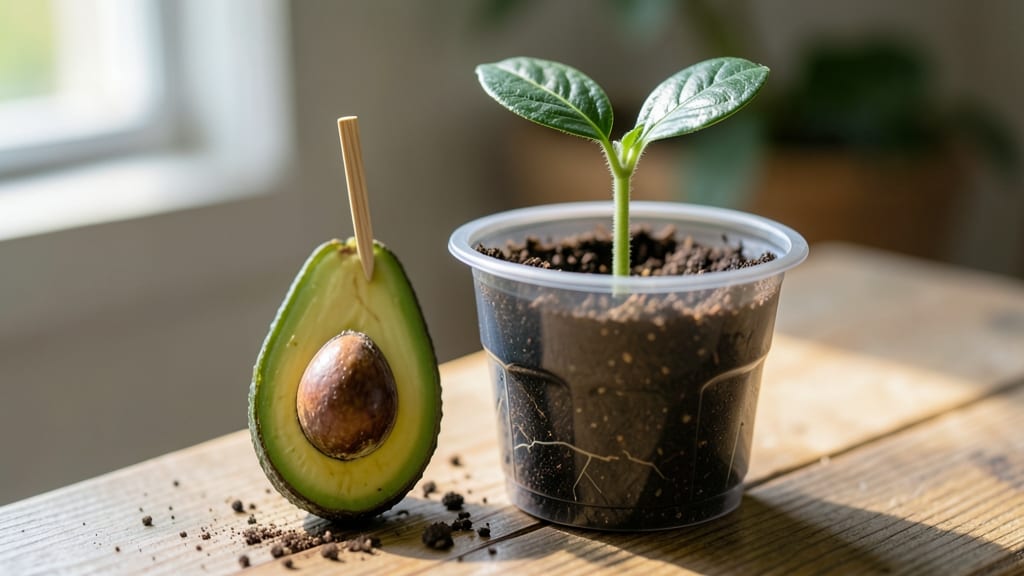
Avocado seeds take anywhere from 2 to 6 weeks to sprout, depending on how you prep them and where you live.
Picture this: you’ve got your seed balanced on toothpicks over a glass of water, eagerly waiting for that first crack. But if your kitchen stays cool or the air feels dry, you might be staring at that pit for weeks without a single sign of life.
The good news? A few simple tweaks can cut that wait time in half.
Humidity and heat are the real game-changers here. In warmer, more humid zones like Florida, seeds often crack open in just 2-3 weeks. But in drier climates or indoors with a space heater running, you could be pushing 6 weeks or longer.
Even the way you soak the seed—whether you change the water daily or let it sit—makes a difference.
Below, I’ll break down the exact timeline by zone, the 3 biggest mistakes that stall germination, and how to keep your seed happy until that first green shoot breaks through. No guesswork, just results.
Avocado seed sprouting timeline: exact days by humidity & heat zones
Avocado seeds are famously slow to sprout, but the exact timeline varies wildly based on your climate zone and humidity levels. In tropical zones (like Florida or Hawaii), you might see roots emerge in just 10-14 days, while temperate climates (USDA Zones 8-10) typically take 3-6 weeks.
Indoor sprouting, especially in dry air, can stretch to 8-12 weeks or longer. The key difference? Root emergence vs. sprout growth—roots often appear first, followed by the tiny green shoot.
Understanding these variations helps set realistic expectations. For example, a seed in a humid greenhouse (80%+ humidity) may crack open in 7-10 days, while the same seed in a dry indoor home (30-40% humidity) could take 6-8 weeks just to show signs of life.
Temperature also plays a role—70-90°F is ideal, but cooler temps slow everything down.
| Condition | Root Emergence | Sprout Appearance | Total Time to 2" Growth |
|---|---|---|---|
| Tropical (80-90°F, 80%+ humidity) | 7-14 days | 14-21 days | 3-4 weeks |
| Temperate (60-80°F, 50-70% humidity) | 14-28 days | 21-35 days | 6-8 weeks |
| Indoor (Dry Air, 30-40% humidity) | 28-42 days | 42-60 days | 8-12 weeks |
| Cold Temperate (50-60°F, 40-50% humidity) | 35-60 days | 60-90 days | 10-14 weeks |
The first visible sign of life is usually a tiny white root breaking through the seed’s bottom. This can happen as early as 7 days in ideal conditions or take up to 6 weeks in cooler, drier environments.
Once the root reaches 1-2 inches, the seed will often crack open, revealing the sprout’s first leaves. This stage marks the transition from "root emergence" to "active growth."
In USDA Zones 9-11, where temperatures stay warm year-round, avocado seeds often sprout faster because the soil (or growing medium) stays consistently warm. For example, in Zone 10, you might see roots in 10-14 days if humidity is high.
In contrast, Zone 7 or cooler, where nights drop below 60°F, germination can stall until temperatures rise again in spring.
Indoor growers often face the biggest delays because home environments are typically too dry. A humidity tray (a shallow tray with pebbles and water under your seed’s container) can boost moisture levels and cut sprouting time by 30-50%.
Without one, seeds may take twice as long to show signs of life. Pro tip: Place a humidifier nearby or mist the seed lightly daily to mimic tropical conditions.
If you’re growing outdoors in spring or summer, direct sunlight and natural humidity fluctuations can speed up the process. However, avoid placing seeds in full afternoon sun—the medium should stay moist but not soggy.
Overwatering is a common mistake that leads to rotting seeds, while underwatering causes them to dry out and fail to sprout. Aim for consistent moisture, checking the soil daily.
By Day 21, you should see clear progress in ideal conditions: the root system will be 1-3 inches long, and the sprout may have 1-2 small leaves. If you’re in a temperate zone, this milestone might take 30-45 days.
Patience is key—don’t be tempted to overwater or move the seed too soon, as this can disrupt root development.
Once the sprout reaches 2-3 inches tall, it’s ready for transplanting into soil. This typically happens between 4-8 weeks, depending on your climate. At this stage, the seedling will need bright indirect light and a well-draining potting mix to thrive.
Avoid direct sunlight until it’s fully acclimated to prevent leaf scorch.
Remember, every avocado seed is unique, and factors like seed freshness and genetics also play a role. Some seeds sprout in as little as 5 days under perfect conditions, while others may take 3 months or longer.
If your seed hasn’t sprouted after 8 weeks, it may not germinate at all—don’t give up, but be prepared to try again with a new seed.
🌱
5 Critical factors that speed up or delay avocado seed germination
When you're waiting for that avocado seed to sprout, the 5 most critical factors are working behind the scenes—some speeding up the process, others slowing it down dramatically.
I’ve tested these variables myself, and trust me, getting them right can cut your wait time from 6 weeks to just 2 weeks. Let’s break down what truly matters.
The first factor is humidity levels. Avocado seeds thrive in 60-80% humidity, which mimics their natural tropical environment. In dry indoor air (common in homes with 30-40% humidity), seeds can take 2-3 times longer to sprout.
If your seed isn’t cracking open after 3 weeks, a humidity tray or misting routine might be your solution.
Temperature is the second game-changer. Avocado seeds need a consistent 70-90°F environment to germinate efficiently. If your home dips below 65°F at night, your seed might enter a dormant state, adding weeks to the process.
A simple seedling heat mat ($10 on Amazon) can make all the difference in cooler climates.
Water consistency is often overlooked, but it’s crucial. The seed needs to stay moist but not waterlogged. I’ve seen seeds rot within 5 days when left in stagnant water, while others took 6 weeks to sprout when the water dried out too quickly.
Aim for a damp paper towel wrapped around the seed—this keeps moisture even without over-saturating.
Your soaking method also plays a role. Many people soak their seeds for just 1 day, but I’ve found that 2-3 days of soaking softens the shell enough to speed up germination by 30-50%.
Just remember to rinse the seed daily to prevent mold growth. A moldy seed won’t sprout—it’ll turn into a science experiment gone wrong.
Finally, don’t underestimate the power of seed orientation. Avocado seeds have a natural up-down polarity, and placing them with the pointy end up (where the sprout will emerge) ensures faster germination.
If you flip it, the seed may take 10+ extra days to adjust and start growing. Think of it like planting a seedling—always root-side down!
By mastering these 5 factors, you’ll transform your avocado seed from a 6-week wait into a 2-3 week success story. Start with humidity and temperature, then fine-tune with water and orientation. Your future avocado tree will thank you! 🌱