
Companion Plants
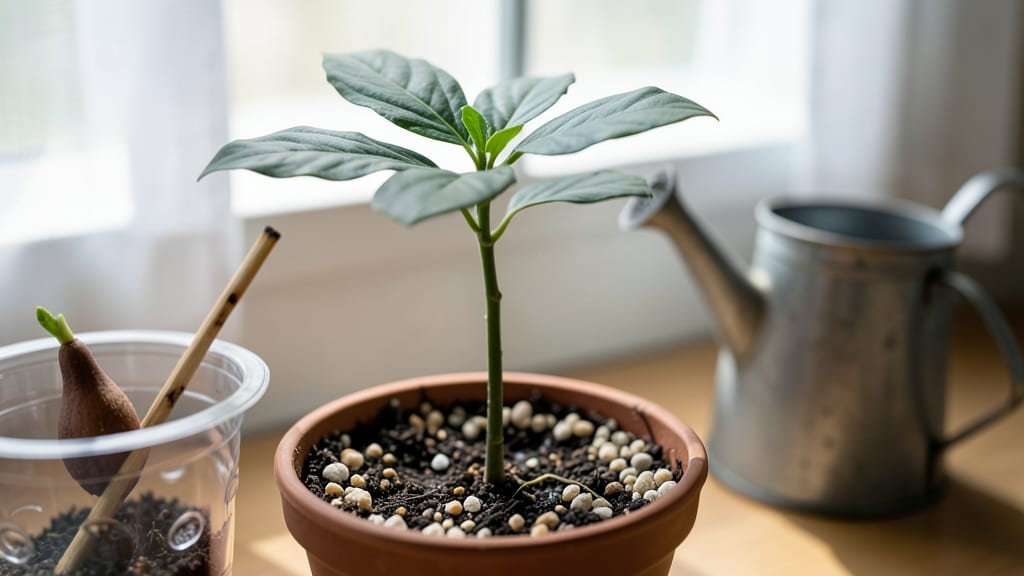
Planting your avocado seed in soil at the right time determines whether you end up with a thriving 🥑 sapling or a sad, rotting seed.
You’ve watched that seed sprout in water, roots dangling like tiny fishing lines, and now you’re ready to move it to soil—but when exactly is the perfect moment? The answer depends on your climate, soil temperature, and whether you’re planting indoors or outdoors.
Too early, and your seedling will struggle with cold soil; too late, and it might miss the growing season entirely. Below, I break down the ideal planting window by zone, soil prep tips, and how to tell when your seedling is ready for the big move.
Skip the guesswork and learn how to give your avocado tree the best possible start—so you’re not left with a pot of dirt and disappointment.
Best time to plant avocado seeds in soil by USDA climate Zones
Avocado seeds thrive when planted in soil during the right window—too early risks frost damage, while waiting too long slows germination. Your USDA climate zone determines the perfect timing, with soil temperature and frost dates as key factors.
In Zones 7-11, I’ll break down the best months to plant, regional adjustments, and how to avoid common pitfalls like rot or stunted growth.
For example, in Zone 10 (like Southern California or Florida), you can plant year-round, but the optimal window is spring through early fall when humidity is lower. Meanwhile, Zone 7 gardeners (think Atlanta or Raleigh) must wait until after the last frost—typically mid-April to May—to ensure survival.
Let’s dive into the specifics by zone.
🌱
In Zone 7, where frost is a real threat, I recommend planting after April 15—this gives your seedling time to establish roots before temperatures drop again. Use a heat mat if your soil stays cool longer, as avocado seeds need consistent warmth to germinate.
For Zone 8, March is ideal, but avoid planting in July or August when humidity spikes and fungal diseases like root rot become more likely.
For Zones 9-11, the rules relax significantly. In Zone 9, I’ve had the most success planting in spring (March–April) or fall (September–October) to avoid the extreme heat of summer. Meanwhile, Zone 10 and 11 gardeners can plant anytime, but I still recommend spring or fall for faster germination.
In California’s coastal regions, for example, summer planting can lead to heat stress if seedlings aren’t acclimated gradually.
Regional adjustments matter! For instance, Florida’s Zone 9 has higher humidity than Arizona’s Zone 9, so I suggest planting in dry season months (November–April) to reduce disease risk.
Similarly, in Southern California’s Zone 10, coastal areas (like Santa Barbara) can plant earlier than inland desert regions (like Palm Springs), where summer heat arrives sooner.
Pro tip: Use a soil thermometer to confirm your soil’s temperature before planting. Avocado seeds won’t germinate well below 60°F (15°C), and waiting for 70°F+ (21°C) speeds up the process. If your soil is too cold, start your seed in water indoors and transplant once temperatures rise.
How to prepare your avocado seed for soil planting (step-by-step)
Before planting your avocado seed in soil, proper preparation is key to avoiding mold or root rot. Many gardeners skip this step and end up with weak seedlings.
I’ve learned the hard way—rushing the process leads to failed germination. Let’s break it down so your seed gets the best start possible.
Start by letting your avocado seed dry for 2-3 days after removing it from the pit. This prevents moisture buildup, which can cause fungal growth. Place it in a warm, dry spot away from direct sunlight.
Once dry, you’ll notice the seed’s outer skin tightens slightly—a good sign it’s ready for the next steps.
Step-by-Step Preparation for Soil Planting
- Step 1: Soak the seed in warm water for 8-12 hours to soften the shell. Change the water halfway to prevent mold.
- Step 2: Insert 4 toothpicks into the seed’s sides, about 1/3 from the top, to suspend it over a glass of water.
- Step 3: Place the glass in bright, indirect light (e.g., east-facing window) and keep the water level consistent.
- Step 4: Wait for a 2-inch root and 2-4 true leaves before transplanting—this takes 4-8 weeks.
- Step 5: Choose a 6-inch pot with drainage holes and fill it with a mix of potting soil and perlite (50/50 ratio).
- Step 6: Plant the seed 1 inch deep, firm the soil gently, and water lightly to settle it.
Selecting the right container size is crucial. A 6-inch pot gives your seedling enough room to grow without overwhelming it. Use a mix of potting soil and perlite (or sand) to ensure well-draining soil. Avocado seedlings hate soggy roots, so avoid heavy garden soil.
After planting, place your pot in a warm spot with bright, indirect light for the first week. This helps the seedling adjust to soil without shock. Water gently every 3-5 days, keeping the soil moist but not waterlogged. Overwatering is the #1 killer of young avocado seedlings.
Monitor your seedling closely for signs of yellowing leaves or stunted growth, which could indicate overwatering or poor drainage. If you notice these issues, adjust your watering schedule or repot into a mix with better aeration.
With the right prep, your avocado seed will thrive and grow into a healthy sapling!