
Planting
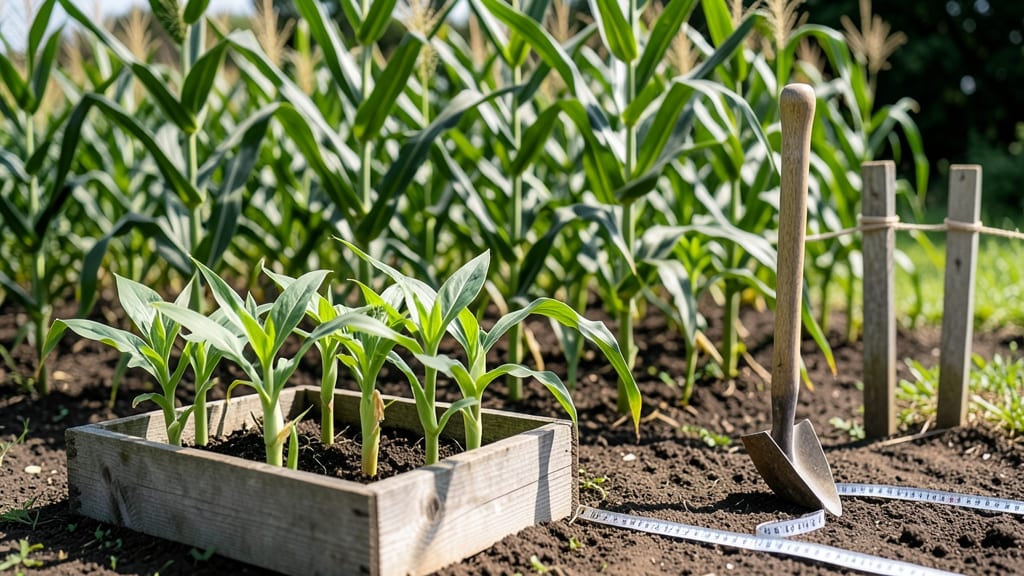
Spacing field corn seeds correctly is the foundation of a high-yield harvest — and getting it wrong can leave you with stunted plants or wasted space.
Picture this: you’ve spent weeks preparing your soil, selected the best seeds, and even timed your planting window just right. But if those kernels aren’t spaced properly, you’re fighting an uphill battle from day one.
Too close, and your plants compete for sunlight and nutrients; too far apart, and you’re leaving yield potential on the table.
This guide breaks down the science behind optimal row spacing (15-40 inches), planting depth, and how soil conditions play a role. Whether you’re a backyard gardener or a small-scale farmer, these adjustments can mean the difference between a thriving crop and a disappointing one.
We’ll cover common mistakes, tools to make spacing easier, and how to tweak your approach for different soil types or farming methods. Ready to set your field corn up for success? Let’s dig in.
Optimal field corn seed spacing by row width for high-yield production
Field corn thrives when planted with precision, and row spacing is one of the most critical factors for maximizing yield. Unlike backyard gardens where tight spacing might work, commercial field corn requires strategic spacing to balance sunlight exposure, weed competition, and harvest efficiency.
The wrong spacing can lead to stunted growth, poor ear development, or even complete crop failure.
Most growers focus solely on seed-to-seed distance, but row width plays an equally vital role. Narrow rows (15-25 inches) improve weed suppression and moisture retention, while wider rows (30-40 inches) allow for better equipment access and larger harvesters.
The best choice depends on your soil type, climate, and farming equipment.
Let’s break down the science behind field corn row spacing and how to optimize it for your specific conditions. Whether you're a small-scale farmer or managing large acreage, these data-backed recommendations will help you achieve high-yield production while minimizing wasted resources.
🌽
| Row Width (inches) | Seed Spacing (inches) | Plants/Acre | Sunlight Efficiency | Weed Control | Best For |
|---|---|---|---|---|---|
| 15-20 | 8-10 | 32,000-36,000 | Excellent | Superior | Small farms, organic |
| 25-30 | 10-12 | 24,000-28,000 | Good | Good | Medium farms, conventional |
| 30-36 | 12-14 | 20,000-24,000 | Moderate | Moderate | Large farms, mechanized |
| 36-40 | 14-16 | 18,000-20,000 | Lower | Poor | Dry climates, low rainfall |
For small-scale farms or organic growers, narrower rows (15-20 inches) are ideal. This spacing maximizes weed suppression and moisture retention, which is crucial for young seedlings. Studies show that narrow rows reduce weed pressure by up to 40%, leading to healthier plants and higher yields.
However, this spacing requires more precise planting equipment or hand-planting.
In conventional farming, wider rows (30-36 inches) are standard because they accommodate larger harvesters and reduce soil compaction. This spacing also allows for better air circulation, which can reduce fungal diseases like corn blight.
However, wider rows mean more weed competition, so pre-emergent herbicides or cover crops are often necessary.
If you're in a dry climate, wider rows (36-40 inches) can help conserve soil moisture by reducing plant density. This is especially useful in regions with low rainfall, where every drop of water matters. However, be prepared for lower yields per acre unless you use irrigation.
💧
Another key factor is soil type. In clay-heavy soils, wider rows (30+ inches) prevent compaction and improve drainage. Meanwhile, sandy soils benefit from narrower rows (20-25 inches) to retain moisture. Always test your soil before planting to determine the best spacing for your conditions.
Pro tip: Use a planting board or laser-guided planter to maintain consistent row spacing. Even a slight deviation can lead to uneven growth and reduced yields. For precision farming, consider using GPS-guided equipment to ensure every row is planted exactly where it should be.
Finally, don’t forget to adjust your seed spacing based on the corn variety. Dwarf varieties can handle closer spacing (8-10 inches), while tall, hybrid varieties need more room (12-16 inches) to avoid shading each other. Always check the seed packet or breeder’s recommendations for the best results.
✂️
Perfect planting depth and seed placement for field corn germination success
Field corn seeds need precise planting depth to germinate consistently. Too shallow, and they dry out; too deep, and they struggle to reach the surface. The ideal planting depth for field corn is 1 to 2.5 inches, depending on soil conditions.
This range ensures moisture retention while allowing seedlings to break through the soil easily. I’ve found that soil temperature plays a critical role—warmer soils (above 60°F) allow for shallower planting, while cooler soils require deeper placement.
Seed size also influences depth. Larger seeds like dent corn varieties can handle slightly deeper planting (up to 2.5 inches), while smaller seeds benefit from shallower depths (1-1.5 inches). Always adjust based on your local climate and soil moisture levels.
For example, in drier regions, I plant slightly deeper to conserve moisture, while in humid areas, I stick to the shallower end of the range to prevent rot.
⚠️ Common Mistakes That Kill Germination
- Planting too deep (below 2.5 inches) causes weak seedlings that may never emerge.
- Inconsistent depth across rows leads to uneven growth and poor yield.
- Skipping soil prep—compacted or rocky soil prevents roots from penetrating.
- Overwatering immediately after planting can wash seeds away or cause rot.
Pro Tip: Use a seed depth gauge or mark your planter for consistency.
Soil moisture is another critical factor. If the soil is dry, planting deeper helps seeds access moisture, but if it’s already saturated, shallower planting reduces the risk of seed rot. I recommend checking soil moisture a day before planting—if the top inch feels dry, water lightly before seeding.
For no-till farming, I often use a planting board to ensure even depth without disturbing the soil structure.
Seed placement within the row matters just as much as depth. Space seeds 8 to 12 inches apart to allow room for root expansion and airflow. Crowded seeds compete for nutrients and increase disease risk.
In my experience, thinning seedlings after germination (when they reach 2-3 inches tall) improves yield by reducing competition. Always thin in the morning to give plants time to recover before evening moisture sets in.
Temperature fluctuations can also impact germination. If nighttime temperatures drop below 50°F, seeds may not sprout until conditions warm up. To mitigate this, I use row covers or plant slightly deeper to insulate seeds.
Conversely, in hot climates, shallow planting helps seeds stay cool. Monitoring your local frost-free dates ensures you plant at the optimal time for consistent germination.
Finally, consider your equipment. Planters with adjustable depth settings make it easier to maintain consistency, especially on larger farms. For smaller plots, a simple hand-held seed depth gauge works perfectly.
Always calibrate your equipment before planting to avoid depth variations. With the right depth and spacing, you’ll see uniform germination and healthier stands, setting the stage for a bountiful harvest.