
Planting
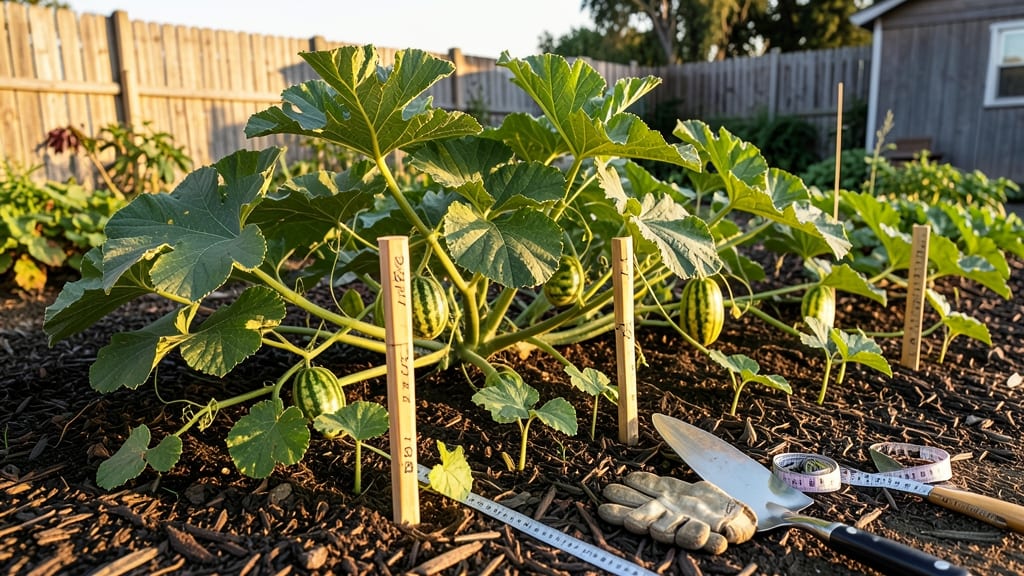
Proper watermelon seed spacing is the secret to juicy vines and monster-sized fruit. 🌱 I learned the hard way when my first crop produced tiny, bitter melons because the plants crowded each other—now I share the exact spacing that turns a patch into a harvest.
The magic numbers are 3-4 feet between plants and 6-8 feet between rows, giving roots room to spread and vines to stretch without fighting for sunlight. Too close, and you’ll get bitter melons or powdery mildew from poor airflow.
Too far, and you waste space that could grow more fruit. With the right spacing, you’ll see vines sprawling 10+ feet in all directions, each plant producing 2-4 melons instead of struggling for resources.
The key is firm soil that holds seedlings steady while allowing roots to dive deep for moisture. Works for both in-ground beds and raised containers—just adjust row spacing if you’re trellising. Let’s get those seeds planted right!
📚 In This Guide
- What you need
- Instructions
- Tips and common mistakes
- Wrapping up and next steps
What you need
- ● Watermelon seeds: Choose disease-resistant varieties (e.g., Sugar Baby, Crimson Sweet). Aim for 2–3 seeds per hill (or 1 seed if transplanting seedlings).
- ● Garden soil: Well-draining, fertile loam (pH 6.0–6.8). Amend with 2–3 inches of compost or aged manure before planting.
- ○ Planting containers (optional): Biodegradable pots or peat pellets for transplanting (if starting indoors).
- ● Row markers or stakes: Wooden dowels, bamboo stakes, or labeled plant markers to maintain 5–6 feet between rows.
- ● Measuring tape or ruler: For precise 2–3 foot spacing between hills (or 12–18 inches for in-row spacing).
- ● Hand trowel or transplanter: To create 1–2 inch deep holes for seeds.
- ○ Mulch (optional): Straw, black plastic, or grass clippings to retain moisture and suppress weeds.
- ● Drip irrigation or watering can: Watermelons need 1–2 inches of water per week; drip systems prevent soil displacement.
- ● Seedling heat mat: For faster germination if planting early in the season.
- ● Fertilizer (balanced 10-10-10 or compost tea): Apply lightly at planting and again when vines start running.
- ● Trellis or netting: For compact varieties (e.g., Sugar Baby) to save space.
- ● Row cover: Frost protection for young seedlings (remove when temps rise above 50°F).
Precision planting for maximum watermelon yield
Here's how to space watermelon seeds for strong vines, fewer diseases, and bigger harvests.
⏰ Step 1: Time Planting for Warm Soil
Watermelons thrive when soil reaches 70-85°F—wait until 2 weeks after last frost when nighttime temperatures stay above 60°F. I test soil warmth by pressing my hand into the ground; if it feels warm like bathwater, it's ready. Planting too early in cold soil stunts root growth and delays fruiting.
Use a soil thermometer for accuracy, especially in cooler climates. The ideal window is mid-to-late spring when vines have 6-8 weeks until summer heat sets in. If you're in a short-season zone, opt for smaller varieties like 'Sugar Baby' that mature in 70 days instead of standard types.
🌱 Step 2: Prepare Beds with Proper Spacing
Watermelons need 3-4 feet between plants and 6-8 feet between rows for full vine spread. I mark planting spots with stakes and string for precision—uneven spacing leads to crowded vines, poor airflow, and powdery mildew. For 4 plants (as promised), arrange them in a square pattern with 4 feet between each plant in all directions.
Loosen soil to 12 inches deep with a broadfork to encourage root penetration. Mix in 2 inches of compost per square foot to provide nutrients without burning tender roots. Avoid fresh manure—it can cause bacterial wilt, a fatal watermelon disease. Work the compost into the top 6 inches of soil only.
☀️ Step 3: Plant Seeds at Correct Depth and Orientation
Sow 2-3 seeds per hill at 1 inch deep—watermelon seeds have a hard outer shell that needs moisture to soften. I plant seeds 1 inch apart in a small circle, then cover lightly with soil. The reason for multiple seeds is that not all will germinate; you'll thin to the strongest seedling later.
Here's where it gets tricky: watermelon seeds have a radicle (root) that grows downward and a hypocotyl (stem) that grows upward. Plant seeds with the pointy end up to ensure proper germination. After planting, water gently with a fine spray nozzle until the soil surface looks slightly damp but not wet—overwatering can wash seeds away.
💧 Step 4: Thin Seedlings for Optimal Growth
When seedlings reach 2 inches tall (about 10-14 days after planting), thin to one strong plant per hill. I use clean scissors to snip unwanted seedlings at soil level—pulling can disturb roots of remaining plants. Keep the strongest seedling, which will have dark green leaves and a thick stem compared to weaker siblings.
After thinning, water deeply at the base to settle the soil around the remaining plant. Avoid wetting leaves to prevent fungal diseases. Mulch with 2 inches of straw around each plant to retain moisture and suppress weeds. The mulch also protects vines from soil-borne diseases when they sprawl later in the season.
✂️ Step 5: Train Vines for Airflow and Sun Exposure
As vines grow, guide them along trellises or raised beds to maximize airflow and sunlight penetration. I use black plastic mulch in hot climates to warm the soil and straw mulch in cooler areas to retain moisture. Watermelons need full sun (6-8 hours daily), so prune nearby plants that cast shade.
Remove sucker vines (small shoots growing from the main stem) to direct energy into fruit production. You'll know a sucker when you see a small vine growing upward between the main stem and leaves. Pinch these off early to prevent competition. By 4-6 weeks after planting, your vines should have 6-8 leaves and be ready for flowering.
Tips & tricks for perfect watermelon plant spacing
A little precision now means fewer headaches later—these tricks will help you grow watermelons that thrive from seed to harvest.
Soil Temperature Secret: The 70-85°F soil temperature range isn't just a guideline—it's when watermelon seeds actually activate their germination enzymes. I test by pressing my hand into the soil; if it feels like bathwater, you're good. In cooler climates, use a soil thermometer to confirm. Planting too early in cold soil forces seeds to work harder, which can lead to weak, stunted vines that never reach their full potential.
Spacing Strategy: The 3-4 feet between plants and 6-8 feet between rows isn't arbitrary—it accounts for watermelon vines that can spread 6-10 feet in all directions. I use wooden stakes and string to mark planting spots before digging. This precision prevents crowding, which causes poor airflow and creates the perfect conditions for powdery mildew. For the 4-plant square pattern, I drive stakes at each corner of my planting area first, then use the string to create perfect diagonal lines for planting.
Seed Orientation Matters: Planting watermelon seeds with the pointy end up ensures proper germination because the radicle (root) grows downward while the hypocotyl (stem) grows upward. I make a small indentation with my finger, place the seed with the point facing up, then cover with just 1 inch of soil. This depth allows moisture to soften the seed's hard shell without burying it too deep, which can prevent sprouting. After planting, I use a fine spray nozzle to water gently until the soil surface looks damp but not wet—this prevents seeds from washing away.
Thinning Technique: When seedlings reach 2 inches tall (about 10-14 days later), I thin to one strong plant per hill using clean scissors rather than pulling. This prevents disturbing the roots of remaining plants. Look for seedlings with dark green leaves and thick stems—they're the ones that will produce the best fruit. After thinning, I water deeply at the base to settle the soil and mulch with 2 inches of straw to retain moisture and prevent weeds. This mulch also protects the vines from soil-borne diseases as they grow.
Pro Tips for Watermelon Seed Spacing
- A little precision now means fewer headaches later—these tricks will help you grow watermelons that thrive from seed to harvest.
- Soil Temperature Secret: The 70-85°F soil temperature range isn't just a guideline—it's when watermelon seeds actually activate their germination enzymes.
- Spacing Strategy: The 3-4 feet between plants and 6-8 feet between rows isn't arbitrary—it accounts for watermelon vines that can spread 6-10 feet in all directions.
Frequently asked questions
Got questions about watermelon seed spacing?
You’re not alone! Here are answers to the most common queries to help you grow a thriving patch with confidence.
What’s the ideal distance between watermelon seeds?
For optimal airflow and space, plant watermelon seeds 12–24 inches apart in rows. If growing in hills, space seeds 3–4 feet apart and keep rows 5–6 feet apart to prevent overcrowding. Smaller varieties can tolerate closer spacing (12 inches), while large varieties need more room (24+ inches).
How soon after planting seeds should I thin them?
Thin seedlings to the correct spacing when they’re 2–3 inches tall (usually 2–3 weeks after germination). Gently snip excess seedlings at the soil line with scissors to avoid disturbing roots. This prevents competition and ensures stronger plants. Pro tip: Thin on a cloudy day to reduce stress on remaining seedlings!
Can I plant watermelon seeds too close if I’m short on space?
While possible, overcrowding leads to poor airflow, disease, and smaller fruits. If space is limited, opt for bush or dwarf varieties (like ‘Sugar Baby’ or ‘Tiny Tim’) and space them 12–18 inches apart. Alternatively, use vertical trellises for vining types to save ground space—just ensure vines have room to sprawl upward.
Why are my watermelon seedlings dying after thinning?
Seedlings may struggle due to root damage, overwatering, or pests. If thinning too late (when roots are deep), handle gently to avoid uprooting. Check for cutworms or slugs—use organic barriers like coffee grounds or diatomaceous earth if needed. Water at the base (not overhead) to prevent fungal issues. Pro tip: Mulch after thinning to retain moisture and deter pests!
Can I replant watermelon seeds if the first batch fails?
Yes! Watermelons have a short lifespan, so replant seeds 2–3 weeks after the last frost (soil temps should be 70°F+). If your first attempt failed due to cold soil, wait until nighttime temps stay above 60°F. Use a black plastic mulch to warm the soil faster. Just avoid replanting too late—vines need 70–90 days to mature!
Wrapping up and next steps
Perfecting your watermelon seed spacing is the secret to a thriving, high-yield harvest—and you’ve got this! 🌱 By following the right techniques, you’ll ensure optimal airflow, fewer diseases, and juicier melons.
Now that you’re armed with the best practices, it’s time to grab those seeds, mark your rows, and get planting! Start small if you’re new, or expand your patch for a bountiful summer feast. Happy growing—your future watermelon smoothies are waiting! 🍉✨