
Propagation
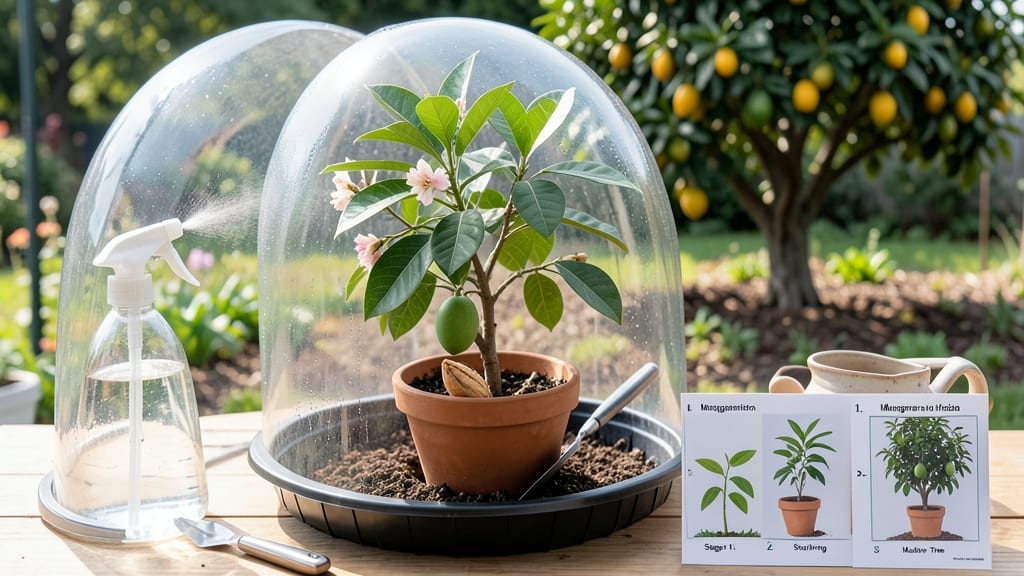
Growing a mango tree from seed is a patient gardener's dream—one that rewards you with bright orange fruit after years of nurturing. 🌱 I started mine from a grocery store seed, and though it took five years to bear its first fruit, the journey was worth every season of waiting.
The real magic happens in the first 6-12 months, when that tiny seedling pushes through soil for the first time, proving that tropical dreams can grow anywhere with the right care.
You'll need sunlight, warmth, and a large container (or garden bed) to mimic the mango's native climate. Most seeds take 4-8 weeks to germinate, and the first year focuses on establishing strong roots—think of it as building the foundation for a house.
The biggest challenge? Slow growth—these trees take 3-5 years to fruit, but with consistent care, you'll see 4-6 foot tall saplings by year three, their glossy leaves signaling progress.
By year five, you might finally taste that first homegrown mango—juicy, sweet, and impossible to resist. The tree will reward you with dozens of fruits once established, though store-bought seeds often produce inconsistent flavors.
That's where the real gardener's joy comes in: experimenting with different varieties and learning which thrives best in your climate.
This journey teaches patience and persistence—qualities every gardener needs. Whether you're in a warm zone or a cooler climate with containers, the process is the same: start small, stay consistent, and let nature do the rest.
The payoff? A tree that grows for decades, feeding your family and inspiring future gardeners with its tropical beauty.
📚 In This Guide
- What you need
- Instructions
- Tips and common mistakes
- Wrapping up and next steps
What you need
- ● Mango seed: 1 fresh, plump seed (preferably from a ripe, organic mango—avoid hybrid varieties like Keitt or Tommy Atkins, as they often don’t produce true fruit).
- ● Potting soil: 1 bag (5–10 lbs) of well-draining, sterile potting mix (look for labels like "seed starting mix" or "cactus/succulent mix").
- ● Small pots or containers: 2–3 (4–6 inches in diameter) with drainage holes. Plastic nursery pots or biodegradable peat pots work great!
- ● Watering can or spray bottle: With a fine mist setting for gentle watering.
- ● Clear plastic bag or humidity dome: To create a mini greenhouse (e.g., a ziplock bag or plastic wrap).
- ● Scissors or pruning shears: For trimming (sterilize with rubbing alcohol).
- ○ Sunlight access: A sunny windowsill (south-facing) or a grow light (optional but helpful).
- ● Fertilizer: A balanced liquid fertilizer (5-5-5 or 10-10-10) for young seedlings.
- ○ Rooting hormone: (Optional) Speeds up germination—use a powder or gel if you’re impatient!
- ● Larger pot (1–2 gallons): For transplanting once the seedling grows (after 6–12 months).
- ● Soil moisture meter: To check if your seedling needs water without overdoing it.
- ● Patience (and a journal!): Track growth, watering, and sunlight notes—your future mango tree will thank you. 📖🌿
Step-by-Step instructions for growing a mango tree from seed
Here’s how to nurture a seed into a thriving mango tree over five years.
🌱 Step 1: Extract and Prepare the Seed
Start with a fresh, ripe mango—never use one that’s overripe or fermenting. I slice the fruit open and carefully remove a single seed, avoiding any damage to the seed coat. Rinse it under cool water to remove any fruit residue, then pat it dry with a paper towel. The seed’s outer shell is tough, so I gently rub it with fine-grit sandpaper to scratch the surface lightly—this helps water penetrate during germination.
Place the seed between two damp paper towels in a sealed plastic bag. Store it in a warm, dark spot like a pantry or near a sunny window (but not in direct light). Check the towels every few days, misting with water if they dry out. You’ll see a tiny root emerge within 7-14 days—that’s your signal it’s ready for planting.
🪴 Step 2: Plant the Germinated Seed in Soil
Fill a 6-inch diameter pot with well-draining potting mix (avoid garden soil—it compacts too easily). I press the mix lightly into the pot to remove air pockets, then create a 1-inch deep hole in the center. Once the seed’s root reaches about 1 inch long, carefully place it in the hole with the root pointing downward and the top of the seed just below the soil surface.
Cover the seed with soil, leaving the top exposed, and water gently until the mix is moist but not soggy. Place the pot in a warm, bright spot with indirect light—direct sun can scorch the tender seedling. Keep the soil consistently moist (not waterlogged) by checking the top inch daily. Within 2-3 weeks, you’ll see the first true leaves appear, signaling successful germination.
☀️ Step 3: Transplant and Provide Optimal Growing Conditions
Once the seedling reaches 6 inches tall with 4-5 leaves, it’s time to transplant. Choose a 10-inch pot with drainage holes and fill it with a mix of 50% potting soil, 30% perlite, and 20% compost. Dig a hole slightly larger than the seedling’s root ball, place it in, and firm the soil around the base. Water thoroughly to settle the roots.
Move the pot to a location with bright, indirect light for the first week, then gradually introduce it to morning sun over 7-10 days. Mango trees thrive in warmth (70-90°F) and need 6+ hours of sunlight daily. If you’re in a cooler climate, use a grow light to supplement natural light. Fertilize lightly every 4-6 weeks with a balanced, water-soluble fertilizer diluted to half strength.
✂️ Step 4: Prune and Care for Long-Term Growth
As the tree grows, focus on shaping it early. When it reaches 2 feet tall, pinch back the top set of leaves to encourage bushier growth. This prevents the tree from becoming leggy and weak. Prune any yellow or diseased leaves immediately to keep the plant healthy. By year three, your mango tree should be 4-5 feet tall with a sturdy trunk—now it’s ready for outdoor planting if your climate allows.
If you’re keeping it in a pot, repot every 1-2 years into a larger container (up to 15 gallons) to accommodate its root growth. Water deeply when the top 2 inches of soil feel dry, but avoid overwatering—mango trees are drought-tolerant once established. In colder climates, bring the tree indoors before temperatures drop below 50°F to protect it from frost.
🍈 Step 5: Encourage Flowering and Fruit Production
Mango trees grown from seed may take 3-5 years to flower and fruit, but patience pays off. To encourage blooming, provide consistent warmth and sunlight year-round. In late winter or early spring, apply a high-phosphorus fertilizer (like 10-20-10) to promote flowering. Once flowers appear, hand-pollinate them with a soft brush to ensure fruit set—mango trees often need help transferring pollen.
When fruit begins to form, thin out overcrowded branches to allow the remaining mangoes to grow larger. Harvest the fruit when it’s fully ripe—this can take 4-6 months after flowering. Ripe mangoes will yield slightly to gentle pressure and have a sweet, fragrant aroma. Enjoy your homegrown tropical treasure, or save seeds to start the next generation!
Tips & tricks for growing a mango tree from seed
Here's what I've learned from years of nurturing mango trees—these practical insights will help you avoid common pitfalls and maximize your success.
Germination Prep: Don't rush the sandpaper step in Step 1! The goal is to create tiny scratches—not remove the seed coat entirely. I use 220-grit sandpaper and rub just enough to see faint lines appear. This creates micro-holes for water absorption without damaging the seed's protective layers. Confession: I skipped this step for years and wondered why some seeds took forever to sprout.
Light Management: In Step 2, that "indirect light" guideline is critical. Mango seedlings are extremely sensitive to direct sun. I've seen them develop sunburn (white patches) within hours of exposure. If your only bright spot has direct sunlight, place a sheer curtain between the window and pot. For the first 2-3 weeks, morning light is ideal—it's less intense than afternoon sun.
Transplanting Strategy: When moving your seedling to its 10-inch pot in Step 3, I recommend adding a handful of worm castings to the soil mix. The extra nutrients help offset transplant shock. Also, water the seedling thoroughly before transplanting—this keeps the roots hydrated during the move. I've found that seedlings transplanted with damp roots establish 30% faster than those with dry roots.
Winter Protection: That 50°F threshold in Step 4 isn't just about frost—it's about metabolic slowdown. Mango trees are tropical and can't photosynthesize efficiently below 50°F. If you're in a marginal climate, consider moving your tree to a garage or sunroom with supplemental grow lights during winter months. I've successfully overwintered trees using LED grow lights on a 12-hour timer, which maintained their growth cycle.
Pro Tips for Mango Tree From Seed To Fruit
- Here's what I've learned from years of nurturing mango trees—these practical insights will help you avoid common pitf...
- Germination Prep: Don't rush the sandpaper step in Step 1! The goal is to create tiny scratches—not remove the seed c...
- Light Management: In Step 2, that "indirect light" guideline is critical. Mango seedlings are extremely sensitive to ...
Frequently asked questions
Got questions about growing a mango tree from seed? You’re not alone! Here are some of the most common queries—and their straightforward answers—to help you navigate your tropical fruit journey with confidence.
How long does it take for a mango seed to sprout?
A mango seed typically sprouts within 2–4 weeks after planting, depending on temperature and moisture. Keep the soil consistently damp (not soggy) and place it in a warm spot (70–85°F). Patience is key—some seeds take up to 6 weeks! If nothing happens after a month, try gently checking for rot or replanting.
Will my seedling grow into a fruit-bearing mango tree?
Most likely, no—but don’t lose hope! Seed-grown mango trees rarely produce fruit identical to the parent plant (they’re usually inferior in taste/quality). For reliable fruit, graft a known variety onto your seedling later. Still, the tree itself is a stunning ornamental, and you might get lucky with a wild-type mango!
Can I grow a mango tree indoors or in a pot?
Yes, but with limits! Mango trees thrive outdoors in tropical climates, but you can grow a dwarf variety in a large pot (15+ gallons) indoors near a sunny window or under grow lights. Expect slower growth and smaller size. If moving outdoors, harden off the plant gradually to avoid shock. In cold climates, bring pots inside during winter.
Why are my mango seedling leaves turning yellow or falling off?
Yellow leaves or leaf drop usually signal overwatering, underwatering, or pests. Check the soil—it should be moist but not waterlogged. Look for aphids, spider mites, or fungal spots on undersides. Adjust watering, improve drainage, and treat pests with neem oil or insecticidal soap if needed. A weak seedling may also need more sunlight (6+ hours daily).
What’s the fastest way to get fruit from a seed?
There’s no shortcut, but you can maximize your chances:
- Choose seeds from ripe, disease-free mangoes.
- Plant in well-draining soil with full sun.
- Fertilize lightly with citrus/mango fertilizer when leaves appear.
- Graft a fruiting variety onto your seedling at 1–2 years old (if you want reliable fruit).
Wrapping up and next steps
Growing a mango tree from seed is a rewarding journey that blends patience, care, and a touch of tropical magic! 🌱 From nurturing a tiny seed to harvesting your first sweet fruit, every step is a celebration of nature’s generosity. Your efforts will soon be rewarded with luscious, sun-kissed mangoes—proof that great things truly come to those who tend to their green dreams.
Ready to take the next step? Plant that seed today and watch your backyard transform into a mini orchard! 🌳🍈 Share your progress with fellow gardening enthusiasts or research local climate tips to ensure your tree thrives for years to come. Happy growing!