
Lawn
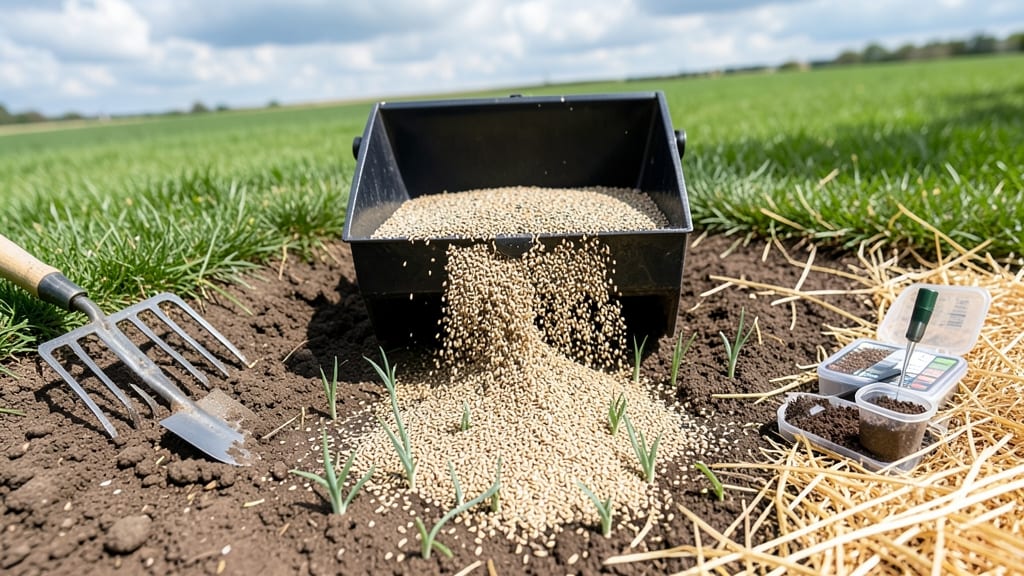
Reseeding your lawn in the fall gives you the thickest, greenest grass 🌱—but timing it wrong means wasted seeds and thin spots by spring.
Fall is the golden window for reseeding your lawn—but timing it wrong means wasted seeds and thin grass. Get it right, and you’ll enjoy a lush, thick lawn come spring.
In Zone 6a, mid-September to early October is your sweet spot, when soil stays warm enough for seeds to sprout but before winter slows growth. Too early, and weeds steal the show; too late, and frost locks out roots.
Below, I’ll break down the exact weeks before frost for your region, soil prep secrets, and how to keep your new grass thriving through winter. No more guesswork—just a lawn that wows.
Best fall reseeding weeks before frost by US planting Zone
Timing your fall lawn reseeding is everything—plant too early, and weeds steal the show; too late, and frost kills your seeds before roots establish.
The golden window is 4-6 weeks before your first frost date, when soil stays warm enough for germination but cool enough to reduce stress on young grass.
In USDA Zones 3-5, this means aiming for late August to mid-September, while Zones 6-8 can stretch until early October.
Soil temperature is your best guide: seeds need 50-65°F soil to sprout consistently. Use a soil thermometer to check—if temps dip below 50°F, wait a week or two.
For example, in Zone 5 (like Chicago or Minneapolis), with a first frost around October 15, your ideal window is September 1-15. In Zone 8 (Houston or San Diego), where frost hits November 15, you’ve got flexibility until mid-October.
Why this timing works: Cooler fall air reduces evaporation and weed competition, while 6-8 weeks of growth before winter lets roots anchor deeply. Grass planted now also outcompetes weeds next spring, giving you a thicker, greener lawn with minimal effort. Skip this window, and you risk thin patches or seedling failure.
Regional examples show how local climate shifts your timeline. In Zone 5 (e.g., Denver or Madison), where first frost hits October 10, aim for September 1-15.
But in Zone 8’s coastal areas (like San Francisco), where fog delays frost until November 20, you can seed until mid-October. Drought-prone zones (e.g., Zone 7b in Arizona) may need earlier seeding to avoid late-season dry spells.
Don’t rely on calendar dates alone—check your local frost data (via Almanac.com or NOAA) and adjust for microclimates.
Shady lawns or north-facing yards may need 1-2 weeks earlier seeding, while south-facing areas can wait slightly longer. Test your soil too: if it’s below 50°F, even the best seeds will struggle to germinate.
Pro tip: Mark your calendar based on soil temp, not just air temp. A 50°F soil in Zone 6 might feel chilly, but it’s perfect for germination.
Use a moisture meter to confirm—dry soil can fool you into thinking temps are higher than they are. Water deeply the day before seeding to raise soil temps slightly and create the ideal environment.
If you’re in a transition zone (e.g., Zone 6a vs. 6b), err on the earlier side.
For example, Zone 6a’s first frost (e.g., Philadelphia) often comes 2 weeks earlier than Zone 6b’s (e.g., Atlanta). Cool-season grasses like Kentucky bluegrass thrive in these windows, while warm-season grasses (like St. Augustine) should be seeded in late spring instead.
One common mistake? Waiting for "perfect" weather. Fall reseeding doesn’t need 70°F days—just consistent moisture and cool nights. If you see 5-7
How to prepare your lawn for fall reseeding: soil, seed, and weather tips
Fall reseeding transforms thin lawns into thick, vibrant carpets—but only if you prepare properly. The key lies in three critical areas: soil health, seed selection, and weather timing. Skipping any step risks wasted seeds and patchy growth. Let’s break down exactly what to do and when.
First, test your soil pH at least two weeks before planting. Ideal lawn grass thrives in pH 6.0-7.0. Use a home test kit or send a sample to your local extension office.
If your soil is too acidic (<6.0), apply lime according to package instructions. For alkaline soil (>7.0), work in sulfur or peat moss.
Next, choose the right grass seed type for your climate and sun exposure. Cool-season grasses like Kentucky bluegrass, fescue, and ryegrass dominate fall planting zones (3-8). Warm-season grasses like Bermuda or Zoysia? Skip fall—plant in late spring instead. Mix seed varieties for disease resistance and color uniformity.
Your Fall Reseeding Checklist
- 4-6 weeks before frost: Test soil pH and amend if needed
- 3 weeks before frost: Aerate compacted soil with a core aerator
- 2 weeks before frost: Mow lawn shorter than usual (1-1.5 inches)
- 1 week before frost: Spread seed evenly (use a broadcast spreader)
- After seeding: Apply thin layer of straw mulch (avoid clumps)
Don’t overlook aeration—this is your secret weapon against compacted soil. Rent a core aerator (or hire a pro) to pull out small soil plugs, creating channels for seeds to reach the root zone.
Aim for 16-24 holes per square foot. For small lawns, a manual spike aerator works in a pinch, but it’s less effective for deep compaction.
When selecting seeding methods, match your lawn’s size and condition. For overseeding (adding seed to existing grass), use a drop spreader for even distribution. For bare spots, hand-scatter seed and press lightly into soil.
Always seed when forecasted rain is in the next 24-48 hours—or water gently twice daily (morning and evening) for 10-15 minutes each time.
Watch the weather forecast like a hawk. Ideal reseeding conditions include daytime temps between 60-75°F and soil temps above 50°F. Avoid seeding if frost is predicted within 48 hours—young seedlings won’t survive. In drought-prone areas, irrigate deeply 2-3 days before seeding to prep the soil moisture.
After seeding, keep the soil consistently moist for the first 3-4 weeks. Use a lightweight mulch (like straw) to retain moisture and protect seeds from birds. Once seedlings reach 2-3 inches tall, gradually reduce watering to 1 inch per week.
Avoid heavy foot traffic until the grass is mature enough to resist wear—usually 4-6 weeks after germination.