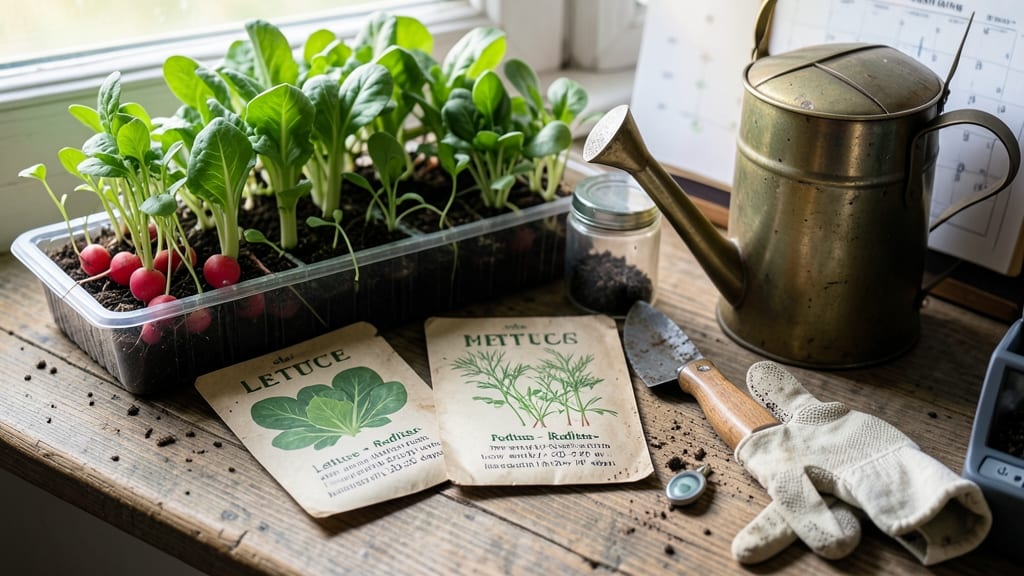
Planting seed in spring at the right time means the difference between a bumper crop and a wasted seed packet.
Timing your spring seed planting wrong can mean wasted effort—or worse, lost crops. But get it right, and you’ll enjoy a thriving garden all season long. Here’s how to pinpoint the exact frost-free deadlines for every plant type in your region.
Most gardeners wait for the last frost date, but that’s only half the story. Soil temperature, microclimates, and plant hardiness all play a role. Cool-season crops like lettuce can handle a light frost, while tender plants like tomatoes need warm soil to germinate.
Below, I’ll break down the best planting windows by USDA zone, how to adjust for your local conditions, and the three biggest mistakes that ruin spring sowing—so you can avoid them.
Jan
❄️
Feb
❄️
Mar
🌱
Apr
🌱
May
🌱
Jun
🌱
Jul
☀️
Aug
☀️
Sep
🍂
Oct
🍂
Nov
🍂
Dec
❄️
Spring seed planting deadlines by US hardiness zone (frost-free date guide)
Getting your spring seed planting timing right means the difference between a bountiful harvest and wasted seeds. The last frost date is your garden’s North Star—but it’s not the only factor. Soil temperature, plant hardiness, and even your microclimate play crucial roles.
Let’s break down the optimal planting windows for USDA Zones 3-10, so you can start seeds indoors or direct-sow with confidence.
Most gardeners focus on cool-season crops like lettuce and peas first, then shift to warm-season favorites like tomatoes and cucumbers. But the exact timing varies by 1-3 weeks depending on your zone.
For example, Zone 3 gardeners might plant peas in late April, while Zone 10 can start them in January. Below, I’ve mapped out the critical deadlines for both groups, plus tips for adjusting based on your local conditions.
🌱 Pro Tip: Always check a 3-5 year average of frost dates—one late frost can wipe out your early plantings. Use the comparison table below to find your zone’s early, mid, and late planting windows, then cross-reference with your soil thermometer readings.
| USDA Zone |
Last Frost Date Range |
Cool-Season Crops (Peas, Lettuce, Spinach) |
Warm-Season Crops (Tomatoes, Peppers, Cucumbers) |
Soil Temp for Germination |
| Zone 3 |
May 10–20 |
Early: Apr 1–10
Mid: Apr 15–25
Late: May 1–10 |
After May 20 (soil 60°F+) |
40–50°F |
| Zone 4 |
May 1–10 |
Early: Mar 20–Apr 1
Mid: Apr 10–20
Late: May 1–10 |
After May 10 (soil 55°F+) |
45–55°F |
| Zone 5 |
April 25–May 5 |
Early: Mar 15–Apr 1
Mid: Apr 1–15
Late: Apr 15–30 |
After May 5 (soil 50°F+) |
50–60°F |
| Zone 6 |
April 15–25 |
Early: Feb 20–Mar 15
Mid: Mar 15–Apr 1
Late: Apr 1–15 |
After April 25 (soil 55°F+) |
55–65°F |
| Zone 7 |
April 1–15 |
Early: Jan 20–Feb 15
Mid: Feb 15–Mar 15
Late: Mar 15–Apr 1 |
After April 15 (soil 60°F+) |
60–70°F |
| Zone 8 |
March 1–15 |
Early: Dec 15–Jan 15
Mid: Jan 15–Feb 15
Late: Feb 15–Mar 1 |
After March 15 (soil 65°F+) |
65–75°F |
| Zone 9 |
February 15–March 1 |
Early: Nov 1–Dec 15
Mid: Dec 15–Jan 15
Late: Jan 15–Feb 15 |
After February 15 (soil 70°F+) |
70–80°F |
How to calculate your local frost-free date (and adjust for microclimates)
Your USDA zone gives you a starting point, but the real magic happens when you calculate your local frost-free date. This is the last average date when frost is expected in spring—and it can vary by weeks even within the same neighborhood.
For example, my urban garden sits in Zone 7a, but my frost-free date arrives 10 days earlier than the official USDA average because of my south-facing yard.
Why does this matter? Planting cool-season crops like peas or spinach too late risks bolting, while warm-season plants like tomatoes won’t germinate until soil hits 60°F+.
Below, I’ll walk you through how to find your precise frost-free date, then adjust for microclimates that can shift your planting window by 2-4 weeks.
Step-by-Step: Calculate Your Frost-Free Date
-
1
Find your USDA zone using the USDA Plant Hardiness Zone Map. Note your zone number (e.g., 5b, 8a).
-
2
Check the USDA’s frost date averages for your zone. For example, Zone 6 typically has a last frost around April 15, but this varies by 1-2 weeks east/west.
-
3
Use a weather app (like Weather Underground or NOAA) to track historical frost data for the last 10 years in your area. Look for the latest frost date recorded.
-
4
Join local gardening groups on Facebook or iNaturalist to ask veteran gardeners about recent frost patterns. Urban areas often have warmer microclimates, while rural spots may frost later.
-
5
Adjust for your microclimate. If your garden sits in a sunny slope, it may warm 1-2 weeks earlier than the average. A low-lying area or urban heat island could delay frost by 5-7 days.
-
6
Verify with a frost clock. Tools like the Old Farmer’s Almanac or Frost Clock app provide real-time adjustments based on your zip code and local conditions.
Once you’ve nailed down your frost-free date, the next step is adjusting for microclimates. A south-facing slope can warm up 3-5 days faster than flat ground, while a north-facing corner might stay cold longer.
Even a paved driveway nearby creates an urban heat island that can push your frost date back by up to 2 weeks.
For example, my tomato plants in the sunny front yard are ready to go in by April 20, but the shady back corner won’t support them until May 5.
To test your microclimate, place a thermometer in your garden soil for a week—if it hits 60°F+ consistently, it’s safe for warm-season seeds.
Pro tip: Keep a gardening journal to track when you plant and when frost actually occurs. Over time, you’ll refine your frost-free date to within 3-5 days—giving you the precision to maximize your growing season. 🌱
★★★★★4.6(7 reviews)
|