
Plants
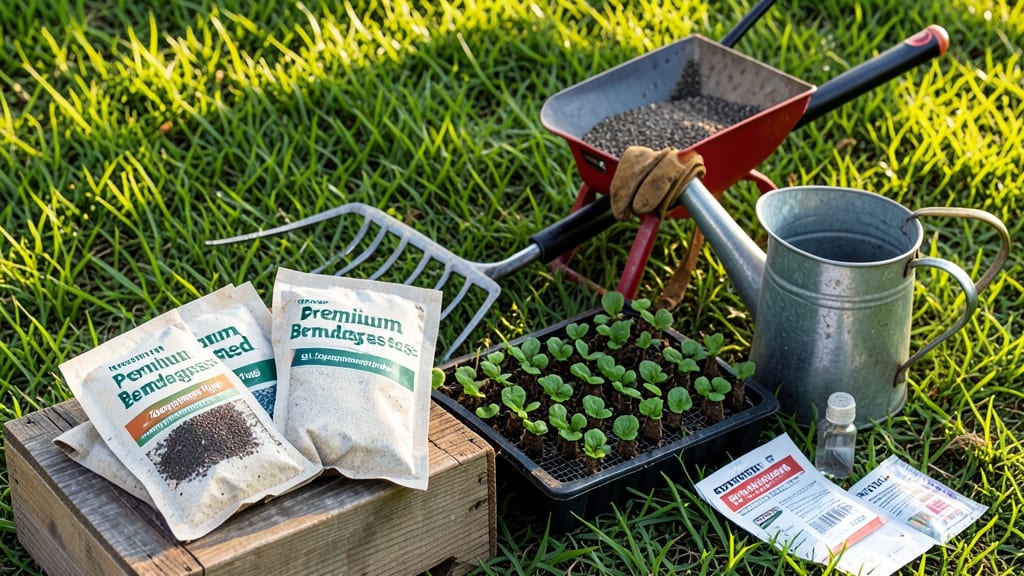
Plant grass seed in Louisiana between March and April or August and September to outsmart the state’s brutal summers and relentless humidity.
Louisiana’s sweltering summers and humid winters make timing critical for grass seed success—plant too early, and weeds take over; too late, and your lawn struggles to establish before heat stress hits.
In USDA zones 8a-9b, the key is soil temperature: aim for at least 60°F and avoid the peak humidity months (May–October), when fungal diseases thrive. Spring planting gives your grass a head start, while late summer/early fall lets it root before winter.
Below, I’ll break down the best months for your region, how to prep your soil for Louisiana’s clay-heavy dirt, and the 3-step care routine that keeps your lawn thick and weed-free—no matter how much it rains.
Best months to plant grass seed in Louisiana’s climate zones (with heat/humidity adjustments)
Louisiana’s humid subtropical climate (USDA zones 8a–9b) demands precise timing for grass seed success. The ideal windows are early spring (March–April) and late summer/fall (August–September), when temperatures and humidity cooperate with seed germination.
Planting outside these windows risks weed competition or heat stress, both of which can kill young grass before it establishes.
Different grass types thrive in Louisiana’s heat, but their planting windows vary. Bermuda grass and Zoysia grass tolerate heat better and can handle late spring plantings, while St. Augustine grass prefers cooler spring or fall conditions.
Understanding these differences is key to avoiding fungal diseases like brown patch, which flourishes in Louisiana’s peak humidity (May–October).
Here’s a breakdown of the best planting months for each grass type, accounting for Louisiana’s soil temperatures, rainfall patterns, and humidity risks:
For spring plantings (March–April), aim to finish by mid-April to avoid the weed explosion that hits in May. The soil temperature should be at least 60°F, and you’ll want to establish roots before summer’s brutal heat (often hitting 90°F+ by June).
I’ve found that early morning planting (before 10 AM) reduces stress on seeds from midday humidity.
If you’re planting in late summer/fall (August–September), focus on August to give grass 6–8 weeks to establish before first frost (Nov 15).
This window also avoids hurricane season (June–November), which can uproot young seedlings. Zoysia grass is my top pick for late summer plantings—it handles heat better than St. Augustine and won’t smother under Louisiana’s oppressive humidity.
Avoid planting in May–July unless you’re dealing with Bermuda grass, which can tolerate late spring sowings. For other types, this period brings fungal diseases (like brown patch) and weed competition from crabgrass and nutsedge.
Even Bermuda grass struggles if planted after June 1, as the soil stays too hot for germination.
Pro tip: Use a soil thermometer to check temperatures before planting—below 60°F slows germination, while above 80°F can kill seeds. In southern Louisiana (zone 9b), where summers are longer, shift plantings to February–March or September–October to avoid extreme heat.
In northern Louisiana (zone 8a), you have a slightly longer spring window (through mid-April).
Watering is critical during establishment. New grass needs 1–1.5 inches of water weekly, but <
How to prep your Louisiana lawn for seed planting (soil, water, and weed control)
Before you even think about scattering grass seed, your Louisiana lawn needs a solid foundation. The state’s heavy clay soil and humid climate demand extra prep work to create the perfect seedbed.
Skipping these steps means battling weeds, poor germination, and uneven growth—problems I’ve seen too often in my own yard. Let’s fix that.
Your first priority should be soil testing. Louisiana’s ideal pH range of 6.0–7.0 is often off-target due to acidic rainfall. Grab a test kit from your local nursery or send a sample to the LSU AgCenter Soil Testing Lab.
If your soil’s too acidic, apply pelletized lime 2–3 months before planting.
Next, tackle compacted clay soil—a common issue in Louisiana’s wetter regions. Rent a core aerator to create ½-inch deep holes every 2–3 inches. This lets roots breathe and water penetrate.
For stubborn areas, mix in 2–3 inches of compost or sand to improve drainage. Timing matters here: aerate 4–6 weeks before planting to let the soil settle.
- 📅 Test soil pH (ideal: 6.0–7.0), adjust with lime if needed
- 🪣 Aerate compacted soil 4–6 weeks before planting (rent a core aerator)
- 💧 Schedule irrigation: Water deeply 2x/day (morning/evening) for 2 weeks post-planting
- 🌱 Apply pre-emergent herbicide 2–4 weeks before seeding (targets crabgrass)
- ✂️ Mow existing grass low (if overseeding), then remove debris
Water management is where many Louisiana gardeners stumble. Our heavy rainfall can drown seeds, while summer droughts stress new growth. Start by watering deeply twice daily (morning and late afternoon) for the first 2 weeks after planting.
Use a rain gauge to ensure 1 inch of water reaches the soil daily. For larger lawns, consider a soaker hose to prevent runoff on sloped areas.
Weed control starts before you plant. Apply a pre-emergent herbicide like pendimethalin or prodiamine 2–4 weeks before seeding. This blocks weed seeds from germinating while your grass establishes.
Pro tip: Avoid post-emergent herbicides after planting—they’ll kill your new grass too. For organic options, use corn gluten meal as a natural pre-emergent.
Finally, clear all debris and level uneven spots. Use a lawn rake to create a fine, firm seedbed—think of it as making a smooth blanket for your seeds. If you’re overseeding an existing lawn, mow it short (1–1.5 inches) first, then remove clippings.
This gives your new grass seed the best chance to compete with established turf.
With these steps, your Louisiana lawn will be ready for seed planting—weed-free, well-drained, and primed for germination. The key is patience: rushing prep work leads to thin, patchy lawns. Trust the process, and you’ll have a lush, resilient lawn by next season. 🌱