
Planting
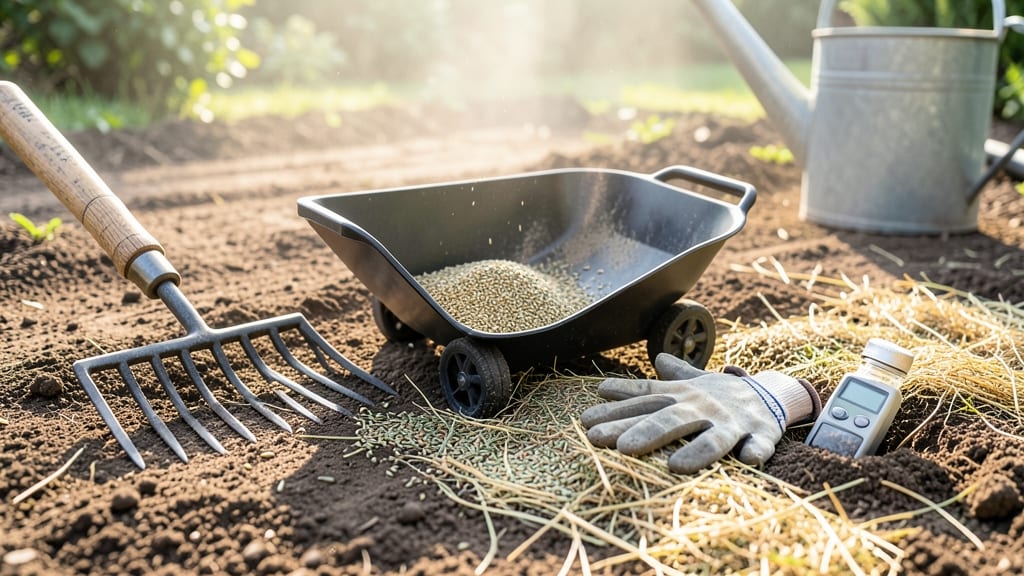
Planting grass seed in Iowa at the right time means the difference between a thick, green lawn and a patchy, brown mess after winter.
If you’ve ever watched your lawn turn into a muddy battlefield after a late frost or struggle with weak grass that barely survives the first freeze, you know timing is everything.
Iowa’s 5a-5b climate makes early fall or late spring the sweet spot—but get it wrong, and you’re fighting an uphill battle.
Cool-season grasses like Kentucky Bluegrass thrive when soil temps hover between 50°F and 65°F, which in Iowa usually means late August to early September or mid-April to May. Warm-season grasses, on the other hand, need the heat of summer, but they’re rare in this zone.
The key? Plant before the first frost hits, so roots have 6-8 weeks to establish before winter.
Below, I break down the best months for your region, how to prep soil like a pro, and why Iowa State University Extension’s frost maps are your new best friend. Let’s get that lawn growing strong.
Iowa grass seed planting calendar: best months by region and climate zone
Iowa’s USDA hardiness zones 5a-6b create unique challenges for lawn care, with late spring frosts and early winter freezes that can devastate young grass. The best planting windows are early spring (March-April) and late summer/early fall (August-September), when soil temperatures hover between 50°F-65°F—perfect for germination.
But timing varies by region, from the warmer southern Iowa to the colder northern areas near the Minnesota border.
For cool-season grasses like Kentucky Bluegrass and Tall Fescue (Iowa’s top choices), fall planting is ideal because seeds germinate in 60-70°F soil and establish deep roots before winter.
Spring planting works too, but early frost risks can stunt growth. Warm-season grasses like Buffalo Grass (drought-tolerant but rare in Iowa) should only be planted in late spring after frost danger—typically mid-May.
Iowa’s frost-free dates vary by 10-14 days from south (Des Moines: April 15) to north (Dubuque: May 1). Use these as your planting gateways: Wait until 2 weeks after last frost for spring, or 6-8 weeks before first frost for fall.
Pro tip: Check Iowa State University Extension’s frost maps annually—they update based on climate shifts.
Here’s how Iowa’s three distinct regions break down for planting:
| Region | USDA Zone | Best Planting Windows | Soil Temp Goal (°F) | Key Considerations |
|---|---|---|---|---|
| Southern Iowa (Des Moines, Cedar Rapids) | 6a-6b | Spring: March 15–April 15 Fall: August 15–September 15 |
50–65°F | Warmer microclimates allow earlier spring planting. Summer droughts may require extra irrigation. |
| Central Iowa (Ames, Iowa City) | 5b | Spring: April 1–April 30 Fall: August 1–September 10 |
50–65°F | Moderate frost risk in spring. Clay soils need amendments (compost/sand) for drainage. |
| Northern Iowa (Waterloo, Dubuque) | 5a | Spring: April 15–May 15 Fall: July 30–September 1 |
50–60°F (cooler tolerance) | Later frost dates delay spring planting. Tall Fescue outperforms Kentucky Bluegrass here. |
For spring planting, aim for March-April when daytime highs consistently reach 50°F. Use a soil thermometer to confirm—seeds won’t germinate below 50°F.
In northern Iowa, wait until after April 15 to avoid late frost damage. Overseeding in spring is risky unless you’re repairing thin patches—new grass won’t outcompete weeds in warm weather.
Fall planting is my top recommendation for Iowa lawns. Seeds sown in August-September germinate slowly in cool soil, avoiding summer heat stress.
They establish deep roots before winter, making them 30% more frost-resistant than spring-planted grass. Southern Iowa can plant until September 15, while northern areas should finish by September 1 to allow 4–6 weeks of growth before frost.
Skip late summer (July) planting—this is Iowa’s hottest, driest period. Seeds bake in 90°F+ soil and dry out within hours. If you miss fall, wait until next spring. Winter planting (November–February) is a no-go: Seeds won’t germinate in frozen ground, and snow mold risks skyrocket.
Even early March can be too cold in northern Iowa.
Pro tip: Use Iowa State’s "Growing Degree Days"
How to prepare Iowa soil for grass seed success: pre-planting checklist
Iowa’s clay-heavy or sandy soils can make or break your grass seed success. Without proper prep, seeds struggle to establish roots, leading to patchy lawns. The key?
A well-aerated, nutrient-rich soil with the right pH balance (6.0–7.5). Let’s break down the essential steps to create the perfect seedbed for your lawn.
Start by testing your soil—Iowa State University Extension offers free kits. Clay soils often compact easily, while sandy soils drain too quickly. Both need organic matter (like compost or peat moss) to improve structure.
Aim for 2–3 inches of organic material mixed into the top 6 inches of soil for ideal seed-to-soil contact.
🌱 Iowa Soil Prep Checklist
- ✅ Test pH (ideal: 6.0–7.5) with a soil kit
- ✅ Loosen soil 4–6 inches deep with a tiller or aerator
- ✅ Add compost (2–3 inches) for clay soils; peat moss for sandy soils
- ✅ Rake evenly to create a fine, firm seedbed (no clumps!)
- ✅ Suppress weeds with pre-emergent herbicide (apply 2 weeks before seeding)
- ✅ Level high spots and fill low areas with topsoil
For clay soils, mix in sand or perlite to improve drainage, while sandy soils benefit from compost or coconut coir to retain moisture. After amending, use a bow rake to create a smooth, firm surface—this ensures seeds make direct contact with soil, not air.
Avoid overworking the soil, which can compact it again.
Weeds are the biggest enemy of new grass. Apply a pre-emergent herbicide 2 weeks before planting to block weed seeds from germinating. For organic control, lay down cardboard or landscape fabric (with holes for seeds) to smother existing weeds.
Remove any remaining weeds by hand before seeding—even small ones compete for water and nutrients.
Finally, water deeply the day before planting to settle the soil. This helps seeds stay in place and germinate faster. After seeding, keep the soil consistently moist (not soggy) for the first 2 weeks. A light misting 2–3 times daily works best—this mimics Iowa’s spring rainfall without overwhelming young roots.
With these steps, your Iowa lawn will have a strong foundation for healthy grass growth, no matter the soil type. The effort now pays off with a thicker, greener lawn that survives winter and drought. Happy planting! 🌱