
Lawn
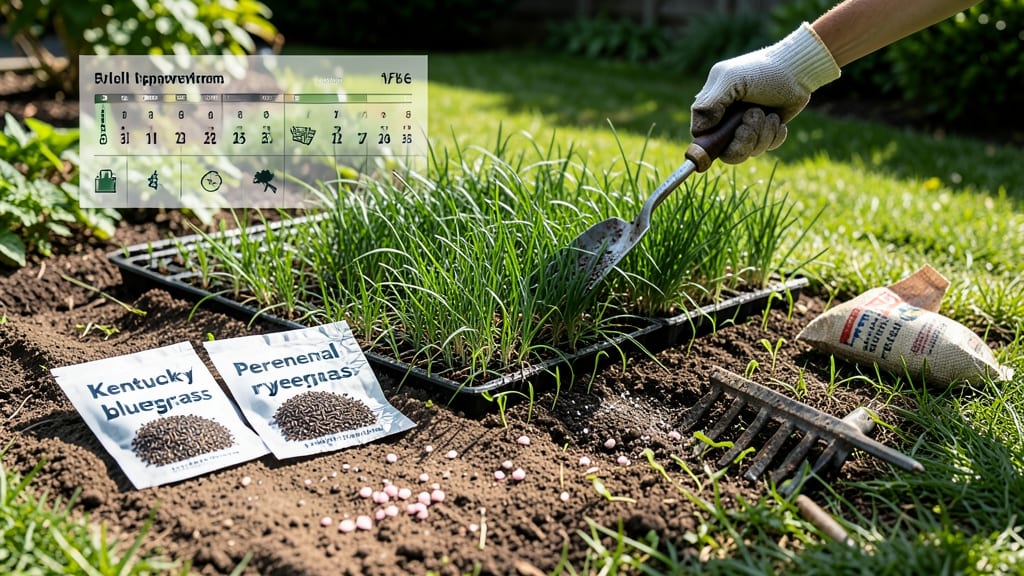
Planting grass seed in Indiana during early spring or fall sets the stage for a lawn that thrives through the year—when you miss those windows, you risk drought stress, heat damage, or frost heave.
Indiana’s 5b-6b climate means your 🌱 grass seed can’t afford to wait. Plant too late in spring, and summer’s heat zaps moisture before roots take hold. Plant too early in fall, and a surprise frost turns tender sprouts to mush.
The difference between a lush lawn and a patchy mess often comes down to soil temperature, not just the calendar.
Most gardeners swear by fall planting—especially for cool-season grasses like Kentucky Bluegrass—because cooler air and warmer soil create perfect germination conditions. But spring isn’t a lost cause if you prep the soil right and watch for that 50-65°F sweet spot.
We’ll break down the exact months, soil tests, and microclimate tweaks that work for Northern vs. Southern Indiana.
Ready to plant? You’ll learn how to time it with Indiana’s frost dates, choose the right seed mix, and keep weeds from stealing your new lawn’s spotlight—without overcomplicating the process.
Best months to plant grass seed in Indiana: fall vs spring timing guide
Indiana’s cool-season grasses like Kentucky Bluegrass and Fescue thrive when planted during the ideal temperature window of 50-65°F. This range ensures seeds germinate quickly without stress from extreme heat or cold.
Many gardeners assume spring is the only option, but fall planting actually gives your lawn a competitive edge—especially in Indiana’s humid climate.
In Northern Indiana (USDA zones 5b-6a), the first frost typically arrives in mid-October, leaving a narrow window for late fall planting. Meanwhile, Southern Indiana (zone 6b) can extend this window until early November.
Understanding these regional differences helps you avoid planting too late and risking frost damage before roots establish.
The key to successful grass seed planting lies in soil temperature, not just calendar months. A soil thermometer is your best friend—plant when readings consistently hit 55°F or warmer in spring or 65°F or cooler in fall. This ensures seeds won’t bake in summer heat or freeze before sprouting.
Fall planting (September-October) is often recommended because cooler temperatures reduce stress on young seedlings. Rainfall is also more consistent, and weeds are less aggressive. Plus, grass planted in fall has 6-8 weeks of growth before winter dormancy, giving it a head start in spring.
Spring planting (April-May) works too, but timing is critical. Plant 4-6 weeks before summer heat sets in—typically by mid-April in Northern Indiana and early April in Southern Indiana. Waiting too long risks seeds drying out before they germinate, leading to patchy lawns.
| Factor | Spring Planting (April-May) | Fall Planting (September-October) |
|---|---|---|
| Ideal Soil Temp | 55-65°F | 50-65°F |
| Best Months | Mid-April to early May | Late August to mid-October |
| Weed Competition | High (spring weeds) | Low (fall weeds dormant) |
| Rainfall Reliability | Moderate (spring showers) | High (fall rains consistent) |
| Growth Before Stress | 4-6 weeks (summer heat risk) | 6-8 weeks (winter dormancy) |
| Northern IN Window | April 15-May 15 | Sept 15-Oct 15 |
| Southern IN Window | April 1-May 10 | Sept 1-Oct 31 |
For Northern Indiana, aim to plant Kentucky Bluegrass seeds by mid-October at the latest. This variety struggles with late fall planting due to its slower establishment. In contrast, Tall Fescue and Fine Fescue handle cooler fall temps better, making them ideal for late-season planting.
If you miss fall’s window, don’t despair—spring is your second chance. Just be prepared to water deeply and mulch lightly to retain moisture as summer approaches. The trade-off? Spring-planted lawns may require 2-3 weeks of extra care to compete with summer weeds and heat stress.
Pro tip: Test your soil’s moisture level before planting. Indiana’s clay soils can become waterlogged in fall or dry out quickly in spring. Aim for 1 inch of water per week (including rainfall) during germination. A simple screwdriver test works—if it slides in easily, your soil is ready.
Remember, the best time to plant grass seed in Indiana isn’t just about the calendar—it’s about soil temperature, rainfall patterns, and grass variety. By aligning these factors, you’ll give your lawn the strong root system it needs to outlast Indiana’s unpredictable weather. 🌱
Indiana-specific grass seed planting checklist: soil, weather, and prep
Indiana’s clay-heavy soils and variable weather demand careful prep before planting grass seed. The key to success lies in testing your soil pH (6.0-7.5), timing weed control, and adjusting for moisture levels that Indiana’s humid summers and freezing winters bring.
Skipping these steps often leads to poor germination or weed competition.
Start by testing your soil’s moisture retention—Indiana’s clay soils can become waterlogged or dry out too quickly. Amend with compost or sand if needed, and aim for consistent dampness (not soggy) during germination.
Weeds are your biggest enemy, so plan to apply pre-emergent herbicide 2-4 weeks before planting to prevent crabgrass and other invaders.
-
🌱 Step 1: Test Soil pH
Use a home test kit or send a sample to Purdue Extension. Adjust with lime (for acidic soil) or sulfur (for alkaline soil) 4-6 weeks before planting. -
💧 Step 2: Prep Soil for Moisture
Loosen top 2-3 inches of soil with a rake or tiller. For clay soils, mix in 1 inch of compost to improve drainage and aeration. -
☀️ Step 3: Check Weather Window
Plant when soil temps are 55-65°F (use a soil thermometer). In Indiana, this typically means late April to early May (spring) or September to early October (fall). -
✂️ Step 4: Control Weeds
Apply pre-emergent herbicide 2-4 weeks before seeding. For organic options, use corn gluten meal as a natural pre-emergent. -
🌡️ Step 5: Monitor Forecast
Use the 30-year climate average for Indiana: Aim for 10-14 days of dry weather after planting to prevent fungal issues. Check the NOAA climate predictor for your region.
Once your soil is prepped, focus on seed selection for Indiana’s climate. Cool-season grasses like Kentucky Bluegrass and Tall Fescue thrive here, while warm-season grasses like Bermuda need warmer soil temps.
Spread seed evenly with a broadcast spreader and lightly rake it into the soil to ensure good seed-to-soil contact.
After planting, keep the soil consistently moist (not soggy) for the first 3-4 weeks. Water lightly 2-3 times daily to prevent seeds from drying out. Indiana’s humid summers can lead to fungal issues, so avoid overhead watering.
Instead, use a soaker hose or drip irrigation to deliver water at the soil level.
Finally, plan for post-planting care. Once your grass reaches 3-4 inches tall, mow it to 3-4 inches to encourage deep root growth. Apply a slow-release fertilizer 6-8 weeks after planting to support establishment.
In Indiana, this means timing your first fall fertilizer application for late August to early September.
With these steps, your Indiana lawn will establish strong roots before winter, giving you a head start on a lush, weed-free lawn next spring. 🌱