
Plants
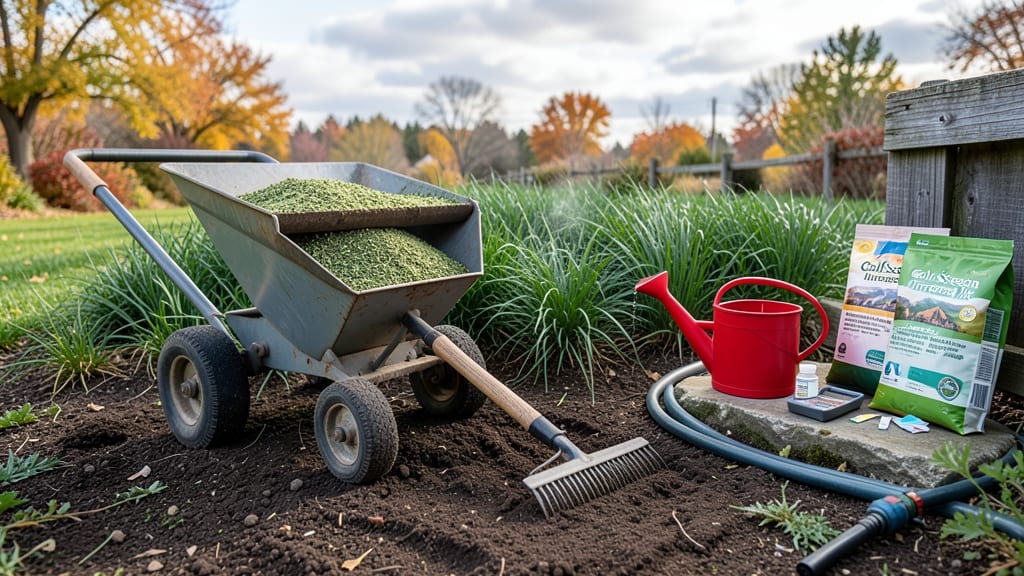
Planting grass seed in Colorado at the right time means the difference between a lush, green lawn and a patchy, struggling mess.
Colorado’s diverse elevations—from high-altitude plains to mountain valleys—create a tricky timeline for planting grass seed, where timing can mean the difference between lush lawns and failed growth.
If you’ve ever poured money into seed only to watch it wither under unexpected frost or bake in early heat, you know how critical the window is.
The best time depends on where you live: Front Range gardeners have a 6-week advantage over Western Slope neighbors, and elevation shifts deadlines by months.
Here’s how to pinpoint the perfect moment for your zone, plus soil prep tricks and seed choices that lock in success—no matter if you’re in Denver or Durango.
Colorado grass seed planting deadlines by elevation: high-altitude vs. Front Range timelines
Colorado’s dramatic elevation shifts—from Denver’s 5,280 feet to Aspen’s 7,800+ feet—create wildly different planting windows for grass seed. A Denver lawn planted in early April might fail in Leadville (10,000 ft) if seeded too early, while mountain regions risk late-spring frosts that delay growth by weeks.
Understanding these zones ensures your seed germinates before heat stress or winter dormancy sets in.
I’ve broken down the three critical elevation bands in Colorado, with soil temperature thresholds and frost risk factors that dictate your planting window. The key? Soil temperature (not air temperature) must reach 50–65°F for consistent germination.
Use a soil thermometer—air temps can be misleading in high-altitude zones where nights stay chilly long after days warm up.
For lowland areas (3,000–5,000 ft), like Colorado Springs or Fort Collins, your window is the broadest: mid-March to early May. But midland zones (5,000–7,000 ft), including Denver and Boulder, shift later—late March to mid-April—to avoid late-spring frosts that can kill tender seedlings.
At 7,000+ feet, like in the Rocky Mountain National Park area, you’re looking at late April to early June for safe planting.
Why the delay? Higher elevations have cooler soil that lingers into summer. A Denver garden might hit 55°F soil by April 1, while Aspen’s soil may still be 45°F in early May. This 6+ week difference explains why timing is everything—plant too early, and your seed rots; too late, and summer drought or winter freeze stunts growth.
Pro tip: Fall planting (late August to September) works in lowland zones but is risky above 6,000 feet due to early frosts.
For high-altitude areas, late spring is your only safe bet—seedlings need 6–8 weeks to establish before the first hard frost (which can hit as early as September 15 in mountain regions).
Soil prep is just as critical as timing. In dry eastern plains, aerate 2 weeks before planting to combat compacted clay, while mountain soils often need organic matter to improve drainage.
Test your soil’s pH—most Colorado grasses thrive in 6.0–7.5, but high-altitude soils can skew acidic (5.0–6.0) due to pine needle runoff.
Watch for microclimates too. A south-facing slope in Denver may warm up 2 weeks earlier than a north-facing yard, while urban heat islands (like downtown Denver) can push soil temps up faster. Use a soil thermometer for 3 consecutive days to confirm readiness—don’t guess!
If you’re in transition zones (5,000–6,000 ft), like Evergreen or Golden, split your seed into two plantings: early April for fast germinators (ryegrass) and mid-May for slower types (fescue). This hedge against late frosts or summer drought, ensuring continuous coverage.
Remember: Watering is non-negotiable in the first 30 days. High-altitude seeds need daily moisture to break dormancy, while lowland seeds can handle every other day once established. Use a rain gauge—Colorado’s arid climate means evaporation rates vary wildly by elevation.
Your grass seed’s success hinges on these deadlines. Follow them, and you’ll see uniform germination and drought-resistant turf by summer. Skip them, and you’re gambling with bare patches and weed takeover—trust me, I’ve seen both sides. 🌱
How to adjust grass seed planting for Colorado’s microclimates: water availability, soil prep, and seed variety choices
Colorado’s microclimates demand more than just timing—your seed choice, water strategy, and soil prep must adapt to whether you’re battling eastern plains drought or mountain humidity.
In the arid Front Range, drought-resistant Buffalo grass thrives with minimal water, while Western Slope gardens often need shade-tolerant Fescue blends to handle afternoon sun. Mountain regions? Cool-season Kentucky Bluegrass dominates, but only if planted when soil temps stay above 50°F.
Your first move: test your soil for pH and organic matter. Colorado’s alkaline soils (pH 7.5+) often need sulfur amendments to hit the ideal 6.0–7.0 range for grass seed germination. Skip this step, and your seed might sprout unevenly or struggle to establish roots.
Pair this with a pre-planting fertilizer—look for high-phosphorus blends (like 5-10-10) to boost root growth in the critical first 30 days.
🌱Here’s how to tailor your approach:
- 🌵 Eastern Plains (Arid Zones): Use drought-tolerant seed blends (e.g., Tall Fescue + Buffalo Grass) and drip irrigation. Water deeply 2x/week instead of daily to prevent evaporation.
- 🌲 Western Slope (Humid Zones): Opt for shade-tolerant varieties like Fine Fescue. Amend soil with peat moss to improve drainage, and avoid overwatering to prevent fungal issues.
- ⛰️ Mountain Regions (Cool Zones): Plant cool-season grasses (e.g., Kentucky Bluegrass) in late spring (after May 15) when soil temps hit 55°F+. Use mulch to retain moisture in thin mountain soils.
- 💧 Watering Hacks: Install a soil moisture sensor to avoid over/under-watering. In high winds (common in plains), straw mulch holds seed in place until germination.
- 🌿 Seed Variety Checklist:
- Arid zones: Buffalo Grass or Tall Fescue
- Humid zones: Fine Fescue or Perennial Ryegrass
- Mountains: Kentucky Bluegrass or Creeping Red Fescue
Don’t overlook irrigation setup. A sprinkler system with even coverage is non-negotiable—uneven watering leads to bare patches or fungal growth. For large lawns, consider a smart controller that adjusts watering based on local weather forecasts.
Pro tip: Water in the early morning (5–9 AM) to reduce evaporation and fungal risks from evening moisture.
Your seed choice should match your climate zone and sun exposure. For example, Blue Gamma Grass (a native Colorado variety) handles drought and heat like a champ but struggles in shady mountain yards.
Meanwhile, ShadeMaster™ blends are engineered for less than 4 hours of sun, perfect for Western Slope gardens under pine trees.
Finally, monitor progress with a germination timeline. Most Colorado grasses sprout in 10–21 days, but cool-season varieties may take 30+ days in mountain regions. If you don’t see sprouts within 3 weeks, check for seed viability or soil compaction.
Adjust watering or aerate if needed—your lawn’s success hinges on these early checks.