
Flowers
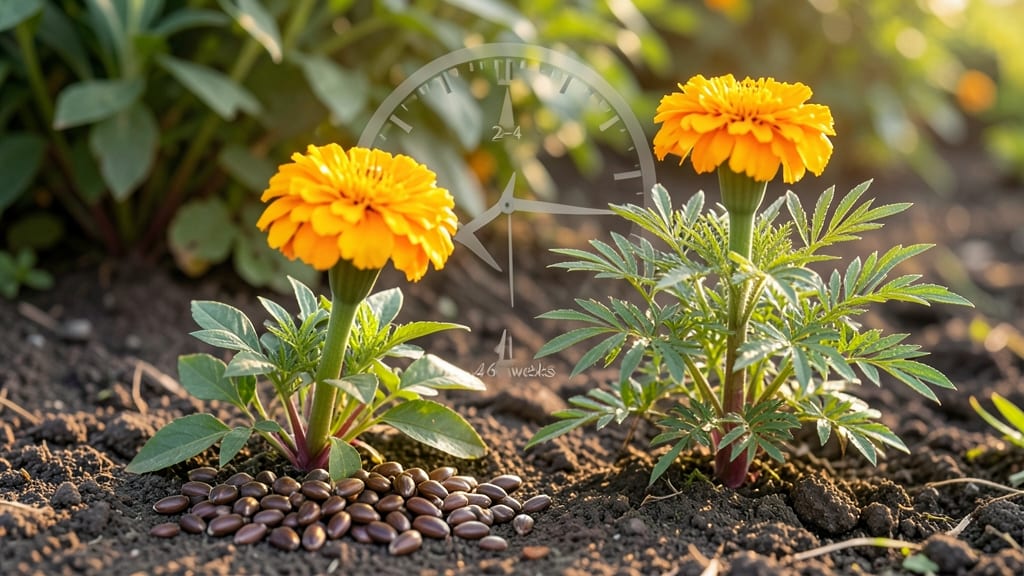
Marigolds take 45 to 80 days from seed to flower, depending on the variety and growing conditions 🌼 — but knowing the right timing can mean the difference between a summer of vibrant blooms and a season of waiting.
Picture this: you’ve just planted your marigold seeds in early spring, eager for those bright orange and yellow blooms to repel pests and brighten your garden.
But if the soil is too cold or the light isn’t strong enough, you could be staring at leafy green plants for weeks without a single flower in sight.
In this guide, I’ll break down the exact seed-to-flower timeline for popular varieties like French and African marigolds, along with the factors that speed up or slow down blooming—so you can plan your garden for a showstopping display.
You’ll also discover how to cut 10-15 days off the waiting time with simple tricks, whether you’re in a warm climate or a cooler zone like 6a. Let’s get those marigolds flowering faster!
Exact marigold seed to flower time by popular variety (from seed to bloom)
If you're eager to see those bright marigold blooms repelling pests and adding color to your garden, timing is everything. The seed-to-flower period varies dramatically by variety—from as little as 45 days to over 80 days. Understanding these timelines helps you plan for continuous blooms all season long.
Marigolds are fast growers compared to many flowers, but their bloom speed depends on soil warmth, sunlight exposure, and even your climate zone. For example, French marigolds often bloom faster than their African marigold cousins, which can take up to 80 days in cooler conditions.
Let’s break down the exact timelines for popular varieties.
🌱 Pro Tip: Start seeds indoors 4-6 weeks before your last frost date to shave off critical days from the timeline. Use a heat mat to speed up germination if your spring is chilly.
| Variety | Seed to Flower Time (Days) | Key Characteristics | Best For |
|---|---|---|---|
| French Marigold | 45–65 days | Compact, bushy, pest-repelling, dwarf varieties (6–12 inches) | Borders, containers, edible gardens |
| African Marigold | 50–80 days | Tall, bold blooms, heat-tolerant, (18–36 inches) | Cut flowers, backyard beds, pollinator gardens |
| Signet Marigold | 45–60 days | Small, fragrant blooms, long-lasting, (12–18 inches) | Windowsills, herb gardens, pest control |
French marigolds are the fastest bloomers, often reaching their first flowers in just 45 days under ideal conditions. Their compact size makes them perfect for container gardens or edging flower beds. I’ve seen ‘Bonanza Gold’ varieties bloom in as few as 50 days when started indoors and transplanted early.
African marigolds, like the ‘African Sunset’ series, take longer—50–80 days—because their larger blooms require more energy to develop. These varieties thrive in hot climates (USDA Zones 8–11) and can continue blooming until frost if deadheaded regularly. In cooler zones, expect the upper end of this range.
🌡️ Temperature Matters: Soil temperatures below 60°F slow germination and flowering. Use a soil thermometer to monitor—warmer soils (70°F+) can cut bloom time by 10–15 days.
Signet marigolds strike a balance, blooming in 45–60 days with delicate, fragrant flowers that attract pollinators. Varieties like ‘French Vanilla’ are prized for their scented petals and are often used in culinary gardens (though only the petals are edible).
Their smaller size makes them ideal for window boxes or interplanting with herbs.
Light exposure is non-negotiable for marigolds. They demand 6+ hours of full sun daily—any less, and you’ll see leggy stems and delayed blooming. In my Zone 6 garden, I place marigolds in the south-facing border where they get unfiltered sunlight from 10 AM to 6 PM.
Even partial shade can extend bloom times by 2–3 weeks.
Watering plays a subtle but critical role. While marigolds are drought-tolerant once established, consistent moisture during the first 30 days ensures strong root development. Overwatering, however, can lead to powdery mildew, which stunts growth.
I water mine deeply every 3–4 days in summer, focusing on the soil base rather than overhead spraying.
Fertilizing with a phosphorus-rich blend (like 5-10-10) at planting and again when buds form can accelerate flowering by 5–10 days. Avoid nitrogen-heavy fertilizers—they encourage leafy growth over blooms. My secret? A handful of bone meal mixed into the planting hole at the start of the season.
Deadheading spent blooms is a game-changer for extending the season. By removing faded flowers, you encourage the plant to redirect energy into new blooms. I deadhead my marigolds weekly and often see a second flush of flowers 2–3 weeks later, especially with French marigolds.
This simple step can add 4–6 weeks to your bloom time.
How climate Zones affect marigold flowering speed (USDA Zones 1-11)
Your USDA climate zone plays a bigger role in marigold flowering speed than you might think. In Zone 9-11, marigolds often bloom in just 45-55 days from seed, while in Zone 3-5, the same varieties can take 65-80 days—sometimes even longer if spring arrives late.
This delay happens because cooler soils and shorter daylight hours slow germination and growth rates.
For example, my French marigolds in Zone 7b typically flower in 50-60 days, but when I grew them in Zone 4a last summer, they needed 70 days before producing their first blooms.
The difference comes down to soil temperature and daylight exposure, both of which vary dramatically across zones.
⚠️ callout warning
Marigold seeds won't germinate below 60°F soil temp. In Zones 1-5, wait until soil reaches 65-70°F for fastest growth. Use black plastic mulch or heat mats to warm soil 5-10 days faster than waiting for nature.
💡 Pro Tip: Start seeds indoors 4-6 weeks before last frost in cold zones to give them a head start.
In warmer zones like Zone 9-11, marigolds grow aggressively because soil stays warm year-round and daylight hours are longer. This means African marigolds, which typically take 50-80 days to flower, often bloom in just 45-55 days when grown in Zone 10a.
The extra warmth and light accelerate photosynthesis, helping plants reach flowering stage faster.
If you're in a northern climate (Zones 1-6), you can extend your marigold season by starting seeds indoors in late winter and transplanting after frost.
I've had success with Signet marigolds in Zone 3b by using grow lights for 14-16 hours/day during early growth stages, cutting bloom time by 10-15 days.
For hotter climates (Zones 8-11), focus on shade protection during peak afternoon heat to prevent bolt (premature flowering). I've found that partial shade cloth in Zone 10b keeps marigolds flowering 2-3 weeks longer into fall by reducing stress.
Also, mulching with straw helps retain moisture, which is crucial for continuous blooming.
Remember, daylight hours also impact flowering speed. In Zones 1-5, shorter summer days can delay blooming, while Zones 6-11 benefit from longer daylight periods that trigger faster flower production.
By understanding your zone's unique conditions, you can adjust planting times and care strategies to get marigolds blooming on schedule every year.