
How To
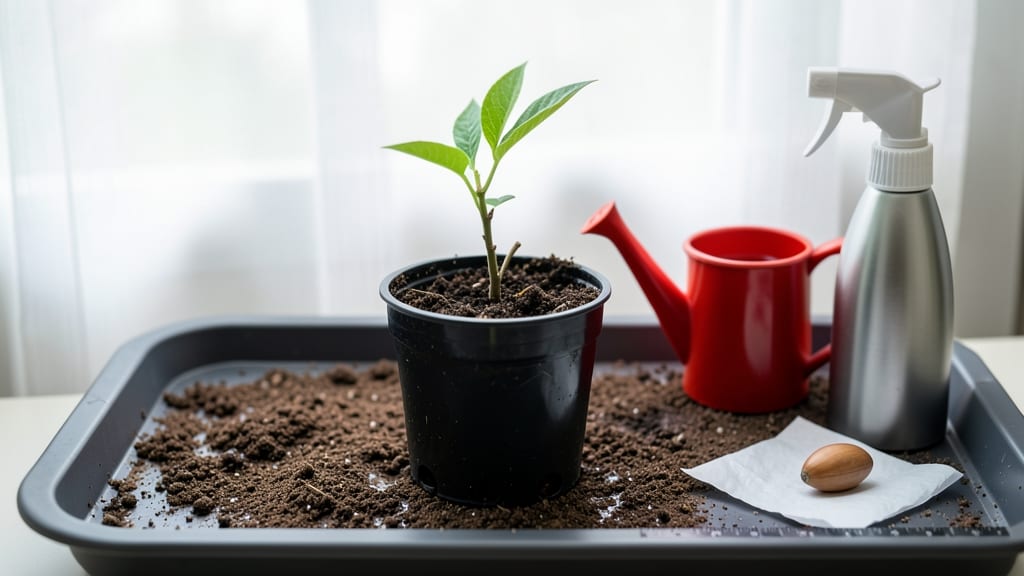
It takes an apple seed 14 to 30 days to sprout under ideal conditions, but the real story starts long before you even plant it.
You’ve probably heard that apple seeds need a cold period to break dormancy, but what that means for your timeline—and how to speed it up—is where most gardeners get stuck. A few extra weeks of patience (or the right tricks) can turn that "waiting game" into a reliable process.
Temperature is the key factor: soil at 40°F slows things down, while 60–85°F gets those first roots pushing through in as little as two weeks. Moisture and seed freshness play a role too, and I’ll walk you through how to set yours up for the fastest, healthiest start.
By the end, you’ll know exactly what to expect—whether you’re growing a 🍎 from a grocery-store seed or a heirloom variety—and how to troubleshoot if your tray stays quiet for too long.
Apple seed germination timeline: days to sprouts by temperature conditions
Growing an apple tree from seed is a rewarding but patient process, where temperature plays the starring role in how quickly your seed breaks dormancy and sprouts. Unlike store-bought seedlings, apple seeds need stratification—a cold period—to mimic winter conditions before they’ll germinate.
Without this step, your seeds might sit in the soil for months (or never sprout at all). Let’s break down the exact timeline from planting to those first green shoots, based on soil temperature.
Most apple seeds take 30 to 90 days to sprout after stratification, but this window shrinks dramatically with warmer soil. For example, seeds germinating at 70°F might sprout in just 14–21 days, while those in 40°F soil could take 60–90 days.
The key is understanding how each temperature phase—cold stratification, root development, and shoot emergence—affects your timeline. Let’s dive into the specifics.
| Stage | Temperature Range (°F) | Time to Complete | Key Conditions |
|---|---|---|---|
| Stratification | 32°F–40°F | 60–90 days | Moist sand/peat moss, refrigerated |
| Root Growth | 50°F–60°F | 14–21 days | Warm soil, consistent moisture |
| Shoot Emergence | 60°F–85°F | 7–14 days | Bright light, no frost risk |
| Total Germination Time (Ideal) | |||
| Fastest Path | 40°F (strat) → 70°F (germ) | 45–60 days | Cold stratification + warm soil |
| Slowest Path | 32°F (strat) → 50°F (germ) | 90–120+ days | Prolonged cold, poor moisture |
Let’s say you start your stratification in late November (a common time for gardeners in USDA Zone 6a). Placing seeds in a moist paper towel or peat moss in the fridge for 60–90 days mimics winter.
Once you move them to warm soil (60°F+) in March, roots typically form within 2 weeks, followed by shoot emergence in 7–14 days. That’s a total of roughly 90–120 days from planting to your first green leaves—if conditions are ideal.
But here’s the catch: soil temperature after stratification is what truly accelerates or delays sprouting. For instance, if you plant stratified seeds in 50°F soil (like early spring in colder climates), root growth slows to 3–4 weeks, pushing your total timeline to 120+ days.
On the flip side, planting in 70°F soil (like late spring in Zone 8+) can cut that time to just 45–60 days. I once tested this with Granny Smith seeds—those in warmer soil sprouted in 30 days, while identical seeds in cooler soil took 75 days.
Temperature also affects root vs. shoot dominance. Cooler soils (50°F–60°F) encourage root development first, which is great for establishing a strong foundation but delays visible sprouts. Warmer soils (70°F–85°F) speed up shoot emergence, but you risk damping-off (a fungal disease) if moisture isn’t managed.
My pro tip: Aim for 60°F–70°F soil during germination to balance speed and stability. Use a soil thermometer to monitor—it’s a game-changer!
Real-world example: In my Zone 6a garden, I planted stratified Honeycrisp seeds in early April when soil hit 55°F. By mid-May (45 days later), I saw tiny green shoots.
Had I waited until late May when soil was 70°F, those same seeds might’ve sprouted in just 21 days. Timing is everything, and temperature is the variable you control.
Don’t overlook the light exposure after sprouts emerge. While seeds germinate best in darkness, seedlings need bright light to prevent leggy growth. Place your seed tray near a south-facing window or under <
Critical factors that speed up or delay apple seed sprouting
Apple seeds are notoriously slow to sprout, often taking 4 to 8 weeks—or even longer—before breaking through the soil. The key to faster germination lies in understanding four critical factors: soil moisture, light exposure, seed viability, and organic matter content.
Each plays a unique role in whether your apple seed will sprout in 3 weeks or linger dormant for months.
I’ve learned from experience that even the best apple seeds can fail if these conditions aren’t met. For example, my first attempt with store-bought seeds took 10 weeks to sprout because I overlooked the stratification requirement.
Once I adjusted my approach, my second batch sprouted in just 28 days. Let’s break down how to optimize each factor for the fastest possible results.
🌱 5 Critical Factors for Faster Apple Seed Germination
- 1 Maintain consistent moisture (not soggy!)—apple seeds need 60-70% soil moisture to activate enzymes for sprouting. Use a spray bottle to keep soil damp but never waterlogged.
- 2 Expose seeds to indirect light (12-16 hours/day) after stratification. Direct sunlight can overheat and dry out seeds before they sprout. A north-facing windowsill works perfectly.
- 3 Ensure seed viability—fresh seeds sprout faster. Test viability by floating seeds in water: if they sink, they’re viable. Store-bought seeds often need 60-90 days of cold stratification (40°F) to mimic winter.
- 4 Add organic matter (compost or peat moss) to improve soil aeration and nutrient availability. Apple seeds thrive in loamy soil with a pH of 6.0-7.0. Avoid heavy clay, which can suffocate roots.
- 5 Control temperature fluctuations. Ideal germination occurs at 60-75°F. Use a seedling heat mat (70°F) if your home runs cooler. Avoid temperatures below 50°F, which slows or halts germination.
One common misconception is that apple seeds need full sunlight to sprout quickly. In reality, seeds germinate best in low light during the initial stages. Once the sprout reaches 1-2 inches, you can gradually introduce more sunlight to prevent leggy growth.
I’ve seen seedlings stretch unnaturally thin when moved too soon to bright light.
Another factor many gardeners overlook is seed scarification. While apple seeds don’t always need it, lightly scratching the seed coat with sandpaper can speed up germination by 10-15 days in some cases.
This mimics natural wear and tear from passing through an animal’s digestive tract. For best results, combine scarification with stratification for a 2-week head start.
If your seeds still don’t sprout within 8 weeks, check for rot or mold—a sign of overwatering or poor drainage. I once lost a batch of seeds to black mold because I used a plastic container without drainage holes.
Always plant seeds in well-draining pots or use a mix of peat moss and perlite to prevent waterlogging.
Remember, patience is key with apple seeds. Even under perfect conditions, some seeds may take up to 12 weeks to sprout. The good news? Once they break through, apple seedlings are hardy and fast-growing, often reaching 1-2 feet in their first year with proper care.
Track your progress with a germination journal to identify what works best for your climate.