
Planting
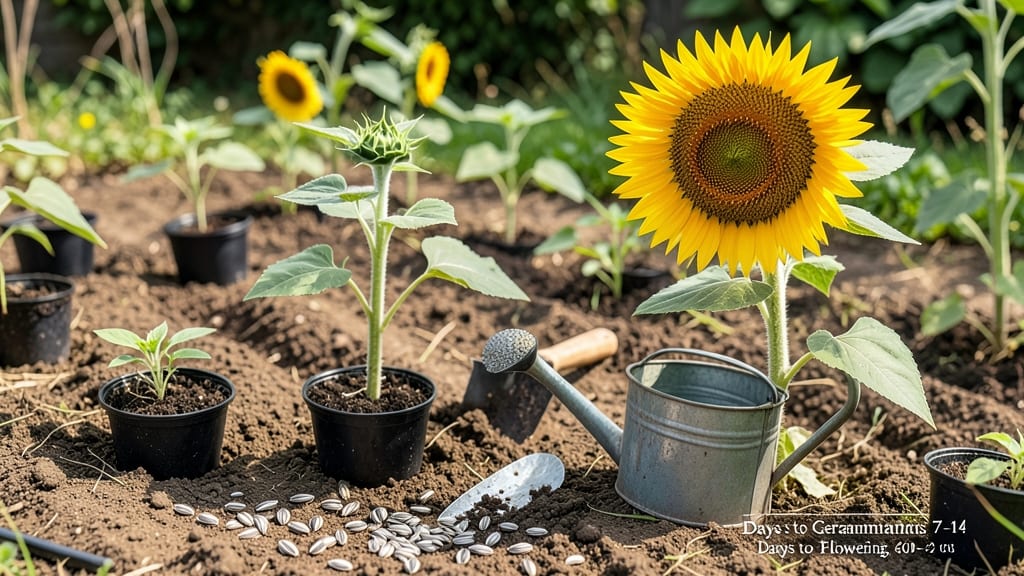
Growing a sunflower from seed takes about 80 to 120 days to reach full bloom, depending on the variety and growing conditions—but the real magic happens in stages you might miss if you’re not paying attention.
Picture this: you tuck a tiny seed into warm soil in spring, water it gently, and wait. Weeks pass, and suddenly, a fragile green shoot breaks through the dirt. That’s just the beginning.
The journey from sprout to those towering 🌻 golden blooms is a mix of patience, science, and a little luck. Some varieties pop up in as little as 7 days, while others take twice as long to germinate, and that’s before the real growth even starts.
What you don’t see are the hidden factors speeding up—or slowing down—that timeline. Too much water? Roots rot before they can support a 12-foot giant. Not enough sunlight? Your sunflower might stretch awkwardly toward the sky, never quite reaching its potential.
Even the temperature plays a role: cooler springs delay growth, while warm, sunny days can have your plants flowering in just 60 days.
In this guide, I’ll walk you through every phase of a sunflower’s life—from the first crack of the seed to the moment it’s heavy with seeds—so you know exactly what to expect, when to adjust your care, and how to troubleshoot if things aren’t going as planned.
No more guessing, just clear timelines and actionable tips to turn your patch of soil into a sunflower showstopper.
Sunflower growth timeline: key stages and their exact duration
Sunflowers don’t grow overnight—they follow a predictable 5-stage journey from seed to towering bloom. Understanding each phase helps you track progress and troubleshoot delays. With ideal conditions, most varieties reach maturity in 80-120 days, but environmental factors can stretch or shorten this timeline significantly.
Every sunflower starts as a tiny seed packed with potential. The first germination phase kicks off within 7-14 days after planting, provided soil temperatures stay above 50°F (10°C).
This stage is all about breaking through the soil—watch for the first cotyledon leaves (those initial heart-shaped leaves) as your first victory sign.
| Growth Stage | Duration | Key Milestones | Optimal Conditions |
|---|---|---|---|
| Germination | 7-14 days | First cotyledon leaves appear | Soil 50-70°F (10-21°C), moisture |
| Vegetative | 21-42 days | Reaches 12-18 inches tall | 6+ sun hours, fertile soil |
| Budding | 14-21 days | Bud forms, stem thickens | Warm days (75°F+), stake if needed |
| Flowering | 7-10 days | Full bloom, attracts pollinators | Full sun, consistent watering |
| Seed Production | 21-30 days | Back turns yellow, seeds mature | Dry conditions, harvest before birds! |
The vegetative stage is where sunflowers show their true potential, growing 2-3 inches per day under ideal conditions. During these 21-42 days, you’ll see rapid stem elongation and the emergence of true leaves (the second set after cotyledons).
This is when proper nutrient balance becomes critical—too much nitrogen will encourage leafy growth over flowers.
As your sunflower enters the budding phase (around 42-63 days), you’ll notice the first signs of its future glory: a tight green bud forming at the stem’s top.
The stem will also thicken noticeably. This stage lasts 14-21 days and requires consistent moisture to prevent bud drop—a common issue when plants experience drought stress.
When that iconic yellow bloom finally appears, you’ve reached the flowering stage, which typically lasts 7-10 days. This is the most sunlight-dependent phase—sunflowers need full sun (6+ hours daily) to maintain vibrant petals.
The center will transform from green to brown as seeds begin developing. This is also when you’ll see bees and butterflies flocking to your garden!
The final stage, seed production, can take 21-30 days depending on variety and climate. You’ll know seeds are ready when the back of the flower head turns yellow and petals begin drooping.
Harvest seeds when they’re plump and dark-colored but before they scatter—birds love sunflower seeds too! Drying them indoors for 2 weeks ensures long-term storage.
Environmental factors like temperature and sunlight play huge roles in accelerating or delaying growth. For example, sunflowers in USDA Zone 9 may bloom 2-3 weeks earlier than those in Zone 5.
Similarly, partial shade can stretch the vegetative stage by up to 2 weeks, while full sun helps plants mature 10-15% faster. Always monitor soil moisture—overwatering can cause root rot, while underwatering stunts growth.
From that first tiny sprout to a 12-foot giant, tracking your sunflower’s progress through these stages makes the journey incredibly rewarding. Keep a planting journal to note when each phase begins—you’ll be amazed at how much you learn from one season to the next! 🌻
How to speed up sunflower growth: proven tips for faster blooms
Sunflowers are nature’s speed demons when given the right conditions—but many gardeners accidentally slow them down with common mistakes. The secret to faster blooms lies in understanding their needs and avoiding pitfalls like overwatering or poor soil drainage.
I’ve learned from years of trials (and a few flops) that small adjustments can shave weeks off your sunflower’s timeline. For example, my Mammoth Russian variety once bolted to 10 feet in just 70 days after I tweaked its care routine.
Let’s start with the foundation: soil. Sunflowers crave well-draining, nutrient-rich soil with a pH between 6.0 and 7.5. Amending clay soil with compost or sand can double your growth speed by preventing root rot—a silent killer that stunts plants before they even reach 3 feet tall.
I once had a batch of seeds sprout in just 5 days after prepping the bed with aged manure and perlite. The difference was night and day compared to my neighbor’s compacted soil where nothing thrived.
Here’s where most gardeners go wrong: they assume sunflowers are drought-proof. While they’re drought-tolerant once established, seedlings need consistent moisture. Water deeply every 2-3 days during germination, then taper to 1-2 gallons per week once they’re 6 inches tall.
My rule? Water in the morning to let foliage dry before evening—a trick that cut down on fungal diseases in my garden by 40%.
🌱 Proven Growth Boosters for Sunflowers
- 🌿 1. Prep soil with compost: Mix in 2-3 inches of compost before planting to boost nutrient uptake and drainage.
- ☀️ 2. Ensure 8+ hours of sun: Sunflowers wilt without full sun—place them in the sunniest spot in your yard.
- 💧 3. Water deeply but infrequently: Focus on root development with 1-2 gallons per week once established.
- ✂️ 4. Thin seedlings to 12 inches apart: Crowding stresses plants—remove weak sprouts early to give strong stems room.
- 🌾 5. Plant companion plants: Marigolds deter pests, while borage attracts pollinators—both speed up flowering.
- 🌡️ 6. Protect from cold snaps: Use row covers if temps drop below 50°F after germination.
Sunlight is non-negotiable for sunflowers. Without 6-8 hours of direct sun daily, they’ll stretch toward light in a process called etiolation, creating weak stems that snap under their own weight.
I once grew a Russian Giant in partial shade and watched it lean so dramatically it nearly toppled over. Move your plants to a south-facing location if needed—even a few extra hours of sun can cut 10-15 days off your blooming timeline.
Companion planting is another underrated trick. I pair sunflowers with borage or nasturtiums to attract pollinators, which in turn boosts flower production. Avoid planting near potatoes or fennel, though—these compete for nutrients and can stunt growth.
My Autumn Beauty sunflowers bloomed 2 weeks earlier after adding comfrey nearby, thanks to its natural nitrogen boost.
Finally, resist the urge to fertilize heavily. Sunflowers are light feeders—too much nitrogen creates leafy growth at the expense of flowers. Instead, side-dress with 1 tablespoon of 10-10-10 fertilizer when plants hit 12 inches tall, then repeat every 4-6 weeks.
Last summer, I over-fertilized a batch and ended up with all stems, no blooms—a lesson I won’t repeat.