
Plants
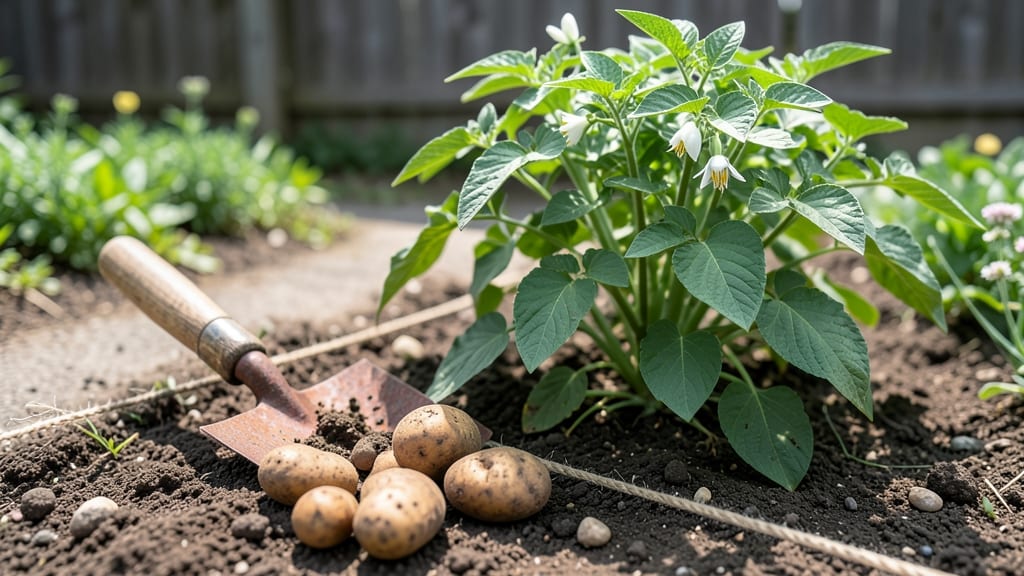
Planting seed potatoes in Michigan requires timing them perfectly—4 to 6 weeks before your last frost, which in most of the state lands between early April and mid-May.
Get it wrong, and you risk frost-killed sprouts or a harvest that never materializes. Michigan’s short growing season and cold springs mean the difference between a bountiful harvest and wasted seeds—so knowing your zone (4, 5, or 6) and local frost dates is non-negotiable.
Below, I break down the exact frost-free timeline for each zone, soil temperature thresholds, and how to adjust if Mother Nature throws a curveball—because in Michigan, plan for the worst and hope for the best.
You’ll also discover the best varieties for your zone, how to prep your soil, and when to start seeds indoors if your spring is particularly chilly. Let’s get those 🥔 in the ground the right way.
Michigan’s seed potato planting timeline by hardiness zone (4-6) and frost dates
Michigan’s short growing season and unpredictable frost dates make timing critical for seed potato success. Planting too early risks frost damage, while waiting too long cuts harvest potential. The key? Soil temperature thresholds of 45°F+ and knowing your USDA zone (4-6)—each has a unique window for optimal planting.
According to Michigan State University and USDA data, zone 4 (northern Michigan) has the latest frost dates, while zone 6 (southern Michigan) can plant up to 3 weeks earlier.
Pre-sprouting your seed potatoes indoors 2-4 weeks before planting gives you a 2-week head start on the growing season—a game-changer for northern gardeners.
🌱
For zone 4 gardeners, aim to plant early varieties like Red Pontiac (90-day maturity) by April 15—any later risks stunted growth before frost.
In zone 6, you can push the envelope with late varieties like Kennebec (110-day maturity) planted as early as March 20, but always confirm soil warmth with a soil thermometer.
Pro tip: Chill your seed potatoes for 2-4 weeks at 40–50°F before planting. This mimics Michigan’s cold springs and encourages uniform sprouting. Store them in a cool, dark basement or unheated garage—never the fridge, as ethylene gas can harm them.
💧
If your last frost date slips (as it often does in Michigan), switch to cold-hardy varieties like Yukon Gold or use frost blankets for the first 2 weeks after planting. These strategies buy you 10–14 extra frost-free days, extending your harvest window significantly.
Soil temperature is more critical than calendar dates. Wait until the morning soil temp consistently stays above 45°F for 5+ days. Use a soil thermometer—Michigan’s chilly, wet springs can delay warming by 2–3 weeks compared to southern states.
🌡️
For container growing, adjust your timeline by 1–2 weeks earlier—pots warm up faster than in-ground soil. Plant zone 5 containers by March 15 and zone 6 containers by March 1 to maximize your short season.
Just ensure containers have drainage holes and use a lightweight potting mix to prevent waterlogging.
Finally, plan for succession planting if you want a continuous harvest. In zone 6, add a second planting of early varieties by May 1—just 6–8 weeks before your first frost. This gives you two harvests in one season, doubling your yield potential.
How to adjust planting for Michigan’s unpredictable weather: signs it’s Really Safe to Plant
Michigan’s unpredictable spring can leave you staring at your seed potatoes, wondering if it’s safe to plant. Relying on calendar dates alone is risky—last frosts in zone 4 can hit as late as May 15, while zone 6 might see frost in early April.
Instead of guessing, use these real-world indicators to time your planting perfectly.
Soil temperature isn’t the only factor: leafing trees, frost cloth tests, and even the moon phase (for traditional gardeners) can help. I’ve planted potatoes for over a decade in Michigan, and these methods have saved my harvests from late frosts.
Let’s dive into the exact signs your potatoes are ready—and what to do if Mother Nature delays spring.
🌱 5 Signs It’s Really Safe to Plant Seed Potatoes in Michigan
- 🌳 Maple or birch trees have leafed out and leaves are fully unfurled (not just buds). This usually means soil is 45°F+ at 4” depth.
- 🌡️ Soil thermometer reads consistently 45°F+ for 3+ days—potatoes need this warmth to sprout reliably.
- 🧵 Frost cloth test: Lay a lightweight frost blanket over a test patch overnight. If no frost forms, your potatoes are safe.
- 🌱 Daffodils or crocuses have finished blooming—a classic sign the soil is warming for root crops.
- ☀️ Daytime highs are consistently above 50°F for a week, with nighttime lows above 35°F.
If your seed potatoes have already sprouted indoors, plant them as soon as you see 2+ inches of growth. For unsprouted potatoes, chill them in the fridge for 2-4 weeks before planting to encourage uniform sprouting. This trick works especially well for late-starting springs in northern Michigan.
But what if the signs say “go,” and then Jack Frost pays an unexpected visit? Don’t panic. Use frost blankets or row covers to protect young plants. For extra insurance, choose cold-hardy varieties like Yukon Gold or Red Pontiac, which tolerate light frosts better than delicate Russets.
I’ve saved entire rows this way after a late April frost.
For zone 4 gardeners, err on the side of caution—wait until after May 10 unless you’re using row covers. In zone 6, you can plant as early as mid-April if the soil is warm enough.
Always plant in well-draining soil with a pH of 5.0-6.5 to prevent rot. Amend clay soil with compost or sand if needed.
Pro tip: Plant your seed potatoes deeper (4-6 inches) in sandy soilheavy clayeyes stay covered while allowing roots to establish quickly. Water deeply after planting to settle the soil and encourage root growth.
If a frost warning hits within 2 weeks of planting, cover your rows with straw mulch or black plastic for extra protection.