
Planting
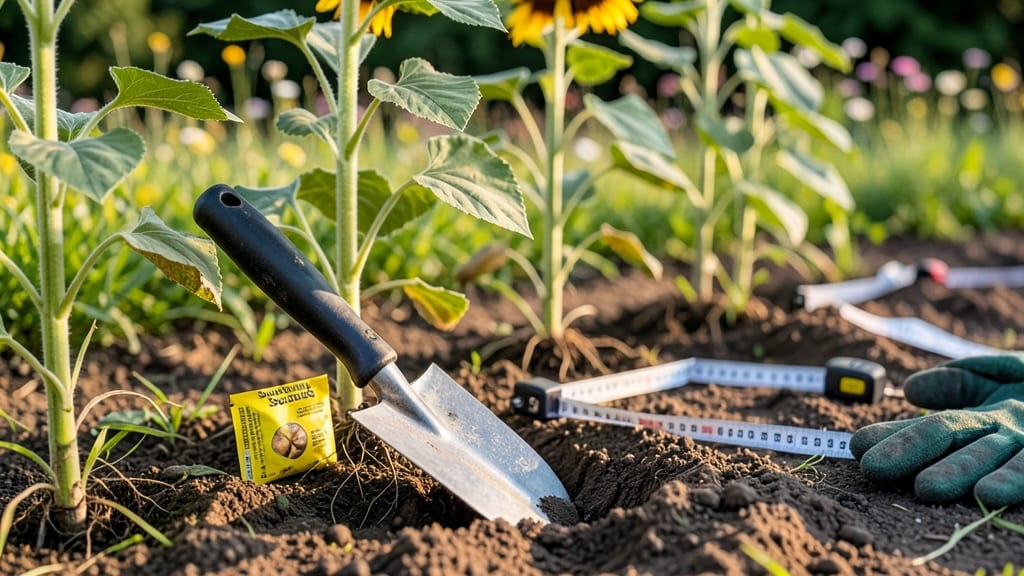
Sunflower seed spacing determines whether your towering 🌻 stalks reach their full potential or struggle in the shade of their neighbors.
Picture this: You’ve spent weeks tending to your garden, only to watch your sunflowers lean dramatically or produce tiny, stunted blooms. The issue isn’t the soil, the water, or even the sunlight—it’s how close (or far) those seeds are planted.
Too tight, and they’ll fight for every drop of water and ray of light; too wide, and you’ll waste precious garden real estate.
In this guide, I’ll break down the exact spacing you need for different sunflower varieties—whether you’re growing giant 12-foot stalks or compact 3-foot dwarfs. We’ll also cover soil prep, row distances, and even how to squeeze sunflowers into small spaces without sacrificing height or yield.
By the end, you’ll know precisely how far apart to plant your seeds for sunflowers that stand tall, thrive, and turn heads all summer long.
Optimal sunflower seed spacing by variety and soil type
Sunflower seed spacing isn't one-size-fits-all—it depends on your sunflower variety and soil fertility. Giant varieties like 'Mammoth' need 24-36 inches apart to avoid overcrowding, while dwarf types like 'Teddy Bear' thrive at 12-18 inches.
Poor soil? Space them wider to compensate for slower growth. Let's break down the perfect distances for your garden layout.
First, consider your sunflower type. Tall varieties (8-16 ft) require more elbow room than dwarf ones (1-3 ft). For example, 'Russian Giant' needs 36 inches between plants to support its massive 12+ ft stalks.
Meanwhile, 'Sunspot' dwarf sunflowers can handle 12 inches apart in containers or small gardens. Always check your seed packet for variety-specific recommendations.
Soil fertility plays a surprising role in spacing. Rich, well-draining soil allows roots to spread quickly, so you can plant closer (18-24 inches). In poor or rocky soil, increase spacing to 30-36 inches—this gives roots room to seek nutrients deeper.
Test your soil pH (ideal: 6.0-7.5) and amend with compost before planting to justify tighter spacing.
Row spacing matters just as much as plant spacing. For standard varieties, aim for 30-36 inches between rows to allow airflow and easy maintenance. Dwarf varieties can share rows spaced 24 inches apart. In raised beds, reduce row spacing to 18-24 inches to maximize vertical growth without crowding.
Here's my proven spacing guide for different garden setups:
| Variety Type | Plant Spacing | Row Spacing | Soil Adjustments | Best For |
|---|---|---|---|---|
| Giant (10-16 ft) | 24-36" | 36-48" | Wide spacing for poor soil | Backyard gardens, cut flowers |
| Standard (6-10 ft) | 18-24" | 30-36" | Normal for average soil | Mixed flower beds |
| Dwarf (1-3 ft) | 12-18" | 24" | Close for containers | Patio pots, small gardens |
| All varieties | 30-36" | N/A | Poor/rocky soil | Urban gardens, slopes |
For urban gardeners with limited space, try the "square foot" method: plant 4 dwarf sunflowers per square foot in a 12"x12" grid. This maximizes vertical growth while keeping stalks from competing.
In raised beds, stagger rows every 18 inches to create a checkerboard pattern—this prevents overcrowding while using space efficiently.
One common mistake? Assuming all sunflowers need the same spacing. Single-stem varieties (like 'Autumn Beauty') can handle 12 inches apart because they don't branch. Branching types (like 'ProCut') need 24+ inches to support multiple flower heads. Always read your seed packet—it's your spacing blueprint!
Pro tip: Use a string and stakes method to mark your spacing grid. Drive stakes at your row spacing distance, then tie string between them. Drop seeds along the string for perfect alignment. This saves time and ensures consistency, especially for large plantings.
Remember, soil fertility affects spacing flexibility. In high-fertility soil, you can reduce spacing by 25% because plants grow faster and stronger. In low-fertility soil, increase spacing by 25% to give roots room to explore.
Always water deeply after planting to encourage root growth into the wider spacing area.
Finally, consider your harvest goals. For seed production, space plants 36 inches apart to maximize seed yield per stalk. For cut flowers, 24 inches apart gives you stronger stems. Adjust based on whether you're growing sunflowers for beauty, food, or both!
How deep and when to plant sunflower seeds for best growth
Getting the planting depth and timing right for sunflower seeds can make the difference between stunted plants and towering giants. Unlike many flowers, sunflowers thrive when planted just 1-2 inches deep—any deeper, and they’ll struggle to break through the soil.
I’ve learned this the hard way after watching seeds rot when buried too deep or sprout too slowly when barely covered.
Timing is equally critical. Sunflowers love warmth, and they won’t germinate until soil temperatures reach 55-60°F. Planting too early in cool soil means waiting weeks for sprouts, while planting too late can shorten the growing season, especially in northern climates.
The sweet spot? After your last frost date, when daytime temperatures consistently stay above 60°F.
Another common mistake? Ignoring soil preparation. Sunflowers prefer loose, well-draining soil with a pH between 6.0 and 7.5. Amend heavy clay soil with compost or sand to prevent waterlogging, which can drown young seedlings.
If your soil is rocky or compacted, consider planting in raised beds for better root development.
⚠️ Sunflower Seed Spacing Warning
Planting sunflower seeds too close (less than 6 inches apart) causes crowding, leading to weak stalks and smaller blooms. Overcrowding also increases the risk of fungal diseases from poor air circulation. For giant varieties, space seeds 18-36 inches apart—any closer, and they’ll compete for nutrients and sunlight, stunting growth.
For spring planting, aim to sow seeds 2-4 weeks after your last frost. In Zone 5 or colder, this might be late May, while gardeners in Zone 8+ can start as early as March.
If you’re in a short-season climate, consider starting seeds indoors 4-6 weeks before transplanting to extend your growing window.
Fall planting is possible in warmer climates (Zones 9-11), but only if you sow seeds 6-8 weeks before your first frost. Sunflowers grown for seed production need a full growing season, so fall-planted varieties may not mature fully.
If you’re experimenting, try dwarf varieties, which mature faster and can handle cooler temperatures better.
Pro tip: Use a seedling heating mat if your soil stays cool. This speeds up germination by 50% and gives your sunflowers a head start. Just place the mat under your seed trays or directly in the garden bed until sprouts emerge.
Pair this with a clear plastic dome to trap heat and moisture—your seeds will thank you with faster, more uniform growth.
Finally, mark your rows with stakes or flags to avoid accidentally planting new seeds too close to existing ones. Sunflowers have deep taproots, so once they’re established, they’re hard to transplant.
Plan ahead, and your garden will reward you with sunflowers that reach their full height potential—no more leaning, no more struggling for space.