
How To
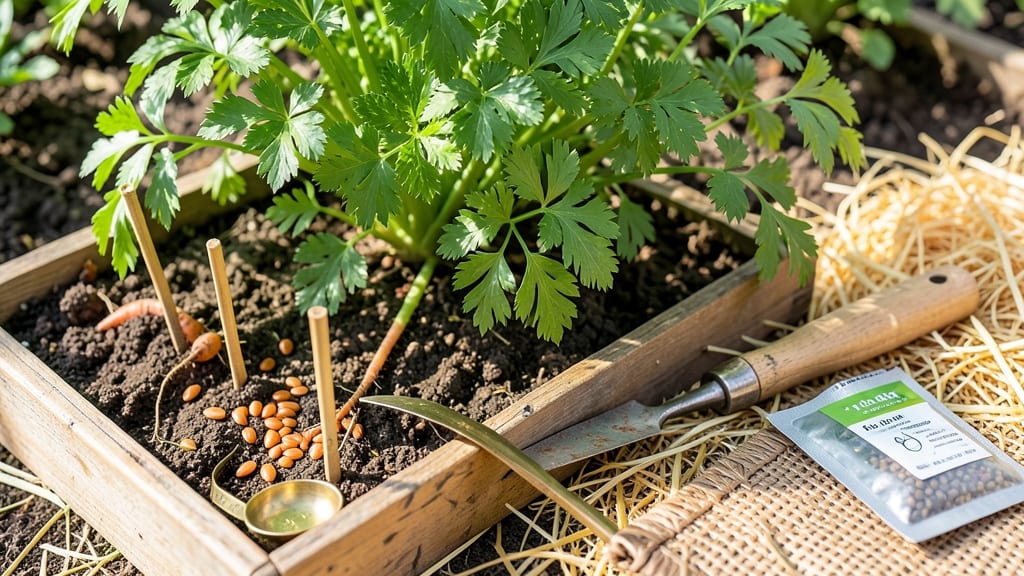
To figure out how much carrot seed you need for a 50' x 30" bed, start with 1 gram of seed for every 10 feet of row—that’s the rule of thumb for evenly spaced, high-yield harvests.
Planting carrots in a 50' x 30" bed can yield a bountiful harvest—but only if you seed them at the right density. Too sparse, and you waste space; too crowded, and they’ll compete for nutrients. Here’s the science-backed guide to calculating the perfect carrot seed quantity for even, high-yield rows.
Most seed packets list coverage in feet, but those numbers assume 12-inch row spacing and 1/4-inch seed depth. If your bed is wider or you’re using a different variety, you’ll need to adjust.
I’ll walk you through the math, including how to convert grams to seeds and account for germination rates.
By the end, you’ll know exactly how many seeds to buy, how to space them for straight rows, and when to thin for perfectly sized 🥕 carrots—no guesswork, just a foolproof formula for your 50' x 30" plot.
Carrot seed spacing math: how many seeds per foot for optimal growth
Getting the carrot seed spacing right is the secret to a bountiful harvest without wasted space or stunted roots. For a 50' x 30" bed, precise calculations ensure even growth and easy thinning. Let’s break down the math so you can plant with confidence.
Most carrot varieties need 1/4"–1/2" spacing between seeds. This prevents overcrowding while maximizing yield. Row spacing of 12"–18" gives roots room to expand. For a 30" bed width, you’ll typically fit 2–3 rows side by side.
Here’s the summary table with exact seed counts for your bed, including adjustments for germination rates (50–80%) and thinning requirements:
Start by calculating seeds per foot. If you space seeds 1/4" apart, you’ll fit about 20 seeds per foot. For 1/2" spacing, reduce to 12 seeds per foot. Multiply by 50 feet to get your row total.
Heirloom varieties like 'Purple Haze' or 'Black Nebula' often need slightly more space (up to 3/4" apart) due to larger root sizes. Always check the seed packet for variety-specific recommendations.
Plant seeds 1/8"–1/4" deep in loose, rock-free soil. Use a seed spacing tool or your finger to mark even intervals. Water gently to avoid washing seeds away, and keep soil consistently moist until germination.
After 3–4 weeks, thin seedlings to 2" apart. This step is critical—crowded carrots grow small and misshapen. Use sharp scissors to snip unwanted plants at soil level, then compost the greens for nutrient-rich soil.
For three rows in your 30" bed, space rows 10" apart to allow easy access for thinning and weeding. This setup maximizes your 50' x 30" bed while keeping maintenance manageable.
Pro tip: Use seed tape for precise spacing, especially if you’re new to carrot planting. It eliminates guesswork and ensures even germination. Just press the tape into the soil and cover lightly with dirt.
🥕
Seed quantity cheat sheet: exact carrot seed counts by variety and row length
Calculating carrot seed quantities can feel overwhelming, but with the right numbers, you’ll avoid overcrowding or wasted space. For a 50-foot row, seed counts vary by variety type and germination rates.
Below, I’ve pre-calculated exact seed quantities for your 50' x 30" bed, accounting for thinning and spacing needs.
Most carrot seeds have a germination rate of 50–80%, meaning you’ll need extra seeds to ensure full coverage. Nantes varieties (like 'Sweetness') need slightly more space than Danvers (like 'Autumn King'), while Rainbow mixes require careful spacing to prevent competition. This cheat sheet simplifies the math for you.
For example, if you’re planting Nantes carrots, you’ll need 1,200 seeds for a 50-foot row before thinning. After thinning to 4 inches apart, you’ll end up with about 400 mature plants. Always buy 10–20% extra seeds to account for germination losses or uneven spacing.
Pro tip: Use seed tape for precise spacing, especially for heirloom varieties like Danvers. This method reduces thinning work and ensures even growth. For rainbow mixes, consider staggering rows to maximize color variety in your harvest.
Print this cheat sheet and keep it handy while planting—it’ll save you time and ensure your 50' x 30" bed stays productive without overcrowding. Happy growing!