
Lawn
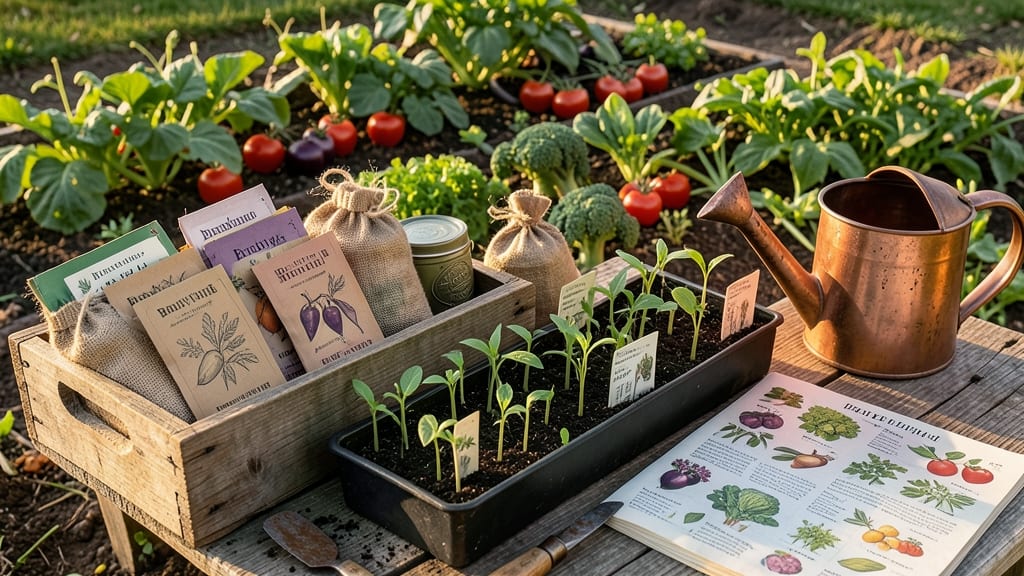
Finding heirloom vegetable seeds that bring history to your garden starts with the right company. 🌱 These rare varieties aren’t just plants—they’re living pieces of agricultural heritage, and the best seed suppliers make it easy to grow them with confidence.
I’ve narrowed down the top sources for organic, non-GMO, and open-pollinated seeds, so you can focus on what matters most: planting and preserving unique flavors for generations.
The best companies go beyond basic seed sales—they offer detailed growing guides, climate-specific recommendations, and even stories behind the varieties. Look for suppliers with strong customer reviews (especially from organic gardeners) and a focus on rare cultivars, like 19th-century tomatoes or heirloom beans you won’t find in big-box stores.
Some even provide seed-saving tips to keep your garden legacy growing.
Whether you’re a beginner testing your first Cherokee Purple tomato or an expert hunting for obscure Apache Blue corn, these companies make it simple. You’ll get seeds that thrive in your zone, resist pests naturally, and deliver flavors store-bought varieties can’t match.
The payoff? A garden that’s as unique as the stories behind these plants.
Start with a few tried-and-true suppliers, then expand your collection as you discover new favorites. The key is matching seeds to your climate, soil, and growing style—so your first harvest sets the stage for years of heirloom success. Ready to grow something extraordinary?
📚 In This Guide
- What you need
- Instructions
- Tips and common mistakes
- Wrapping up and next steps
What you need
- ● Heirloom vegetable seeds: Purchase from reputable heirloom vegetable seed companies (e.g., Baker Creek, Seed Savers Exchange, or High Mowing). Start with 1–2 varieties (e.g., Brandywine tomatoes or Black Krim eggplants).
- ● Seed starting mix: 10–20 lbs of sterile, lightweight potting soil (avoid garden soil—it’s too dense!).
- ● Containers: Seed trays or biodegradable pots (50–100 cells or 2–3 inch pots).
- ● Plastic nursery flats (for organizing seedlings).
- ● Grow lights or sunny windowsill: A full-spectrum LED grow light (12–16 hrs/day) or a south-facing window with consistent sunlight.
- ● Misting bottle or spray nozzle: For gentle watering (avoid drowning seeds!).
- ● Plant labels & markers: Waterproof tags or a pencil to track varieties (trust us, you’ll forget!).
- ● Transplanting tools: Small hand trowel or spoon.
- ● Garden twine (for staking taller varieties like Mammoth Melting Snow peas).
- ● Heat mat: Speeds up germination for slow starters (e.g., Delicata squash).
- ● Humidity dome or plastic wrap: Retains moisture for delicate seeds.
- ● pH test kit: Ensures your soil is in the ideal 6.0–7.0 range.
- ● Compost or organic fertilizer: Boosts nutrient-rich soil for heirloom vigor.
- ● Journal or app: Track planting dates, growth stages, and seed-saving notes.
Step-by-step guide to selecting the best heirloom vegetable seed companies
Here's how to curate a collection of rare, open-pollinated seeds that will preserve your gardening heritage.
🌱 Step 1: Identify Your Climate and Growing Zone
Start by determining your USDA Hardiness Zone—this ensures you select heirloom varieties bred to thrive in your specific conditions. Companies like Baker Creek Heirloom Seeds and Seed Savers Exchange organize their catalogs by zone, making it easier to find cold-hardy varieties like 'Black Krim' tomatoes for Zone 5 or 'Amarillo' peppers for Zone 9.
Check the company's website for zone-specific recommendations, as some heirlooms perform poorly outside their native climates. For example, 'Cherokee Purple' beans flourish in the Southeast but may struggle in cooler, shorter growing seasons. Always cross-reference with local gardener reviews for real-world performance data.
🌿 Step 2: Prioritize Open-Pollinated and Non-GMO Seeds
Heirloom seeds must be open-pollinated to preserve their genetic integrity for future generations. Avoid hybrid or GMO-labeled varieties—these won’t produce true seeds from saved harvests. Southern Exposure Seed Exchange and Territorial Seed Company specialize in 100% open-pollinated, non-GMO heirlooms, ensuring you can replant seeds year after year.
Look for certifications like "Organic Project" or "Non-GMO Project Verified" if organic gardening is a priority. Some companies, like High Mowing Seeds, offer organic heirloom lines treated with natural fungicides, which is ideal if you’re avoiding synthetic inputs entirely.
💧 Step 3: Research Seed Companies for Rare and Unique Varieties
Dive into catalogs from Baker Creek Heirloom Seeds and Seed Savers Exchange—these are the gold standards for rare, historic varieties. Baker Creek’s "Year of the Heirloom" series highlights unique finds like 'Dragon’s Tongue' beans or 'Moon and Stars' watermelons, while Seed Savers Exchange offers endangered crop preservation programs.
Smaller, regional companies often carry even more obscure varieties. Southern Exposure Seed Exchange focuses on Southern-adapted heirlooms like 'Crimson Romance' okra, while Pinetree Garden Seeds specializes in cold-hardy, Northern-friendly options such as 'Mammoth Melting' sugar snap peas. Always read seed descriptions carefully—terms like "heirloom," "open-pollinated," and "non-hybrid" must appear explicitly.
✂️ Step 4: Compare Pricing and Bulk Options
Heirloom seeds can be pricier than conventional varieties, but many companies offer bulk discounts or seed swap programs. Baker Creek provides 10-packs of rare varieties at a lower per-seed cost, while Seed Savers Exchange has a Seed Bank where members can trade seeds for free. Calculate long-term savings—saving seeds from your own harvests will eventually offset initial costs.
Watch for seasonal sales (spring and fall) and membership perks, like free seed catalogs or exclusive varieties for subscribers. Some companies, such as Territorial Seed Company, bundle seeds with growing guides or historical notes—these extras add value beyond the seed packet itself.
🪴 Step 5: Plan for Storage and Long-Term Seed Preservation
Once you’ve selected your heirloom seeds, store them properly to maintain viability for 3-5 years (or longer for some varieties). Use airtight, moisture-proof containers (like Mylar bags with oxygen absorbers) and keep them in a cool, dark place (ideal temperature: 32-41°F). Companies like Baker Creek include storage tips with orders, but you can also DIY with glass jars and silica gel packets.
Label each packet with the variety name, purchase year, and germination date—this prevents confusion and ensures you plant the freshest seeds first. Some heirlooms, like 'Black Beauty' eggplants, retain viability longer than others, so research individual storage needs. Join seed-saving forums (like those hosted by Seed Savers Exchange) to troubleshoot storage issues and share preservation tips with fellow gardeners.
Tips & tricks for building your heirloom seed collection
Here's what I've learned about curating rare seeds that'll keep your garden thriving for generations.
Zone-Specific Selection: Don't just rely on catalog descriptions—visit companies' websites for their zone-specific recommendations. For instance, 'Black Krim' tomatoes thrive beautifully in Zone 5 but may struggle in Zone 10's intense heat. I always cross-reference with local gardening forums to verify real-world performance before ordering. This extra step prevents costly mistakes with varieties that won't adapt well to your microclimate.
Certification Verification: When prioritizing open-pollinated seeds, look beyond just the labels. The "Non-GMO Project Verified" certification is particularly important if you're avoiding genetically modified organisms. I've found that companies like High Mowing Seeds go the extra mile by offering organic heirloom lines with natural fungicide treatments—this gives you both the genetic integrity you want and the organic growing standards you need.
Storage Strategy: The ideal storage temperature of 32-41°F is crucial for maintaining seed viability, but don't overlook humidity control. I recommend using Mylar bags with oxygen absorbers for long-term storage—these create an airtight environment that prevents moisture damage. For short-term storage (up to 1 year), glass jars with silica gel packets work perfectly. Remember to label each packet with the variety name, purchase year, and germination date to maintain organization in your seed collection.
Community Resources: Tap into the wealth of knowledge available through seed-saving forums hosted by companies like Seed Savers Exchange. These communities often share regional growing tips and troubleshooting advice that you won't find in catalog descriptions. I've learned about specific varieties that thrive in my area through these forums—like the 'Crimson Romance' okra that performs exceptionally well in my Southern climate. This peer-to-peer knowledge is invaluable for maximizing your heirloom seed success.
Pro Tips for Heirloom Vegetable Seed Companies
- Here's what I've learned about curating rare seeds that'll keep your garden thriving for generations.
- Zone-Specific Selection: Don't just rely on catalog descriptions—visit companies' websites for their zone-specific recommendations.
- Certification Verification: When prioritizing open-pollinated seeds, look beyond just the labels.
Frequently asked questions
Got questions about heirloom vegetable seed companies? You’re not alone! Here are some of the most common concerns—and answers—to help you grow a garden full of rare, flavorful treasures.
What’s the difference between heirloom seeds and hybrid seeds?
Heirloom seeds are open-pollinated, meaning you can save them from year to year and they’ll grow true to type. Hybrid seeds, on the other hand, are bred for specific traits (like disease resistance) but won’t produce the same results if you save their seeds. Heirlooms offer flavor, biodiversity, and sustainability—plus, you’re preserving history!
When is the best time to order heirloom seeds?
Most companies recommend ordering 6–8 weeks before your last frost date to ensure timely delivery. Early spring (February–March) is ideal for warm-season crops (like tomatoes and peppers), while cool-season veggies (kale, lettuce) can go in as soon as you’re ready to plant. Pro tip: Check seed packets for days to maturity to align with your growing season!
Are heirloom seeds more expensive than regular seeds?
Yes, but the trade-off is unmatched flavor, uniqueness, and long-term savings. While a single packet of heirloom tomatoes might cost $3–$5 (vs. $1 for hybrids), you’ll get heirloom-quality produce and the ability to save seeds for future seasons. Many companies also offer bulk discounts or seed swaps to stretch your budget!
Can I save seeds from heirloom vegetables to replant next year?
Since heirloom seeds are open-pollinated, you can harvest, dry, and store them for planting in future seasons. Just follow these steps:
- Let veggies fully mature on the plant.
- Extract seeds (e.g., ferment tomato seeds in water for 3 days, then dry).
- Store in a cool, dark place (like a sealed jar) for up to 3–5 years.
What if I can’t find a specific heirloom variety locally?
No worries! Many online heirloom seed companies (like Baker Creek, Seed Savers Exchange, or Rare Seeds) specialize in rare varieties. You can also:
- Join seed swaps or gardening forums (e.g., Reddit’s r/SeedSaving).
- Check with botanical gardens or university extension offices.
- Try crowdfunded seed projects for ultra-rare varieties.
Wrapping up and next steps
Choosing heirloom vegetable seeds isn’t just about growing food—it’s about preserving history, flavor, and biodiversity for future generations. 🌱 These rare varieties offer unique tastes, resilience, and a deeper connection to gardening traditions. Whether you're a seasoned gardener or just starting, your garden can become a living legacy.
Ready to take the next step? Start small with a few heirloom seeds, experiment with flavors, and share your harvest with others. Your garden could inspire the next generation of seed savers—one rare tomato or heirloom pepper at a time!