
Size
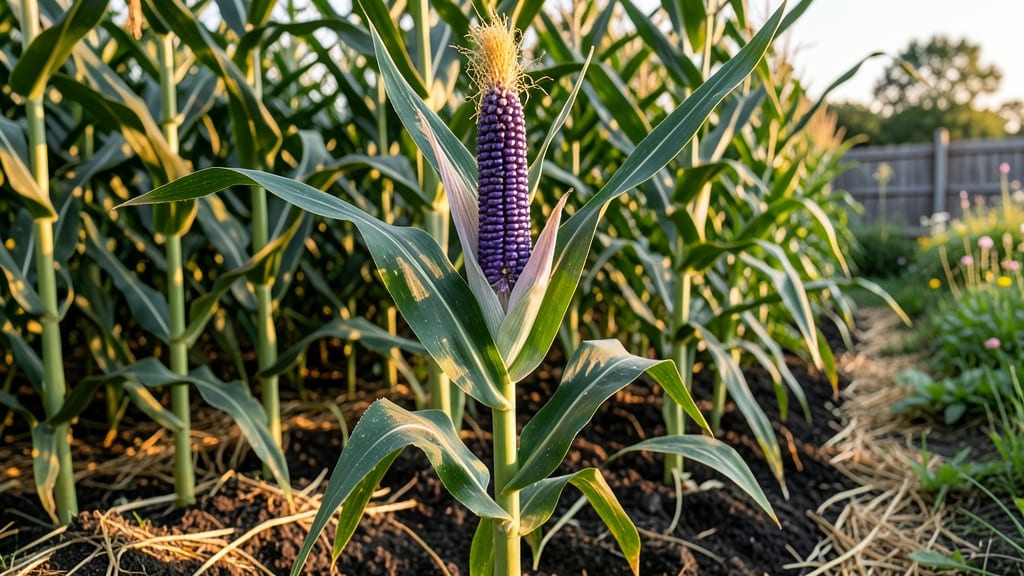
Growing violet corn from seed transforms your garden into a living work of art. 🌱 The first time I saw those deep purple stalks emerge, I knew this wasn't just another crop—it was a statement piece that would make neighbors stop and stare.
What makes violet corn special is how it grows: the same care as regular corn, but with kernels that turn a stunning magenta when cooked, and stalks that stay vibrant all summer long.
You'll need well-draining soil, full sun (at least 6 hours daily), and patience—violet corn takes about 90-110 days to mature. The secret to those bold purple kernels lies in the soil: mix in compost before planting to give roots the nutrients they need for that intense color.
Plant seeds 1 inch deep and 4-6 inches apart in rows spaced 3 feet apart—this gives plants room to grow without crowding.
Water consistently, keeping soil moist but not soggy, especially during tasseling and ear development. The real magic happens when those silks appear: that's when you'll see the purple hue start to develop.
By harvest time, you'll have ears that look like edible jewels, perfect for popping straight off the cob or drying for winter storage. The flavor? Sweet with a nutty depth that regular corn can't match.
Watch for corn earworms and smut—both can ruin your harvest. Use row covers early to deter pests, and remove infected plants immediately.
With the right care, you'll end up with vibrant purple stalks that make your garden the talk of the neighborhood, plus a crop that's as beautiful as it is delicious. Here's how to make it happen!
📚 In This Guide
- What you need
- Instructions
- Tips and common mistakes
- Wrapping up and next steps
What you need
- ● Violet corn seeds: 1–2 packets (or saved seeds from a previous harvest). Choose heirloom varieties like Black Aztec or Purple Majesty for the deepest hues.
- ● Growing space: Outdoor garden: 6–8 hours of full sun daily, well-draining soil (pH 6.0–7.0). A 4’ x 4’ plot per plant (or 12” apart in rows for multiple plants).
- ● Containers: 5-gallon pots (minimum) with drainage holes if growing in pots.
- ● Soil: Loamy, nutrient-rich soil amended with 2–3 inches of compost or aged manure.
- ● Fertilizer: Balanced fertilizer (10-10-10) or compost tea at planting and mid-season.
- ● Organic options: Fish emulsion or worm castings for a gentle boost.
- ● Watering supplies: Drip irrigation or a watering can with a spray nozzle (avoid wetting leaves to prevent disease).
- ● Support: Bamboo stakes or trellis (5–6 ft tall) for tall varieties to prevent lodging.
- ● Mulch: Straw or shredded leaves to retain moisture and suppress weeds.
- ● Row covers: Lightweight fabric to protect young seedlings from pests or frost.
- ● pH test kit: To ensure soil acidity/alkalinity is ideal for vibrant purple hues.
- ● Seedling heat mat: If starting indoors in cool climates (60–70°F for germination).
- ● Pruning shears: For trimming dead leaves or harvesting.
Step-by-Step instructions for growing stunning violet corn in your garden
Here's how I transform dormant violet corn seeds into those dramatic purple stalks that steal the show in any garden.
🌱 Step 1: Prepare Your Planting Site for Maximum Growth
Violet corn thrives in rich, well-draining soil with plenty of space to spread its roots. Choose a location with full sun exposure (6-8 hours daily)—this is critical for developing those bold purple hues. I always amend my garden bed with 2-3 inches of compost and work it into the top 6 inches of soil to create a nutrient-rich foundation.
Test your soil's pH—violet corn prefers a slightly acidic to neutral range of 6.0-7.0. If your soil runs alkaline, add sulfur or peat moss to adjust it before planting. The goal is loose, fertile soil that won't compact around those developing roots. I like to rake the area smooth and create shallow furrows 1 inch deep where the seeds will go.
🌱 Step 2: Plant Seeds at the Right Depth and Spacing
Sow violet corn seeds 1 inch deep and 6 inches apart in rows spaced 3 feet apart. This gives the plants room to grow their wide, sturdy stalks without competing for nutrients. I plant 4 seeds per hill to ensure at least one strong plant emerges—corn seeds sometimes struggle with uneven germination.
Cover the seeds lightly with soil and water gently but thoroughly. The soil should feel moist 2 inches down after watering. Avoid soaking the area—you want the seeds to stay consistently moist but not waterlogged, which can cause rot. I use a fine-mesh spray nozzle to avoid disturbing the seeds while ensuring even moisture.
☀️ Step 3: Maintain Consistent Moisture and Fertility
Keep the soil evenly moist throughout the growing season, aiming for 1-1.5 inches of water per week. Violet corn is drought-tolerant once established, but young plants need steady moisture to develop strong stalks. I water in the morning to allow foliage to dry before evening, which helps prevent fungal diseases.
When plants reach 12 inches tall, side-dress with 2-3 inches of compost or a balanced organic fertilizer to support the heavy ear production. I also mulch around the base with straw to retain moisture and suppress weeds. Watch for tassels (male flowers)—they appear first and signal that silking (female flowers) will follow in about a week.
✂️ Step 4: Monitor for Pests and Harvest at Peak Color
Violet corn is relatively pest-resistant, but keep an eye out for corn earworms and aphids. I handpick larger pests and use neem oil for minor infestations. The dramatic purple color intensifies as ears mature—harvest when the husks turn completely brown and the kernels feel plump when pressed gently.
Cut stalks at the base with pruners and hang them in a dry, shaded area for 2-3 weeks to dry completely. The kernels will darken further, and the husks will crisp up. Store dried ears in airtight containers away from direct sunlight to preserve their vibrant color and flavor for months.
⏰ Step 5: Save Seeds for Next Year's Dramatic Display
If you want to grow violet corn again, let a few ears dry completely on the stalk before harvesting. Once fully mature, the kernels will turn a deep purple-black. Shell the dried ears and store the seeds in a cool, dark place. Violet corn seeds retain viability for 2-3 years when stored properly.
Here's the thing—violet corn is a tri-color variety, so saved seeds may produce a mix of purple, white, and yellow kernels. For consistent color, I purchase fresh seeds annually. But the thrill of watching those purple stalks emerge each spring makes it worth the experiment!
Tips & tricks for growing stunning violet corn in your garden
Real talk: those vibrant purple stalks don't just happen—they require some intentional care. Here's what nobody tells you about growing this showstopper variety.
Soil Prep Secret: The 2-3 inches of compost in Step 1 isn't just about nutrients—it's about creating the perfect airy environment for those deep roots. I like to mix in a handful of perlite too (about 1 part perlite to 4 parts soil) to prevent compaction. This helps the roots spread properly for those wide, sturdy stalks you're dreaming of. The key is loose soil that won't suffocate those developing roots as they grow.
Planting Strategy: When planting those 4 seeds per hill in Step 2, I always mark the location with small sticks before covering. This helps me remember where I've planted and prevents accidental disturbance when weeding later. Also, if you're short on space, you can reduce the row spacing to 2.5 feet—just be prepared for slightly more competition between plants.
Watering Wisdom: That 1-1.5 inches of water per week in Step 3 needs to be consistent, but here's the trick: I water deeply every 3-4 days rather than light daily sprinkles. This encourages deeper root growth, which means those purple stalks will stay upright and sturdy. The soil should stay moist 2 inches down, but not soggy—think of it like wringing out a damp sponge.
Harvesting Hack: For the 2-3 week drying period in Step 4, I hang the stalks in a well-ventilated area with a small fan blowing gently nearby. This speeds up the drying process while preventing mold. The fan keeps air circulating, which helps those kernels dry evenly and maintain their vibrant color. Just don't let it blow directly on the ears!
Pro Tips for Violet Corn Seed Grow A Garden
- Real talk: those vibrant purple stalks don't just happen—they require some intentional care.
- Soil Prep Secret: The 2-3 inches of compost in Step 1 isn't just about nutrients—it's about creating the perfect airy environment for those deep roots.
- Planting Strategy: When planting those 4 seeds per hill in Step 2, I always mark the location with small sticks before covering.
Frequently asked questions
Got questions about growing vibrant violet corn? You’re not alone! Here are answers to the most common queries—from planting to harvest—to help you cultivate stunning purple stalks with confidence.
How deep should I plant violet corn seeds?
Plant violet corn seeds about 1 to 1.5 inches deep in well-drained soil, spacing them 6–8 inches apart. For rows, keep them 2–3 feet apart to allow room for growth. Warm soil (at least 60°F) speeds up germination, so wait until after the last frost if your climate is cool.
How long does violet corn take to grow?
From seed to harvest, violet corn typically takes 90–120 days, depending on the variety and growing conditions. Early varieties may mature in 80 days, while heirloom types could take closer to 130 days. Monitor soil moisture and sunlight—6+ hours of sun daily is ideal for vibrant purple kernels.
Can I grow violet corn in containers?
Yes! Violet corn thrives in large containers (at least 12–18 inches deep) with drainage holes. Use a high-quality potting mix and fertilize regularly (every 2–3 weeks). However, corn is wind-pollinated, so grow multiple plants together or hand-pollinate with a paintbrush if space is tight. Containers work best in warm climates or as seasonal pots.
What pests should I watch for with violet corn?
Violet corn faces similar pests as regular corn, including corn earworms, aphids, and raccoons. Use row covers early in the season to deter pests, and handpick larger insects. For earworms, try Bt spray (Bacillus thuringiensis) or neem oil. Store harvested ears in a cool, dry place to prevent mold or critter damage.
Will violet corn kernels stay purple when cooked?
Freshly harvested violet corn kernels retain their vibrant purple hue when cooked, especially if boiled or steamed. However, overcooking or canning may fade the color slightly. For the deepest purple, harvest at peak ripeness (when husks turn brown) and cook quickly. The flavor is slightly sweeter and nuttier than white corn—perfect for salads, soups, or grilling!
Wrapping up and next steps
Growing violet corn from seed is a rewarding journey that transforms your garden into a stunning, edible masterpiece! 🌱 With the right soil, sunlight, and patience, you’ll soon enjoy vibrant purple stalks and nutritious kernels—perfect for adding color and flavor to your meals.
Whether you’re a seasoned gardener or a beginner, this vibrant crop is a fun and fulfilling project.
Ready to take the next step? Start by planting your seeds this season and watch your garden flourish with bold, eye-catching beauty. Share your progress with fellow gardeners or even experiment with recipes featuring your homegrown harvest. Happy growing! 🌟