
Lawn
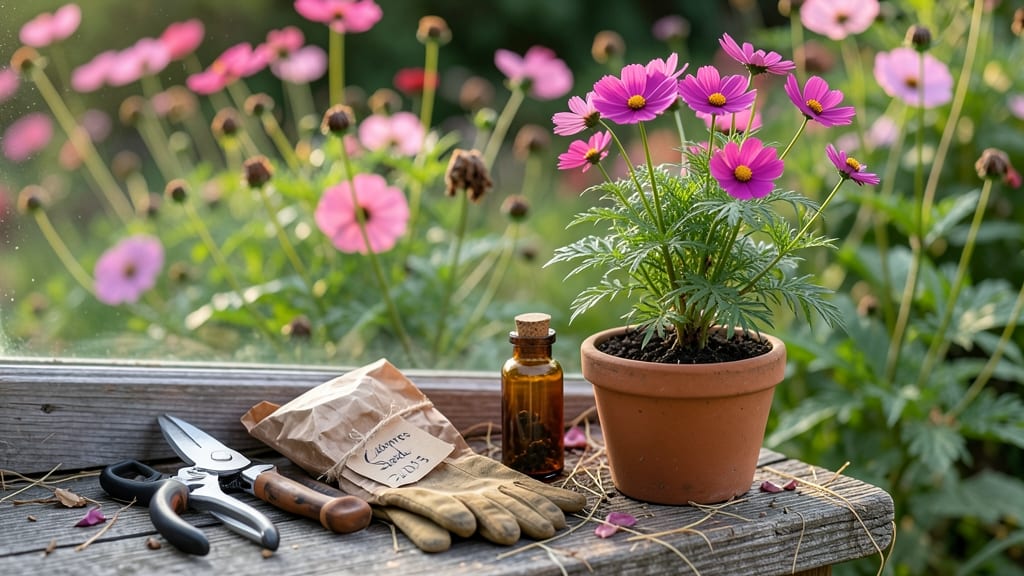
Cosmos seed collection lets you grow these airy, vibrant blooms for free next season—no store-bought packets needed. 🌻 The key is timing: harvest when the seed heads turn brown and papery, usually 4-6 weeks after flowering, before they scatter in the wind. I’ve saved seeds from my garden for three years now, and the plants always come back just as lush. Start by snipping the dried seed heads and hanging them upside down in a paper bag—this keeps seeds contained while they finish drying. Once completely dry (about 2 weeks), gently rub the heads to release the seeds, then sift out debris. Store them in a cool, dry place like an envelope or jar, where they’ll stay viable for 2-3 years. What you’ll end up with are plump, dark seeds ready to plant in spring. The first year might be spotty, but by year two, you’ll have self-sustaining cosmos popping up everywhere. Just watch for moisture—mold is the biggest enemy of stored seeds, so keep them dry. Works for any cosmos variety, from bright pinks to snow whites. Here’s how to do it right the first time—no guesswork, just reliable blooms year after year.
📚 In This Guide
- What you need
- Instructions
- Tips and common mistakes
- Wrapping up and next steps
What you need
- ● Mature cosmos flowers: Choose fully bloomed, dry flowers (🌼) with seed heads that are brown and papery.
- ● Pruning shears or scissors: Sharp, clean pair to snip stems without damaging seed heads.
- ● Paper bags (brown kraft or breathable fabric bags): 1-2 bags per batch of seeds (5–10 flowers per bag).
- ● Newspaper or cardboard: For drying seed heads—cover a flat surface (like a table or tray).
- ● Small envelopes or seed packets: 3x5” or similar size (1–2 per type of cosmos variety).
- ● Permanent marker: To label seed packets with variety names and harvest dates.
- ● Air-tight containers (glass jars, plastic bins, or vacuum-sealed bags): For long-term storage (quart-sized or larger).
- ○ Desiccant packets (optional but recommended): 1–2 per container to absorb moisture.
- ● Fine mesh sieve or colander: For separating seeds from chaff (if hand-processing).
- ● Humidity pack: For containers to monitor moisture levels.
- ● Labeling tape or tags: For organizing seeds by color/variety.
- ● Seed catalog or notebook: To track germination rates and notes on each batch.
- ● Heat mat or warm spot: For reviving old seeds (if needed).
Step-by-Step guide to harvesting and storing cosmos seeds
Cosmos seeds are a gardener's gift—self-sowing and easy to collect, but timing and technique matter. Here's how I ensure vibrant blooms return year after year without losing quality.
🌱 Step 1: Select and Harvest Mature Seed Heads
Wait until the cosmos flowers have fully matured and developed into dry, papery seed pods. The petals will fall away naturally, leaving behind the characteristic brown, fluffy seed heads. These appear around late summer to early fall, depending on your climate. I harvest on a dry, sunny morning when humidity is low—this prevents mold from forming on the seeds.
Use clean, sharp scissors or pruners to cut the entire seed head, leaving about 2 inches of stem attached. This extra stem helps with handling later. Place the harvested seed heads in a paper bag (not plastic) with the stems pointing downward. This allows any remaining moisture to evaporate while keeping seeds contained.
🌿 Step 2: Dry the Seed Heads Thoroughly
Find a warm, dry, and well-ventilated space—like a sunny windowsill or a drying rack—to let the seed heads dry for 2-3 weeks. The goal is to reduce moisture content until the seed pods are completely brittle. You'll know they're ready when a gentle squeeze releases seeds easily, and the pods crumble between your fingers.
I like to place the seed heads upside down in a cardboard box with holes punched in the sides. This encourages airflow while keeping seeds from scattering. Avoid direct sunlight, which can overheat the seeds and reduce viability. Check weekly—if mold appears, spread the seed heads out immediately in a single layer to dry faster.
✂️ Step 3: Extract and Clean the Seeds
Once the seed heads are fully dry, rub them between your hands or use a fork to gently break apart the pods. The seeds will release as small, dark brown, and slightly fuzzy ovals. I place a sheet of white paper beneath my work area to catch any stray seeds—cosmos seeds scatter easily, and you don’t want to lose them.
Sift the seeds through a fine-mesh sieve to separate them from chaff and debris. Discard any seeds that appear shriveled, discolored, or damaged. Store the clean seeds in a labeled envelope or small paper bag. I add a silica gel packet to absorb any lingering moisture—this keeps seeds viable for up to 3 years.
🪴 Step 4: Store Seeds Properly for Long-Term Viability
Place the labeled envelope or bag in an airtight container, like a glass jar with a tight-sealing lid. Store it in a cool, dark place—such as a refrigerator or basement—where temperatures stay between 35-45°F. Avoid freezer storage unless you're preserving seeds for more than 3 years, as temperature fluctuations can stress the seeds.
Label each container with the cosmos variety and the harvest year. I also note the germination rate if I’ve tested it before—this helps me predict success when planting next season. Check the container annually for signs of moisture or pests. If you notice any mustiness or condensation, transfer the seeds to a new container immediately.
⏰ Step 5: Test Germination Before Planting Next Year
Before sowing, test a small batch of seeds to confirm viability. Plant 10 seeds in a shallow tray filled with moist potting mix, then cover lightly with ¼ inch of soil. Place the tray in a warm spot with indirect light and keep the soil consistently moist. Germination should occur within 7-14 days—look for the first true leaves to emerge.
If fewer than 50% of the seeds sprout, consider mixing them with fresh seeds or purchasing new ones. Healthy cosmos seeds should germinate reliably, but age and storage conditions can affect performance. Once you confirm viability, you're ready to sow your seeds outdoors in early spring or late fall for a stunning display of color the following year.
Tips & tricks for perfect cosmos seed collection
Timing and technique make all the difference when preserving cosmos seeds for next year's garden. Here's what I've learned from years of trial and error to ensure your seeds stay viable and vibrant.
The Harvesting Window: Don't rush to harvest—wait until the seed heads are completely dry and papery, with petals fully fallen away. I've learned this the hard way: harvesting too early means seeds won't mature properly, while waiting too long risks them scattering naturally. Aim for that perfect moment when the seed heads turn uniformly brown and feel light as a feather.
Drying Strategy: The 2-3 week drying period in Step 2 is non-negotiable for seed viability. I've found that placing seed heads upside down in a cardboard box with ventilation holes creates ideal airflow without risking seed loss. If you live in a humid climate, consider adding a small fan to circulate air gently—this can cut drying time by nearly a week without overheating the seeds.
Seed Extraction Technique: When breaking open those brittle seed pods in Step 3, work over a large sheet of white paper or directly onto a clean towel. Cosmos seeds are notorious for their ability to escape at the slightest provocation! I've saved countless seeds by using a fork to gently pry open pods rather than crushing them by hand—this preserves more seeds and reduces chaff contamination.
Storage Environment: The 35-45°F temperature range specified in Step 4 is crucial for long-term viability. I store my seed containers in the back of my refrigerator's crisper drawer, which maintains that perfect cool, dark environment. Avoid the freezer unless you're storing seeds for more than 3 years—temperature fluctuations can actually reduce germination rates over time.
Pro Tips for Cosmos Seed Collection
- Timing and technique make all the difference when preserving cosmos seeds for next year's garden.
- The Harvesting Window: Don't rush to harvest—wait until the seed heads are completely dry and papery, with petals fully fallen away.
- Drying Strategy: The 2-3 week drying period in Step 2 is non-negotiable for seed viability.
Frequently asked questions
Got questions about saving your cosmos seeds for next season?
You’re not alone! Here are answers to the most common queries to help you master seed collection like a pro.
When is the best time to collect cosmos seeds?
Harvest seeds when the cosmos flower heads turn brown and begin to dry out—usually 6–8 weeks after blooming. Wait until the seed pods split open naturally (or gently open them) to reveal the dark, papery seeds inside. Avoid collecting seeds from wet or moldy flowers to ensure viability.
How long does it take for cosmos seeds to dry before storing?
Seeds need 1–2 weeks of drying in a cool, dark, and well-ventilated space (like a paper bag or envelope). Spread them in a single layer to prevent moisture buildup. Pro tip: Use a fan on low to speed up drying if humidity is high!
What’s the best way to store cosmos seeds for long-term use?
Store seeds in an airtight container (like a glass jar or resealable bag) with a desiccant packet to absorb moisture. Keep them in a dark, cold place (fridge or freezer) for up to 3–5 years. Label the container with the collection date to track freshness!
Why aren’t my cosmos seeds germinating after storing?
Seeds may fail to sprout if they’re too old, stored damp, or not pre-treated. Try stratifying (mixing seeds with damp sand and refrigerating for 1–2 weeks) or soaking them in lukewarm water for 12 hours before planting. If seeds look shriveled or discolored, they may no longer be viable.
Can I collect seeds from hybrid cosmos varieties?
Yes, but expect unpredictable results—hybrid seeds may not grow true to the parent plant. For consistent blooms, buy fresh seeds from a nursery. If you’re experimenting, plant multiple seeds to account for variations in color or size.
What if I miss the seed collection window?
Don’t worry! If you miss the natural drying process, you can still harvest seeds from spent flowers before they scatter. Cut the flower heads, hang them upside-down in a paper bag, and wait 1–2 weeks for seeds to dry indoors. Just act fast—birds and wind love free snacks too!
Wrapping up and next steps
Preserving the beauty of your cosmos blooms for next year’s garden is simpler than you think! By mastering the art of drying, storing, and reviving cosmos seeds, you’re not just saving time—you’re nurturing a legacy of vibrant, low-maintenance flowers.
Whether you’re a seasoned gardener or just starting out, these steps empower you to grow with confidence and keep your garden thriving year after year.
Ready to turn this year’s harvest into next year’s masterpiece? Grab your dried seeds, label those containers, and start planting! Your future garden—and its visitors—will thank you. 🌸✨