
Lawn
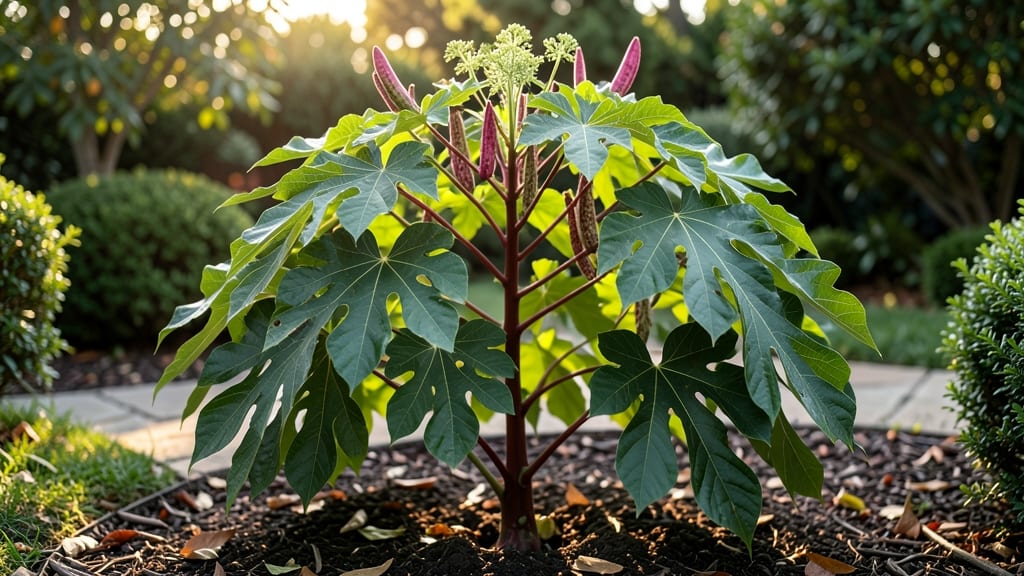
Growing castor beans from seed starts with breaking their stubborn dormancy—because these tropical plants won’t sprout without a little coaxing. 🌱 I’ve learned the fastest trick is soaking seeds overnight in warm water, then nicking the tough outer shell with a file or sandpaper.
This mimics the tropical rains that trigger germination in their native habitat. The payoff? Seedlings emerge within 7-14 days instead of the weeks it takes with untreated seeds. Castor beans thrive in warm climates (zones 10-11) but can be grown as annuals in containers elsewhere.
They need full sun, well-draining soil, and consistent moisture—though they’re surprisingly drought-tolerant once established. Once sprouted, these plants grow 6-10 feet tall with striking red flowers and seed pods that look like mini castles. Just remember: every part is toxic—keep them away from pets and kids.
The seeds themselves have industrial uses (castor oil), but the ornamental value is undeniable. For best results, plant seeds ½ inch deep in warm soil after the last frost. If your climate cools below 60°F, grow them in pots and bring them indoors.
Patience pays off—these giants deliver drama with minimal fuss once they’re going.
📚 In This Guide
- What you need
- Instructions
- Tips and common mistakes
- Wrapping up and next steps
What you need
- ● Castor bean seeds (Ricinus communis) – 5-10 seeds per batch (ensure they’re fresh or pre-treated for dormancy-breaking).
- ● Paper towels or seed germination pads – 2-3 sheets per batch (for moisture retention).
- ● Plastic zip-top bags or small containers – 1 per batch (to create a humid environment).
- ● Spray bottle with water – For gentle hydration (avoid soaking seeds).
- ○ Scissors or knife – For optional seed scarification (if needed).
- ● Growing pots or seed trays – 3-4 inch pots per seedling (well-draining soil required).
- ● Well-draining potting mix – 1 bag (1 cubic foot) (lightweight, organic blend).
- ○ Heat mat (optional but helpful) – For faster germination (70-80°F range).
- ● Hydrogen peroxide (3%) – For seed soaking (10-15 mins) (boosts germination).
- ● Grow lights or sunny windowsill – 12+ hours of light daily (castor beans love light!).
- ● Seedling heat lamp – For extra warmth (if indoors).
- ● Fertilizer (balanced 10-10-10) – Light dose after 4-6 weeks (avoid over-fertilizing).
- ● Pruning shears – For shaping mature plants (castor beans grow fast!).
Step-by-Step instructions for germinating castor bean seeds
Here’s how to break dormancy and coax these slow starters into fast, vigorous growth.
🌱 Step 1: Scarify the Seeds to Break Dormancy
Castor bean seeds have a hard outer shell that blocks water absorption, so you’ll need to rough up the surface. Place seeds between two layers of coarse sandpaper (80-100 grit) and gently rub them in a circular motion for about 30 seconds per seed. You’re not trying to remove the shell—just create tiny scratches to let moisture penetrate.
Test one seed first: if it feels slightly rough but still intact, you’re doing it right. Over-scratching can damage the seed’s viability. Once scarified, store them in a dry, cool place until you’re ready to plant—this step can be done weeks in advance.
💧 Step 2: Soak Scarified Seeds for 24 Hours
Fill a small bowl with lukewarm water (not hot) and add the scarified seeds. They’ll sink to the bottom, which is normal. Let them soak for 24 hours, stirring gently every few hours to prevent mold. You’ll see the water turn slightly cloudy—that’s the seed’s natural oils leaching out, a good sign.
After soaking, check for any seeds that float. Discard those—they’re nonviable. The good ones will feel slightly plump and may even show a tiny crack in the shell. Drain them well in a fine mesh strainer before planting, but don’t let them dry out completely.
☀️ Step 3: Plant in Warm, Moist Soil
Castor beans need warmth to germinate, so use a seed-starting mix and place it in a container near a heat source (like a seedling mat set to 80-85°F). Fill a small pot or seed tray with the mix, making sure it’s moist but not soggy—you should be able to squeeze a handful and have it hold together without dripping.
Plant the soaked seeds 1 inch deep, spacing them 2 inches apart if growing multiple. Gently press the soil around them to ensure good contact. Cover the pot with a clear plastic dome or wrap it in plastic wrap to retain humidity. Place it in indirect light (like under a grow light on a low setting) until germination begins.
⏰ Step 4: Monitor for Germination and Thin as Needed
Germination can take 7-14 days, but with scarification and soaking, you’ll often see sprouts within 5-7 days. Keep the soil consistently moist—never let it dry out, but avoid waterlogging. Once the first true leaves appear (not the initial seed leaves), remove the plastic cover to prevent fungal growth.
If you planted multiple seeds per pot, thin to the strongest seedling once they’re 2 inches tall. Use clean scissors to snip unwanted sprouts at soil level, leaving the strongest one with the most vibrant green leaves. This reduces competition and gives your plant room to grow.
🌿 Step 5: Transplant After True Leaves Form
Once your castor bean seedlings have 3-4 true leaves and are at least 4 inches tall, they’re ready to move to their permanent spot. Harden them off by placing them outside in partial shade for 1-2 hours daily, gradually increasing exposure over 5-7 days.
Castor beans thrive in full sun and well-draining soil. Plant them 12-18 inches apart in a location with at least 6 hours of direct sunlight daily. Water deeply after transplanting to help roots establish, then maintain even moisture—these plants are drought-tolerant once established but need consistent water during early growth.
Tips & tricks for germinating castor beans
These dormancy-busting strategies will help you skip the weeks-long wait and get those castor beans sprouting in record time.
Scarification Precision: When scarifying your seeds in Step 1, focus on creating micro-scratches rather than removing the shell—think of it like sanding wood just enough to let the stain penetrate. Use a 80-100 grit sandpaper and test one seed first: it should feel slightly rough but still intact. Over-scarifying can compromise viability, while under-scarifying leaves the shell impermeable. I've found that 30 seconds per seed is the sweet spot for most castor beans, but if your seeds feel particularly tough, you might need an extra 10 seconds.
Soaking Strategy: During the 24-hour soak in Step 2, don't skip the stirring—every 4-6 hours prevents mold buildup from those leaching oils. Use lukewarm water (around 85°F) because hot water can cook the seed's delicate interior. After soaking, drain them thoroughly but don't let them dry out completely—they should feel damp but not wet. I've seen beginners rush this step and end up with soggy seeds that develop mold; patience here pays off with faster germination.
Heat Hack: Castor beans absolutely thrive at 80-85°F soil temperatures during germination (Step 3). If you don't have a seedling mat, place your container on top of your fridge or near a sunny window during the day. I've used a simple heat mat set to 80°F under my seed tray, and germination happened in just 5 days instead of the usual 7-14 days. The key is maintaining consistent warmth—fluctuations slow everything down.
Pro Tips for Seed Castor Bean
- These dormancy-busting strategies will help you skip the weeks-long wait and get those castor beans sprouting in record time.
- Scarification Precision: When scarifying your seeds in Step 1, focus on creating micro-scratches rather than removing the shell—think of it like sanding wood just enough to let the stain penetrate.
- Soaking Strategy: During the 24-hour soak in Step 2, don't skip the stirring—every 4-6 hours prevents mold buildup from those leaching oils.
Frequently asked questions
Got questions about growing seed castor beans? You’re not alone—these tough little seeds can be tricky! Below, we tackle the most common concerns, from dormancy-breaking hacks to troubleshooting slow starters. Let’s get those Ricinus communis seeds sprouting like pros!
How do I break seed castor bean dormancy?
Castor bean seeds have a hard, waxy coat that resists water. To break dormancy, soak seeds in warm water (80–90°F) for 24–48 hours, changing the water every 12 hours. For stubborn seeds, lightly sandpaper the shell or use a nick with a knife—just don’t cut too deep! Pro tip: A quick dip in hydrogen peroxide (3%) for 10 minutes can also boost germination by sterilizing the seed coat.
Why aren’t my castor bean seeds germinating?
Slow germination? Check these fixes:
- Temperature: Ideal range is 70–80°F. Too cold? Use a heat mat or move pots to a warmer spot.
- Moisture: Keep soil consistently damp (not soggy). Bottom-watering helps prevent mold.
- Depth: Plant seeds ½ inch deep—too shallow, and they dry out; too deep, and they suffocate.
- Patience: Germination can take 7–21 days. If nothing happens in 3 weeks, test a few seeds in a new batch.
Troubleshooting tip: If seeds sprout but rot, reduce watering and improve drainage with perlite or sand.
Can I grow castor beans from seed in cold climates?
Castor beans hate frost—they thrive in USDA zones 9–11 as perennials. In cooler areas, grow them as annuals in containers and bring them indoors when temps drop below 50°F. Start seeds 6–8 weeks before last frost in a greenhouse or sunny windowsill. For outdoor planting, wait until soil is at least 60°F and use black plastic mulch to warm the soil faster. →
Are there alternatives to castor beans for fast-growing shade?
If castor beans seem too finicky, try these fast-growing, shade-tolerant alternatives:
Plant
Height
Growth Speed
Shade Tolerance
Moringa (Moringa oleifera)
10–15 ft
60–90 days to harvest
Moderate (prefers partial shade)
Sunflower (Helianthus annuus)
3–12 ft
60–100 days
Low (needs full sun but tolerates light shade)
Bamboo (e.g., Bambusa vulgaris)
20–60 ft
1–2 years for mature growth
High (great for deep shade)
Note: Unlike castor beans, these won’t produce oil-rich seeds but offer similar fast vertical growth for privacy or windbreaks.
Are castor bean seeds toxic? Should I wear gloves?
YES! All parts of the castor bean plant—especially the seeds—contain ricin, a deadly toxin. Wear gloves and long sleeves when handling seeds, soil, or plants. Avoid inhaling dust from seeds or composting plant debris. Keep castor beans out of reach of pets and children. If seeds are accidentally ingested, seek emergency medical help immediately. Safety first: Store seeds in a locked container labeled “TOXIC.”
Wrapping up and next steps
Growing seed castor beans can be a rewarding experience—especially when you unlock their fast germination with the right dormancy-breaking tricks! 🌱 Whether you're aiming for vibrant foliage, eco-friendly pest control, or even castor oil production, patience and preparation are key.
Now that you’re armed with the best methods—from soaking seeds to scarification—it’s time to roll up your sleeves and try them out.
Start small with a few seeds, experiment with techniques, and soon you’ll be enjoying lush, thriving castor bean plants. Ready to grow? Grab your supplies, pick your favorite method, and watch those seeds sprout with confidence! 🌟