
Propagation
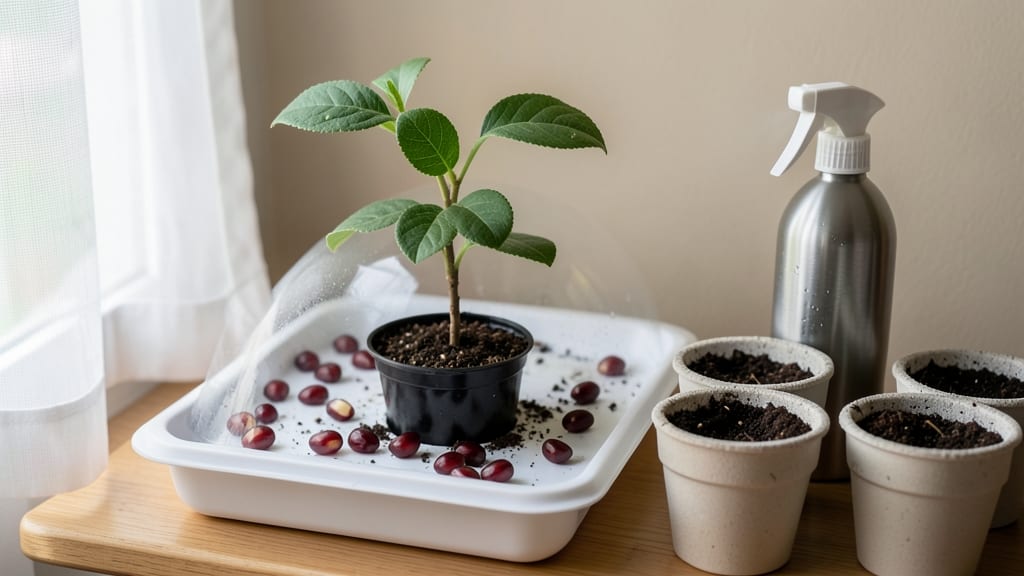
Pomegranate seed propagation gives you a head start on growing your own tree—30 days of patience will reward you with sturdy seedlings ready for transplanting. 🌱 I've struggled with slow germination before, but this method cuts the wait time in half while boosting success rates. The key is treating those tiny seeds with care from the very first step. Start by extracting seeds from ripe fruit, letting them dry for a day to prevent mold. No fancy equipment needed—just a shallow tray, moist paper towels, and a warm spot. Most seeds sprout within 10-14 days, though some stubborn ones take the full month. The trick is keeping them consistently moist but never soggy. Once sprouted, transfer seedlings to small pots with well-draining soil mix. Place them in bright, indirect light and maintain 70-75°F temperatures for best growth. You'll notice the first true leaves appear within 2-3 weeks after sprouting—proof you're on the right track. This method works for both cold and warm climates, though tropical varieties germinate fastest. The biggest challenge? Seed viability drops after a year, so use fresh seeds for best results. Here's how to make it work every time!
📚 In This Guide
- What you need
- Instructions
- Tips and common mistakes
- Wrapping up and next steps
What you need
- ● Pomegranate seeds: 10–20 fresh, plump seeds (harvested from ripe fruit; avoid dried or shriveled ones).
- ● Well-draining potting mix: 1 bag (1–2 cubic feet) of a blend like cactus/succulent mix (60%) + perlite or coarse sand (40%) for aeration.
- ○ Small pots or seed trays: 2–4 (3–4 inches deep) with drainage holes. Optional: Use biodegradable peat pots for easy transplanting.
- ● Spray bottle: 8–12 oz with a fine mist nozzle (for gentle hydration).
- ● Plastic wrap or humidity dome: 1 sheet (to create a mini greenhouse effect).
- ● Grow lights or sunny windowsill: Access to 6–8 hours of indirect light daily (south-facing window or LED grow lights).
- ○ Fertilizer (optional but helpful): 1 tsp balanced liquid fertilizer (5-5-5 or 10-10-10) diluted to half-strength for seedlings.
- ○ Warmth: Keep seeds in a spot with 70–85°F (21–29°C)—a seedling heat mat (optional) can help speed up germination.
- ● Patience: Germination takes 30–60 days (sometimes longer). Consistency is key!
- ● Sterilized tools: Clean scissors or pruners (if trimming seeds) with rubbing alcohol.
Step-by-Step instructions for germinating pomegranate seeds
Here's the foolproof method I've used to sprout pomegranate seeds every time—no special equipment needed.
🌱 Step 1: Extract and Prepare the Seeds
Start by scooping out the seeds from a fresh pomegranate, being careful not to crush them. Rinse them gently under cool water to remove any remaining pulp. The seeds have a hard outer coating that needs softening before planting—this is the key to fast germination. Soak them in warm water for 24 hours, changing the water every 8 hours to prevent mold. You'll know they're ready when the outer coating starts to soften slightly.
After soaking, spread the seeds on a paper towel and let them dry for 1-2 hours at room temperature. This prevents them from rotting in the soil. I like to place them in a single layer on the towel so they don't stick together—this makes planting easier later. Once dry, they're ready for the next step.
🪴 Step 2: Plant the Seeds in Moistened Soil
Fill small pots (3-4 inches deep) with a well-draining potting mix—this is critical because pomegranate seeds rot easily in soggy soil. I use a mix of 50% potting soil and 50% perlite to ensure good drainage. Moisten the mix lightly until it feels like a damp sponge, not dripping wet. Plant the seeds ½ inch deep, spacing them about 2 inches apart in the pot.
Gently press the soil around the seeds to ensure good contact but don't compact it too tightly. The seeds need air and moisture to germinate, so avoid burying them too deeply. Place the pots in a warm spot (70-75°F) where they'll stay consistently moist. A seedling heat mat helps speed up germination if your home runs cooler.
💧 Step 3: Maintain Warmth and Moisture
Cover the pots with plastic wrap or a humidity dome to trap warmth and moisture—this mimics the tropical conditions pomegranate seeds love. Check the soil daily and mist it lightly if the surface feels dry. The key here is to keep the soil evenly moist but not waterlogged. Overwatering is the fastest way to kill these seeds, so resist the urge to drown them in water.
Germination typically takes 14-30 days, depending on temperature and humidity. You'll see the first signs of life when tiny green sprouts push through the soil. Once they appear, remove the plastic wrap immediately to prevent fungal growth. Keep the pots in bright, indirect light until the seedlings are 2-3 inches tall—direct sun at this stage can scorch their delicate leaves.
☀️ Step 4: Transition to Sunlight and Individual Pots
When the seedlings reach 2-3 inches, it's time to give them more light. Move them to a south-facing window or under grow lights for 12-14 hours of light daily. Pomegranate seedlings need plenty of sunlight to grow strong, but too much too soon can shock them. Start with 2-3 hours of morning sun and gradually increase exposure over 7-10 days. You'll know they're adjusting well when their leaves stay a vibrant green and they grow upright.
Once the seedlings have 4-5 true leaves, transplant them into 5-inch pots with fresh potting mix. Handle them gently to avoid damaging the roots—pomegranates are sensitive to root disturbance. Water them lightly after transplanting and keep the soil consistently moist for the first 2 weeks. This helps them establish strong root systems before they're ready for outdoor conditions.
⏰ Step 5: Harden Off and Prepare for Outdoor Planting
After 4-6 weeks of indoor growth, your seedlings should be sturdy enough to handle outdoor conditions. Start hardening them off by placing them outside in a shaded, sheltered spot for 1-2 hours the first day. Gradually increase their outdoor time over 10-14 days, exposing them to morning sun first and then full sun by the end of the process. Watch for signs of stress like wilting or yellowing leaves—these are signals to slow down the transition.
Once the seedlings can handle full sun without wilting, they're ready to be planted outdoors in well-draining soil with full sun exposure. Choose a spot with 6+ hours of sunlight daily and dig a hole slightly larger than the root ball. Plant them at the same depth they were growing in pots, water deeply, and mulch around the base to retain moisture. With patience and care, you'll have healthy pomegranate seedlings ready to thrive in your garden!
Tips & tricks for germinating pomegranate seeds
Pomegranate seeds are stubborn little things—here's how to give them the best shot at success without losing patience.
The Soaking Secret: In Step 1, when you're soaking those seeds for 24 hours, use warm water—around 75°F—that's just warm enough to touch comfortably. Too hot and you'll cook the seeds; too cold and the outer coating won't soften properly. I like to use a glass jar so I can see the seeds and change the water every 8 hours as instructed. The key visual cue is when the hard outer shell starts to look slightly wrinkled—that's when you know they're ready to move to the drying step.
Soil Mix Matters: For Step 2, don't skimp on the perlite! That 50/50 mix of potting soil and perlite is non-negotiable—pomegranate seeds absolutely hate soggy conditions. I've tried planting them in regular garden soil before, and every single seed rotted within days. The perlite creates tiny air pockets that prevent waterlogging while still keeping enough moisture for germination. When you're pressing the seeds into the soil, aim for gentle firmness—think "light hug" rather than "tight squeeze."
Germination Timeline Reality: The 14-30 day germination window can feel like an eternity, but here's what actually happens: Most seeds will sprout within 21 days if conditions are perfect. If you're not seeing any green after 28 days, it's time to troubleshoot. Check your soil moisture—it should feel like a damp sponge, not a dripping wet washcloth. Also verify your temperature—those seeds need consistent warmth between 70-75°F. I keep mine on top of my refrigerator (which stays warm) during the day and move them to a warmer spot at night.
Light Transition Strategy: When you reach Step 4 and need to move those 2-3 inch seedlings to more light, don't rush the process. Start with just 2-3 hours of morning sun and gradually increase by 1-2 hours every 2-3 days. I've seen people burn their seedlings by moving them straight to full sun—it's like giving a pale human a sunburn on day one at the beach. Watch the leaves: If they start looking yellow or crispy at the edges, you've gone too fast. The goal is vibrant green leaves that stay perky, not wilting or bleached-out.
Pro Tips for Pomegranate Seed Propagation
- Pomegranate seeds are stubborn little things—here's how to give them the best shot at success without losing patience.
- The Soaking Secret: In Step 1, when you're soaking those seeds for 24 hours, use warm water—around 75°F—that's just warm enough to touch comfortably.
- Soil Mix Matters: For Step 2, don't skimp on the perlite!
Frequently asked questions
Got questions about growing pomegranates from seed? You’re not alone—this method takes patience and know-how! Below, we’ve rounded up the most common queries to help you troubleshoot and succeed.
How long does it take for pomegranate seeds to germinate?
Germination can take anywhere from 2 to 4 weeks, depending on warmth and moisture. If your seeds haven’t sprouted in 30 days, they may need a little more time or a boost (like a warm spot or soaking). Patience is key—don’t give up too soon!
Can I plant pomegranate seeds directly in the ground?
While possible in warm climates (USDA Zones 8-11), direct sowing risks frost damage or slow growth. Start seeds indoors 6-8 weeks before last frost for better control. If you must plant outside, use a black plastic mulch to retain heat.
What’s the best way to speed up germination?
Try these tricks:
- Soak seeds in warm water for 24 hours before planting.
- Use a heat mat (70–80°F) to mimic tropical conditions.
- Keep soil consistently moist (not soggy!).
- Cover seeds lightly with 1/4 inch of soil—don’t bury them deep.
Will pomegranate seedlings grow into fruit-bearing trees?
Yes, but it’ll take 5–7 years for seedlings to bear fruit—much longer than grafted trees (which fruit in 2–3 years). If you’re impatient, consider buying a grafted pomegranate sapling instead.
Why are my pomegranate seedlings turning yellow or wilting?
Yellowing leaves often signal overwatering or fungus (like damping-off). Wilting can mean underwatering or root rot. Adjust your watering routine, ensure pots have drainage holes, and avoid crowding seedlings—space them 2–3 inches apart.
Can I grow pomegranates from seed in cold climates?
Yes, but you’ll need to overwinter seedlings indoors (or in a greenhouse) until spring. Pomegranates thrive in full sun and heat, so move them outside only after all frost risk has passed. Consider growing them in large containers for flexibility.
Still stumped? Drop your question in the comments—we’re happy to help!
Wrapping up and next steps
Propagating pomegranate seeds is a rewarding journey that unlocks the joy of growing your own fruit tree from scratch! With patience, the right tools, and a few simple steps, you can watch tiny seeds transform into vibrant saplings in just 30 days.
Whether you’re a gardening novice or a seasoned green thumb, this method makes it easy to cultivate a healthy pomegranate tree—and the best part? You’ll enjoy homegrown fruit in just a few years!
Ready to take the next step? Start by planting those seeds today, and soon you’ll be harvesting juicy, ruby-red pomegranates straight from your backyard. Happy growing! 🌱🍇