
Propagation
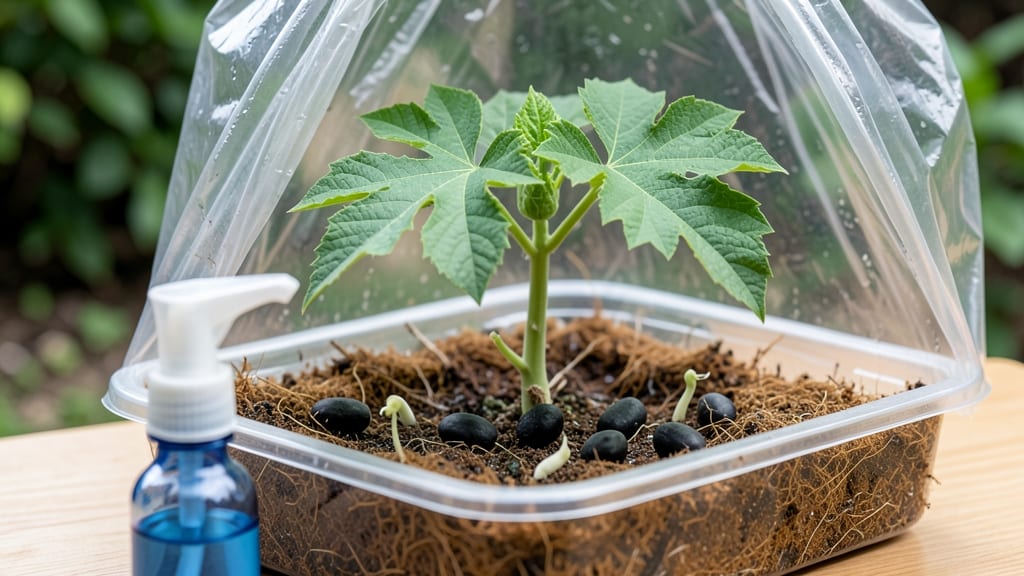
Your papaya seed germination can turn into tropical fruit trees in just 14 days—if you nail the moisture, warmth, and patience. 🌱 I’ve watched papaya seeds go from limp little specks to sturdy seedlings with proper care, and the key is creating a mini tropical environment on your countertop.
The first step? Selecting plump, firm seeds and preparing them for their tropical awakening.
You’ll need warmth (75–85°F), moisture (not soggy), and patience—papaya seeds are sensitive but reward quick action. Start with a shallow tray, paper towels, and a plastic bag to trap humidity.
The goal is to mimic the tropical forest floor where papaya seeds naturally germinate, and the results are worth the effort: vibrant green sprouts in less than two weeks.
Once those first leaves appear, you’ll want to transplant carefully into individual pots with well-draining soil. The seedlings grow fast—3–4 inches in their first month—and need bright, indirect light to stay strong.
Watch for mold or rot (a sign of too much moisture), and you’ll have thriving papaya plants ready for the garden or container in no time.
This method works for both indoor starters and outdoor tropical climates, though you’ll need to harden off seedlings before moving them outside. The payoff? Homegrown papayas with flavors you won’t find in stores. Let’s get those seeds sprouting!
📚 In This Guide
- What you need
- Instructions
- Tips and common mistakes
- Wrapping up and next steps
What you need
- ● Papaya seeds: Fresh seeds from a ripe, organic papaya (preferably within 24 hours of extraction for best germination rates). Aim for 3–5 seeds per pot (or more if experimenting).
- ● Seed-starting mix: A lightweight, well-draining potting soil blend (e.g., 50% peat moss + 50% perlite or vermiculite). Avoid garden soil—it can compact and hinder germination. Quantity: Enough to fill a small pot (4–6 inches deep).
- ● Small pots or containers: Use biodegradable pots (3–4 inches in diameter) or clean plastic containers with drainage holes. Quantity: 1–2 per batch of seeds.
- ● Water spray bottle: For gentle hydration without disturbing seeds.
- ● Plastic wrap or clear lid: To create a humidity dome (e.g., a plastic bag or a sealed container lid).
- ○ Grow lights or sunny windowsill: Papaya seeds need warmth (75–85°F) and bright, indirect light (6–8 hours daily). A seedling heat mat (optional but helpful) can speed up germination.
- ● Fungicide (e.g., neem oil or hydrogen peroxide solution): 1 tsp neem oil per quart of water to prevent mold.
- ● pH test kit: Ideal soil pH for papaya is 6.0–6.8.
- ● Humidity tray: A shallow tray with pebbles and water to maintain moisture levels.
- ● Label markers: To track seed varieties or planting dates.
Step-by-Step guide to germinating papaya seeds
Here's how I jumpstart papaya seeds into sprouts—fast, reliable, and without the guesswork.
🌱 Step 1: Extract and Prepare the Seeds
Cut open a ripe papaya and scoop out the seeds along with the surrounding gel-like mucilage. Rinse them thoroughly under cool water to remove any remaining fruit pulp. The gel actually helps retain moisture, but too much pulp can rot seeds, so be thorough.
Spread the seeds on a clean paper towel and let them air-dry for 12-24 hours at room temperature. You'll know they're ready when the outer coating turns slightly darker and the seeds feel dry to the touch. This prevents mold when you plant them later.
💧 Step 2: Soak Seeds to Break Dormancy
Place the dried seeds in a small container and cover them with lukewarm water—never hot. Let them soak for 24-48 hours, checking occasionally to ensure they stay submerged. This softens the hard seed coat, which is papaya's natural way of delaying germination until conditions are perfect.
After soaking, drain the water and give the seeds a quick rinse. You'll notice some may float—they're likely non-viable. Discard those and focus on the seeds that sink to the bottom. This simple test saves time down the road.
☀️ Step 3: Plant in Warm, Moist Medium
Fill small pots (2-3 inches deep) with a light, well-draining mix—I use a blend of 50% peat moss and 50% perlite for fast drainage. Moisten the mix until it's damp but not soggy, then plant 2-3 seeds per pot just below the surface, about ¼ inch deep. Cover lightly with additional mix.
Place the pots in a warm location—ideally 75-85°F—since papaya seeds need heat to germinate. A seedling heat mat works wonders here. Keep the soil consistently moist by misting lightly every 1-2 days, but never let it sit in standing water.
⏰ Step 4: Monitor for Sprouts and Thin Carefully
Germination typically takes 7-14 days, but some seeds may take longer. You'll see the first sign when tiny white roots emerge, followed by a sprout breaking through the soil. Once the seedlings reach 2 inches tall, thin them to the strongest one per pot by snipping the others at the base with clean scissors.
Move the pot to a bright, indirect light spot immediately after germination. Direct sun can scorch delicate seedlings. Watch for yellowing leaves—this signals either overwatering or insufficient light. Adjust care based on what you observe.
🌿 Step 5: Transition to Stronger Growth Conditions
After 4-6 weeks, when seedlings develop their first true leaves (not the initial seed leaves), transplant them into 4-inch pots with a richer mix of 60% potting soil, 20% perlite, and 20% compost. This gives their roots room to grow and access to more nutrients.
Hardening off begins here: place the seedlings outside in partial shade for 2-3 hours daily, gradually increasing their time outdoors over 10 days. This prepares them for the tropics or greenhouse environment they'll thrive in. Avoid transplanting until nighttime temperatures stay above 60°F.
Tips & tricks for perfect papaya seed germination
Here's what nobody tells you about getting those papaya seeds to sprout reliably—these tricks make all the difference between success and disappointment.
Drying Secret: In Step 1, when you're drying your seeds for 12-24 hours, resist the urge to rush this process. The drying time is critical for preventing mold later, and you'll know they're ready when they feel dry to the touch—not just slightly damp. I've learned this the hard way after watching seeds develop mold when they weren't fully dried.
Soaking Strategy: During the 24-48 hour soak in Step 2, use a container with a lid to keep the water level consistent without evaporation. The seeds need to stay submerged, and checking them occasionally helps you spot the floaters—those non-viable seeds that won't germinate. This simple test saves you from wasting time on seeds that won't sprout anyway.
Heat Mat Hack: For Step 3, if your home doesn't naturally stay between 75-85°F, invest in a small seedling heat mat. I've found that maintaining this warm temperature range is absolutely critical for breaking the seed's natural dormancy. Without it, germination can take weeks instead of days, and some seeds may never sprout at all.
Light Transition: After germination in Step 4, when you move your seedlings to bright, indirect light, position them within 6 inches of a south-facing window. This distance prevents the delicate seedlings from getting scorched while still providing the light they need to grow strong. I've seen seedlings with yellowing leaves because they were either too close or too far from the light source.
Pro Tips for Papaya Seed Germination
- Here's what nobody tells you about getting those papaya seeds to sprout reliably—these tricks make all the difference between success and disappointment.
- Drying Secret: In Step 1, when you're drying your seeds for 12-24 hours, resist the urge to rush this process.
- Soaking Strategy: During the 24-48 hour soak in Step 2, use a container with a lid to keep the water level consistent without evaporation.
Frequently asked questions
Got questions about growing papaya from seeds? You’re not alone—this tropical gem has a few quirks! Here are answers to the most common queries to help you succeed in your papaya seed germination journey.
How long does it take for papaya seeds to germinate?
Papaya seeds typically sprout within 7–14 days under ideal conditions (warmth, moisture, and humidity). If you’ve planted them correctly but see no progress after 2 weeks, check for rot or dryness. Patience is key—some seeds may take up to 3 weeks!
Can papaya seeds germinate in cold weather?
Nope! Papaya seeds love warmth—they struggle below 70°F (21°C). If your climate is chilly, use a seedling heat mat or start them indoors near a sunny window. Cold soil slows (or stops) germination entirely.
What if my papaya seeds won’t sprout?
Don’t panic! Try these fixes:
- Freshness check: Store-bought seeds may be old. Use seeds from a ripe, organic papaya for best results.
- Soak test: Soak seeds in warm water for 24 hours before planting to kickstart germination.
- Light vs. dark: Papaya seeds prefer indirect light during germination—too much sun can dry them out.
Can I grow papaya from store-bought seeds?
Yes, but with a catch! Many commercial papayas are hybrids bred for fruit quality, not propagation. For reliable germination, use seeds from a heirloom or organic papaya. If you’re experimenting, store-bought seeds might work—but expect 50–70% success.
How do I know if my papaya seedling is healthy?
A thriving papaya seedling has:
- First leaves: Round and smooth (not jagged).
- Stem: Firm, not mushy (a sign of rot).
- Color: Vibrant green, not yellow or brown.
Wrapping up and next steps
Growing papaya seeds is a rewarding journey that unlocks the potential of tropical fruit right in your own space!
With the right conditions—like proper moisture, warmth, and patience—you can watch tiny seeds transform into thriving seedlings in just 14 days. 🌱 Whether you’re a gardening newbie or a green-thumb enthusiast, this process is a fun and fulfilling way to bring the tropics closer to home.
Now that you’re armed with the knowledge, why not take the next step? Grab those seeds, set up your germination station, and let nature work its magic. Happy growing—and may your papaya plants flourish! 🌿✨