
Size
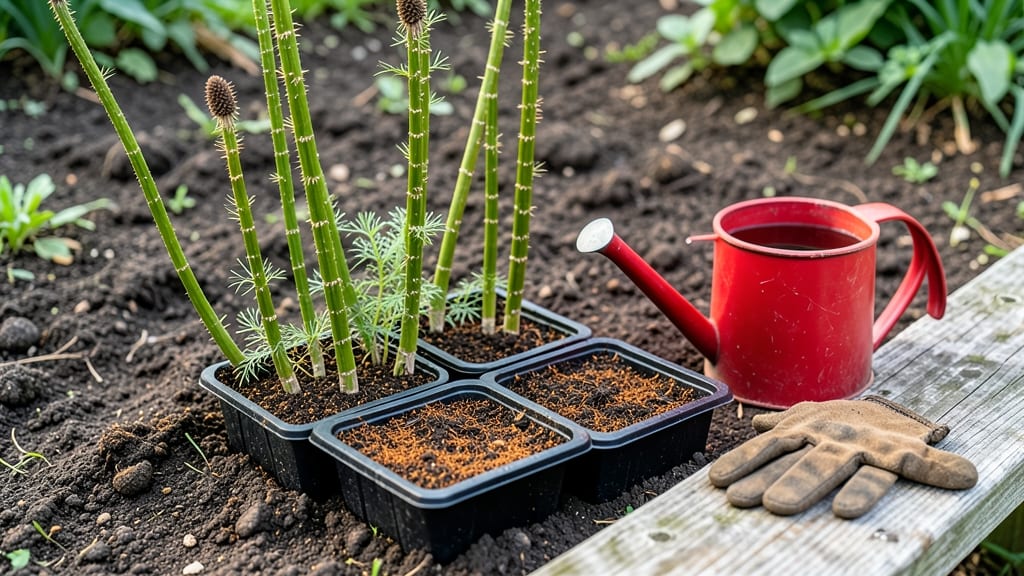
Growing horsetail seed in a garden means adding a year-round weed-blocking green carpet that thrives where other ground covers fail. 🌿 I planted mine last spring, and by summer it had already smothered weeds in my shady corner—no mulch needed.
The secret lies in patience and the right soil conditions, but once established, it’s nearly indestructible.
Start with a moist, well-draining spot in partial shade (horsetail tolerates full sun too, but growth is slower). Scatter seeds lightly over prepared soil—no need to bury them deep—then press them in gently.
A light misting keeps them damp until sprouts appear, which can take 4-8 weeks depending on temperature. Too much water or poor drainage will drown them, so raised beds or slopes work best.
Once sprouted, horsetail grows fast—expect 6-inch stems by summer’s end. It spreads via rhizomes, so give it room or contain it with edging. The feathery plumes add texture, and the deep roots prevent erosion.
Maintenance is minimal: water during dry spells, and trim back in early spring to encourage fresh growth. Weeds stand no chance once it fills in.
Troubleshooting slow starts? Try stratifying seeds (mix with damp sand, refrigerate 4 weeks) to break dormancy. Overwatering causes rot, so let soil dry slightly between waterings. With the right setup, you’ll have a low-maintenance, living mulch that outperforms any store-bought ground cover. Ready to try it?
📚 In This Guide
- What you need
- Instructions
- Tips and common mistakes
- Wrapping up and next steps
What you need
- ● Horsetail seeds: Choose Equisetum hyemale (scouring rush) or Equisetum arvense (field horsetail). Buy from a reputable supplier (1–2 oz per 100 sq ft).
- ● Well-draining soil: Horsetail thrives in sandy or loamy soil with a pH of 6.0–7.5. Amend heavy clay with perlite or coarse sand (1 part perlite to 3 parts soil).
- ○ Compost or organic matter: Mix in 1–2 inches of compost to enrich the soil (optional but recommended for nutrient-poor areas).
- ● Watering can or hose: Horsetail loves moisture—aim for 1–2 inches of water per week (more in dry climates).
- ● Garden trowel or transplant spade (for digging small holes, 1–2 inches deep).
- ● Garden rake (to level soil and remove debris).
- ○ Mulch (optional): Use straw or pine needles (1–2 inches thick) to retain moisture and suppress weeds.
- ● Pruners or shears (for trimming mature plants in late winter/early spring).
- ● Garden gloves (horsetail can be slightly abrasive—protect your hands!).
- ● Sunlight: Full sun to partial shade (4–6 hours of direct sun daily).
- ● Space: Horsetail spreads aggressively—plant 12–18 inches apart in rows or clusters for controlled growth.
- ● Patience: Germination takes 2–4 weeks; full coverage may take 1–2 years.
Step-by-step instructions for planting horsetail as a year-round ground cover
This hardy, drought-tolerant plant thrives with minimal fuss—here’s how to establish it as a living weed barrier.
🌱 Step 1: Choose the Right Location and Prepare the Soil
Horsetail tolerates poor soil and wet conditions, but it performs best in full sun to partial shade with well-draining soil. Avoid heavy clay unless you amend it with 2-3 inches of compost—this plant spreads aggressively, so pick an area where you want to suppress weeds permanently. Clear existing vegetation and loosen the top 6 inches of soil with a garden fork.
Here’s the thing—horsetail thrives in moist but not soggy conditions. If your soil drains poorly, create raised beds or mound soil to prevent waterlogging. Test drainage by digging a 6-inch hole, filling it with water, and checking if it drains within 24 hours. If not, mix in sand or perlite to improve aeration.
🌿 Step 2: Scatter Seeds and Press Lightly Into Soil
Horsetail seeds are tiny, so I like to mix them with sand (about 1 part seed to 10 parts sand) for even distribution. Sprinkle the mixture sparingly—aim for 1/4 teaspoon per square foot—since each seed can produce multiple stems. Lightly rake the area to cover seeds with no more than 1/8 inch of soil (they need light to germinate).
Press the soil gently with your hand or a board to ensure good seed-to-soil contact. Overwatering now will wash seeds away, so mist the area lightly with a fine spray until the surface feels barely damp. Horsetail seeds germinate best in consistent moisture, so keep the soil evenly damp (not soggy) until sprouts appear in 2-4 weeks.
☀️ Step 3: Maintain Moisture and Control Spread in Early Growth
Once seedlings emerge, reduce watering to 1-2 times per week, allowing the top 1-2 inches of soil to dry slightly between waterings. Horsetail is drought-tolerant but grows faster with regular moisture. Mulch with 1-2 inches of straw or wood chips to retain humidity and suppress competing weeds—this is where its magic begins.
Watch for leggy growth (thin, pale stems reaching for light). If this happens, your planting is too dense or lacks sunlight. Thin seedlings to 3-4 inches apart to encourage bushier, healthier plants. Horsetail spreads rapidly, so trim back aggressive runners with clean pruners to maintain your desired coverage area.
✂️ Step 4: Harvest and Manage for Long-Term Coverage
After 6-8 weeks, horsetail forms dense mats that smother weeds naturally. To encourage thicker growth, trim back one-third of the plant height in early spring and again in midsummer. This prevents flowering (which can spread seeds unintentionally) and redirects energy into leafy, weed-suppressing growth. Wear gloves—horsetail leaves can irritate skin.
For perennial maintenance, cut back dead foliage in late winter before new growth begins. Horsetail is hardy in USDA zones 3-10, so minimal winter care is needed unless your area experiences extreme cold. In frost-prone zones, add a light mulch layer (1-2 inches) to protect roots during harsh winters.
🪴 Step 5: Expand Coverage Strategically
Horsetail spreads via underground rhizomes, but you can speed up coverage by dividing established clumps in spring. Dig up a section with a sharp spade, ensuring each piece has roots and stems, then replant in bare spots. Water deeply after transplanting to reduce shock. This method works best for filling gaps or extending coverage to new areas.
Real talk: Horsetail can become invasive if unchecked. To contain it, install edging barriers (like buried plastic or metal) around garden beds. If it spreads beyond your desired area, simply dig out unwanted sections—its roots pull up easily when the soil is moist. With proper management, it’ll become your lowest-maintenance, most effective weed-suppressing ground cover.
Tips & tricks for perfect horsetail ground cover planting
A few simple strategies can transform this tough plant into your garden's most reliable weed barrier. Here's what I've learned from years of working with horsetail—tricks that save time and frustration while maximizing coverage.
Soil Prep Secret: The 24-hour drainage test is non-negotiable. I've seen too many failed plantings where people assumed their soil drained properly. If water pools in that 6-inch hole after 24 hours, you're dealing with potential root rot. For clay-heavy soils, I recommend mixing in equal parts sand and perlite—this creates the perfect airy texture horsetail craves. Think of it as giving your plants lungs rather than suffocating them.
Seed Distribution Hack: That 1:10 seed-to-sand ratio might seem excessive, but trust me on this. Horsetail seeds are microscopic, and uneven distribution leads to patchy growth. I use a fine-mesh strainer to sift the sand-seed mix, then sprinkle it while walking diagonally across the bed. This creates a grid pattern that ensures no bare spots. For large areas, consider using a seed spreader set to its lowest setting—just don't let it blow seeds away.
Mulching Strategy: The 1-2 inches of mulch mentioned isn't just decorative—it's your weed-suppression insurance policy. I prefer straw over wood chips because it breaks down faster, creating a softer mat that smothers weeds more effectively. Here's my pro move: After the initial planting, I apply half the mulch thickness (about 1 inch) and wait until seedlings emerge before adding the remaining layer. This prevents seedling smothering while still suppressing weeds.
Pruning Timing: Those early spring and midsummer trims are crucial for dense growth, but timing matters. I trim in early spring when new growth is just beginning to emerge—usually when you see about 20% of the plant showing green. In midsummer, wait until after flowering if you notice any. The key is to always cut back to about one-third of the plant height, never less. This forces the plant to branch out rather than grow tall and leggy.
Pro Tips for Horsetail Seed Grow A Garden
- A few simple strategies can transform this tough plant into your garden's most reliable weed barrier.
- Soil Prep Secret: The 24-hour drainage test is non-negotiable.
- Seed Distribution Hack: That 1:10 seed-to-sand ratio might seem excessive, but trust me on this.
Frequently asked questions
Got questions about growing horsetail as a garden ground cover?
You’re not alone! Here are answers to the most common queries to help you cultivate this hardy, weed-suppressing plant with confidence.
When is the best time to plant horsetail seeds?
Horsetail thrives in spring or early summer when soil temperatures are consistently above 50°F (10°C). Planting at this time ensures strong root establishment before winter. Avoid autumn planting—horsetail struggles in cold, wet soil and may rot. For faster results, start seeds indoors 6–8 weeks before the last frost!
How much water does horsetail need, and how often should I water it?
Horsetail is drought-tolerant once established, but young plants need regular moisture—water deeply 2–3 times per week during the first growing season. After that, reduce to once a week (or less in rainy climates). Overwatering can lead to root rot, so ensure well-draining soil. Mulch lightly to retain moisture without suffocating the plant.
Can horsetail grow in full shade, or does it need sunlight?
While horsetail tolerates partial shade, it performs best in full sun (6+ hours daily). In shady spots, growth may be leggy or sparse. If your garden is low-light, choose a north-facing or filtered-sun area for slower but still effective weed suppression. Pair it with shade-loving companions like ferns or hostas for a balanced understory.
What should I do if horsetail isn’t spreading like it should?
Slow spread? Check these fixes:
- Soil pH: Horsetail prefers slightly acidic to neutral soil (pH 6.0–7.5). Test your soil and amend with sulfur or lime if needed.
- Watering: Inconsistent moisture stresses plants. Aim for deep, infrequent watering to encourage root growth.
- Competition: Weeds or dense grass can smother horsetail. Hand-pull invaders or mulch heavily to give it space.
- Division: Dig up clumps in early spring and replant sections to jumpstart spread.
Are there non-seed alternatives to establish horsetail in my garden?
Yes! Skip seeds and try these low-effort methods:
- Rhizome division: Buy established horsetail rhizomes (underground stems) from nurseries. Plant 3–4 inches deep in spring for instant coverage.
- Transplants: Purchase young horsetail plants (like Equisetum hyemale) and space them 12–18 inches apart.
- Layering: Bend a healthy stem to the ground, weigh it down with a rock, and cover with soil. New roots will form in 4–6 weeks!
Wrapping up and next steps
Growing horsetail seed as a garden ground cover is a game-changer for low-maintenance, year-round weed control—and it’s easier than you think! 🌱 With its hardy nature and natural pest-repelling qualities, this versatile plant transforms bare soil into a lush, green carpet while saving you time and effort.
Whether you’re a seasoned gardener or a beginner, horsetail seed is your secret weapon for a tidy, thriving garden with minimal fuss.
Ready to take the next step? Start small—plant a test patch in a sunny spot this season and watch the magic unfold. Your future self (and your garden!) will thank you. 🌿