
Lawn
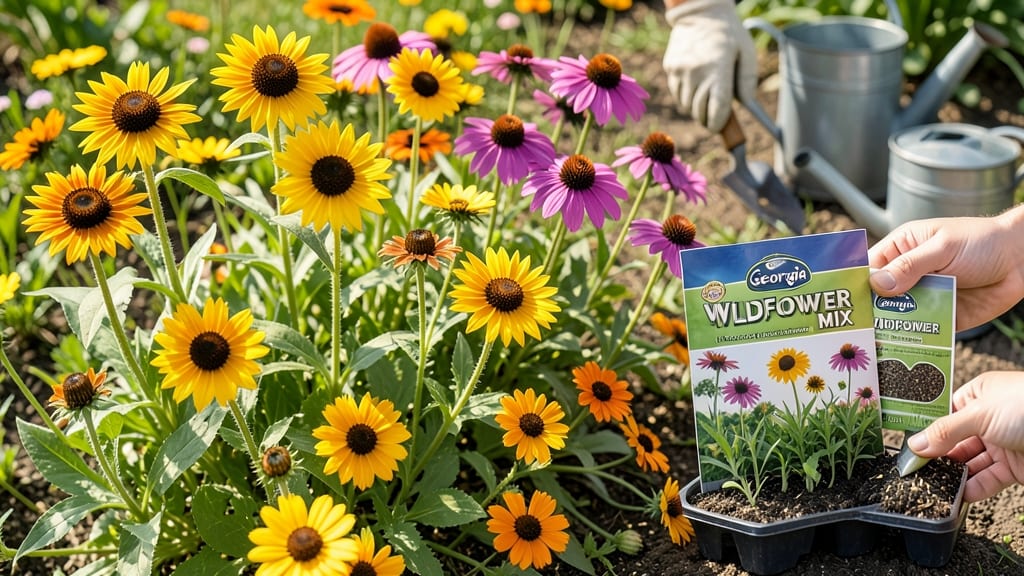
Your Georgia wildflower meadow starts with a single bag of seeds that transforms bare soil into a pollinator paradise. 🌸 I’ve planted three different mixes over the years, and this one—packed with native species like black-eyed Susans and coreopsis—delivers bold color from February through November with almost no upkeep after the first year.
The secret isn’t fancy tools or constant tending; it’s matching the right seeds to Georgia’s climate and letting nature take over.
You’ll need a sunny spot (at least 6 hours of light daily), loose soil, and a rake—no tilling required. Spring or fall planting works best, with fall being the foolproof choice for deeper root establishment before winter rains.
Water lightly for the first two weeks, then let the flowers teach you their rhythm: deep soaks when blooms appear, minimal fuss the rest of the time. Most mixes include drought-tolerant varieties that thrive once established, cutting your water bill while boosting local ecosystems.
By summer’s end, you’ll have a meadow teeming with bees, butterflies, and hummingbirds—more pollinators than your neighbors’ manicured lawns could ever support. The flowers adapt yearly, shifting from spring’s purple lupines to fall’s golden asters without extra work.
Even weeds get outcompeted by the dense native growth, so maintenance becomes a 10-minute monthly stroll rather than a chore.
This works for urban yards, rural fields, or even container gardens—just scale the seed quantity. The only real mistake? Waiting to plant. Start small (a 10x10-foot patch is plenty for impact) and expand as you fall in love with the results.
Your first year might look patchy, but by year two, it’ll be neighbor-jealousy levels of lush.
📚 In This Guide
- What you need
- Instructions
- Tips and common mistakes
- Wrapping up and next steps
What you need
- ● Georgia Wildflower Seed Mix: 1–5 lbs (per 100 sq. ft.), depending on your space. Opt for a native mix (e.g., black-eyed Susans, coreopsis, or milkweed) for best results.
- ● Garden Rake: A sturdy bow rake (8–12" teeth) to loosen soil and remove debris.
- ● Hose or Watering Can: For pre-planting soil moistening and post-planting hydration.
- ● Gloves: Heavy-duty gardening gloves to protect hands from thorns or rough soil.
- ● Sunlight: A full-sun to part-shade spot (6+ hours of sunlight daily for most Georgia wildflowers).
- ○ Broadcast Spreader: For even seed distribution (optional but highly recommended for large areas).
- ● Soil Test Kit: To check pH (Georgia wildflowers thrive in slightly acidic to neutral soil, pH 6.0–7.0).
- ● Mulch or Straw: Lightweight mulch (e.g., straw or pine needles) to retain moisture and deter weeds.
- ● Wildflower Seed Envelope: Save a small sample for future replanting!
- ● Notebook & Pen: To track planting dates, rainfall, and bloom progress.
Step-by-Step instructions for planting a Georgia wildflower meadow
Here's how to create a low-maintenance wildflower display that thrives in Georgia's climate.
🌱 Step 1: Prepare Your Planting Site
Choose an area with 6+ hours of sunlight daily—wildflowers need full sun to bloom their best. Clear any existing vegetation, then loosen the soil to a depth of 4-6 inches using a garden fork or tiller. This helps roots establish quickly in our sandy or clay-heavy Georgia soils. I like to rake the area smooth afterward, removing any remaining debris or rocks larger than a quarter.
Test your soil's drainage by digging a 6-inch deep hole and filling it with water. If it drains completely within an hour, your site is ready. If water remains after 2 hours, amend the soil with 2-3 inches of compost to improve drainage and fertility. This prevents root rot, which is especially critical during Georgia's hot summers.
💧 Step 2: Scatter and Lightly Cover the Seeds
Spread the wildflower seeds evenly across your prepared area using the 1/2 pound seed mix. I find it easiest to scatter seeds by hand when the ground is dry—this helps prevent clumping. For larger areas, use a broadcast spreader set to its lowest setting. Aim for a density of about 10-15 seeds per square foot, which creates a natural, full look without overcrowding.
After scattering, lightly cover the seeds with a thin layer of soil—just enough to hide them from birds and sunlight. Use a rake with wide tines to create a 1/4-inch thick covering. Press gently but don't compact the soil. This ensures good seed-to-soil contact while allowing sunlight to penetrate for germination. Water gently but thoroughly to settle the seeds into place.
☀️ Step 3: Water and Maintain Through Establishment
Keep the planting area consistently moist for the first 4-6 weeks—this is critical for seed germination. Water deeply 2-3 times per week, aiming for about 1 inch of water per week. You'll know you're doing it right when the top inch of soil feels damp but not soggy. During Georgia's summer heat, you may need to water daily until seedlings appear, but avoid creating puddles.
Once seedlings emerge, reduce watering to 1 inch per week. Let the soil dry slightly between waterings to encourage deep root growth. Mow the area to a height of 3-4 inches when plants reach 6-8 inches tall to prevent seed heads from dominating. This promotes bushier growth and more vibrant blooms. First-year flowers may be sparse, but don't worry—established meadows produce spectacular blooms in subsequent years.
✂️ Step 4: Enjoy and Maintain Year-Round Beauty
After the first bloom cycle, allow some seed heads to remain on plants for 4-6 weeks to collect seeds for next year's natural regeneration. Cut back spent blooms to 3-4 inches in late fall or early winter to promote new growth. This timing works perfectly with Georgia's mild winters—you'll see fresh green shoots emerge as temperatures warm in spring.
In late winter or early spring, before new growth appears, apply a 1-inch layer of mulch around the base of plants. This helps retain moisture and suppress weeds without smothering your wildflowers. I use pine straw or shredded leaves because they break down slowly and won't compact like heavier mulches. With minimal maintenance, your wildflower meadow will provide color from early spring through late fall, attracting pollinators and adding natural beauty to your landscape.
Tips & tricks for planting a Georgia wildflower meadow
Took me a while to figure these out, so here goes—small details that make all the difference with Georgia wildflowers.
Soil Prep Secret: In Step 1, when loosening that 4-6 inches of soil, I like to add a handful of garden lime (about 1 pound per 100 square feet) if your soil test shows acidity. Georgia's sandy soils often need this pH boost—wildflowers like black-eyed Susans and coreopsis thrive in slightly alkaline conditions (pH 6.0-7.0). Skip this if your soil drains perfectly in under an hour, but don't skip the compost if it's still soggy after 2 hours!
Seed Distribution Tip: For Step 2, I've learned the hard way that mixing seeds with sand (1 part seeds to 10 parts sand) makes scattering even easier—just sprinkle the mixture like confetti! This also prevents clumping when using a broadcast spreader. After covering with soil, I like to use a hose with a gentle spray nozzle to water, rather than a heavy stream that could wash seeds away.
Watering Wisdom: During those critical first 4-6 weeks in Step 3, I set a timer for my morning watering routine—this ensures consistent moisture without overwatering. In Georgia's heat, I water in the early morning (before 8am) to prevent fungal issues. Once seedlings appear, I switch to a soaker hose to deliver that 1 inch of water per week directly to the roots without wetting the leaves.
Mulch Strategy: For the final step, I've found that spreading mulch in late winter (February) gives the wildflowers a head start before spring rains arrive. I avoid heavy mulches like wood chips—they can smother emerging shoots. Instead, I use a thin layer (about ½ inch) of pine straw that lets sunlight reach the soil while protecting from weeds.
Pro Tips for Georgia Wildflower Seed Mix
- Took me a while to figure these out, so here goes—small details that make all the difference with Georgia wildflowers.
- Soil Prep Secret: In Step 1, when loosening that 4-6 inches of soil, I like to add a handful of garden lime (about 1 pound per 100 square feet) if your soil test shows acidity.
- Seed Distribution Tip: For Step 2, I've learned the hard way that mixing seeds with sand (1 part seeds to 10 parts sand) makes scattering even easier—just sprinkle the mixture like confetti!
Frequently asked questions
Got questions about transforming your Georgia landscape with wildflowers? Here are answers to the most common ones—so you can plant with confidence!
When is the best time to plant Georgia wildflower seed mix?
For spring blooms, sow seeds in late fall (October–November) or early spring (February–March). If you want summer color, plant in late winter (January–February). Avoid planting in peak summer heat—seeds need moisture to germinate!
How long does it take for wildflowers to grow and bloom?
Most Georgia wildflower mixes take 4–6 weeks to germinate and 60–90 days to bloom. Some varieties (like black-eyed Susans) may take longer, but patience pays off with vibrant, low-maintenance beauty!
Do I need to water my wildflower seeds constantly?
Keep soil consistently moist (not soggy) for the first 2–3 weeks. After germination, reduce watering to once a week (or when rain is scarce). Mature wildflowers are drought-tolerant—just let nature take over!
Can I mix wildflower seeds with my existing grass?
Yes! Scatter seeds over bare spots or thin grass areas. For best results, mow the lawn short first, then lightly rake soil to expose seed. Avoid heavy herbicides—wildflowers thrive in chemical-free zones.
Will wildflowers attract bees or pests?
Wildflowers do attract pollinators (like bees and butterflies), which is great for gardens! To deter pests, choose native Georgia varieties (they’re adapted to local ecosystems). Avoid overwatering—pests love damp, crowded conditions.
Can I replant the same area next year?
Yes! Wildflowers self-seed, so you’ll likely see new sprouts in spring. For a fresh mix, add a light layer of compost and reseed in fall. Over time, your patch will evolve into a thriving, colorful ecosystem!
Wrapping up and next steps
Transforming your Georgia landscape into a vibrant wildflower haven doesn’t have to be complicated—just rewarding! With the right Georgia wildflower seed mix, you’ll enjoy year-round color, support local pollinators, and reduce maintenance hassles.
Whether you’re a seasoned gardener or a beginner, this low-effort solution brings beauty and life to your outdoor space with minimal upkeep.
Ready to get started? Pick your seeds, prep your soil, and plant with confidence! 🌸 Your future wildflower paradise awaits—just take the first step today.