
Propagation
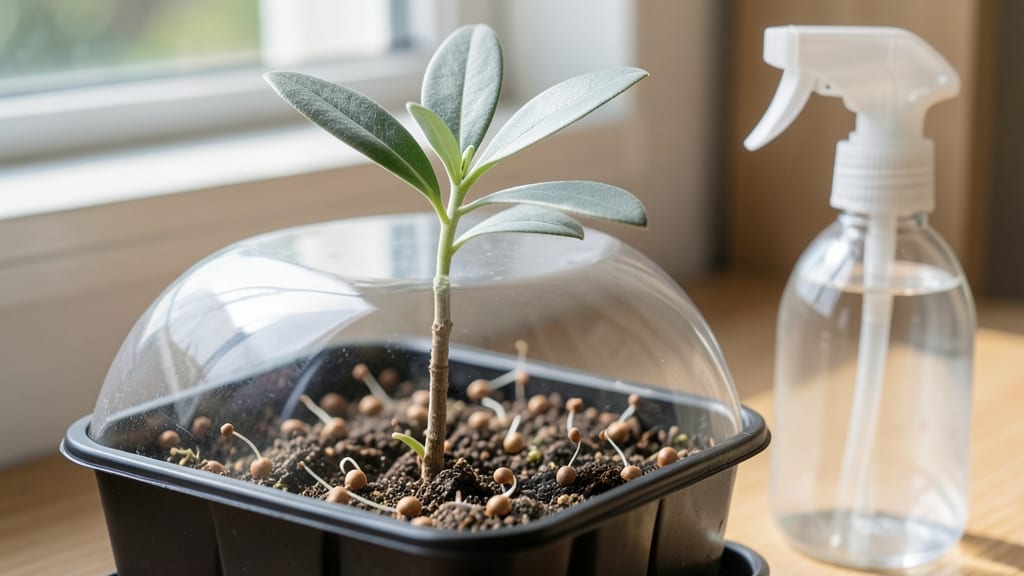
Eucalyptus seed propagation starts with patience—because those tiny seeds hide a fast-growing secret once they crack open. 🌱 I’ve watched my own eucalyptus sprouts break through soil in just 7-14 days after the right prep, but only after learning the tricks that skip the usual germination struggles.
The key? Mimicking their native Australian conditions without overcomplicating it.
You’ll need a warm spot (70-75°F), a mix of sandy soil and perlite for drainage, and a clear plastic dome or humidity tray to keep moisture steady. No fancy scarification or stratification—just a light scratch on the seed coat with sandpaper before planting.
Most beginners overwater here, so let the top inch dry between waterings once they sprout.
What you’ll end up with are straight, sturdy seedlings that grow 2-3 inches in their first month—if you avoid the two biggest mistakes: cold drafts and soggy soil.
The first true leaves signal it’s time to transplant, and by summer, you’ll have a 6-foot-tall sapling ready for its permanent home.
Works for all eucalyptus varieties, from dwarf ‘Gunnii’ to towering ‘Globulus’. The only catch? Some seeds take 3-6 months to germinate—so don’t give up if your first batch sits quiet. Here’s how to troubleshoot the wait.
📚 In This Guide
- What you need
- Instructions
- Tips and common mistakes
- Wrapping up and next steps
What you need
- ● Eucalyptus seeds: Fresh, high-quality seeds (preferably from a trusted supplier or harvested from mature trees). Aim for at least 50 seeds for better success rates.
- ● Seed trays or small pots: 2–3 trays with drainage holes (4–6 inches deep) or small individual pots (3–4 inches in diameter). Use sterilized containers to prevent mold.
- ● Potting mix: A well-draining blend of 50% peat moss or coco coir, 30% perlite or vermiculite, and 20% coarse sand. Avoid heavy garden soil—it retains too much moisture!
- ● Spray bottle: For gentle watering (a 16–24 oz misting bottle works perfectly).
- ○ Plastic wrap or humidity dome: To create a mini greenhouse effect (optional but highly recommended for humidity-loving eucalyptus seeds).
- ● Grow lights or sunny windowsill: A full-spectrum LED grow light (12–16 hours/day) or a south-facing window with bright, indirect light.
- ○ Thermometer (optional): To monitor soil temperature (ideal range: 65–75°F for germination).
- ● Seed scarification tools: Sandpaper (fine-grit, #120–150) or a knife to nick seeds if they’re hard-coated.
- ● Fungicide: A mild solution (like hydrogen peroxide 3%) to dip seeds in before planting to prevent rot.
- ● Heat mat: For faster germination (set to 70–75°F).
- ● Plant labels: To track seed varieties and planting dates.
- ● Fertilizer: A balanced, water-soluble fertilizer (5-5-5 or 10-10-10) for seedlings once they sprout (use half-strength at first!).
Step-by-Step instructions for eucalyptus seed propagation
Here's how to coax those stubborn eucalyptus seeds into vigorous sprouts using proven techniques.
🌱 Step 1: Prepare Seeds for Faster Germination
Eucalyptus seeds have a hard outer shell that resists water penetration, so we need to soften it first. Fill a bowl with lukewarm water and add the seeds, letting them soak for 24-48 hours. You'll know they're ready when you see tiny cracks appear in the seed coats—this means the outer layer has softened enough for roots to emerge.
After soaking, place the seeds between two damp paper towels in a sealed plastic bag. Store them in a warm location (75-80°F) for 3-5 days. Check daily—the moment you see a tiny white root (¼ inch long), they're ready for planting. This pre-germination step cuts weeks off the germination time and ensures stronger seedlings.
🪴 Step 2: Choose the Right Growing Medium
Eucalyptus seedlings need excellent drainage to prevent rot, so mix 50% peat moss with 50% perlite or coarse sand. Avoid garden soil—it compacts too easily and holds too much moisture. Fill small pots (2-3 inches deep) with this blend, leaving ½ inch of space at the top.
Moisten the mix until it's damp but not soggy—you should be able to squeeze a handful and see moisture beads form without dripping. The key here is creating a loose, airy medium that mimics eucalyptus' native sandy soils. Plant each pre-sprouted seed ½ inch deep, spacing them 1 inch apart in their pots.
☀️ Step 3: Create Ideal Germination Conditions
Place the pots in a bright, indirect light location—think filtered sunlight rather than harsh midday rays. A south-facing window with sheer curtains works perfectly. Maintain 70-75°F soil temperatures using a seedling heat mat if needed, as cooler temperatures slow germination significantly.
Keep the growing medium consistently moist by misting lightly every 2-3 days—never let it dry out completely, but avoid waterlogging. You'll see the first true leaves appear in 2-4 weeks, signaling successful germination. At this stage, seedlings are extremely delicate, so avoid disturbing them unless necessary.
💧 Step 4: Transition to Independent Growth
Once seedlings develop their third set of true leaves (about 6-8 weeks after planting), it's time to transition them to more robust growing conditions. Gradually introduce direct morning sunlight for 2-3 hours daily, increasing exposure by 1 hour each week to prevent sunburn.
Reduce watering frequency to every 5-7 days, allowing the top ½ inch of soil to dry between waterings. This teaches seedlings to develop deeper root systems. Fertilize lightly with a half-strength balanced fertilizer (10-10-10) every 4 weeks to support their rapid growth phase.
✂️ Step 5: Prepare for Transplanting
When seedlings reach 4-6 inches tall with a sturdy stem, they're ready for their first transplant. Choose a larger container (5-6 inches deep) filled with a mix of 60% potting soil, 20% perlite, and 20% compost. Dig a hole twice as wide as the root ball and place each seedling at the same depth it was growing before.
Water thoroughly after transplanting to settle the soil around roots. Place the new pots in bright, indirect light for 1 week while they adjust. You'll know they've acclimated when new growth appears within 2-3 weeks. This gradual transition prevents transplant shock and sets your eucalyptus up for years of healthy growth.
Tips & tricks for perfect eucalyptus seed germination
Here's what nobody tells you about getting eucalyptus seeds to sprout reliably—and how to avoid the most common pitfalls.
Seed Prep Precision: The 24-48 hour soak is non-negotiable, but don't rush it. I've seen seeds develop cracks after just 18 hours in warm water, but they often fail to germinate properly. For best results, use a thermometer to confirm your water stays between 75-80°F during soaking—cooler water slows the process significantly. Pro tip: Place your bowl on top of your refrigerator to maintain consistent warmth without risking overheating.
Root Detection Technique: When checking for that critical ¼-inch root in Step 1, use a magnifying glass if needed—those tiny white roots can be nearly invisible to the naked eye. I've missed roots by a millimeter, only to discover them later when they'd grown too long and became tangled. The moment you spot that root, plant immediately—delaying by even a few hours can stress the seedling before it's even started growing.
Medium Moisture Mastery: The damp-but-not-soggy test in Step 2 is crucial, but here's the secret: squeeze the medium gently—if water drips out, it's too wet. If nothing happens, it's too dry. Aim for just a few beads of moisture clinging to your fingers. Overwatering at this stage is the #1 cause of seedling rot, while underwatering prevents proper hydration for root development. I keep a spray bottle nearby to mist between checks, but I never let the surface dry completely between waterings.
Light Transition Strategy: When you're ready to move seedlings to direct morning sunlight in Step 4, start with just 1 hour on the first day—even if the instructions say 2-3 hours. Sudden exposure can cause sunburn on delicate new leaves. I've seen seedlings develop white patches from overexposure, which stunts growth. Gradually increase by 30 minutes every 2-3 days until you reach the full 2-3 hours recommended.
Pro Tips for Eucalyptus Seed Propagation
- Here's what nobody tells you about getting eucalyptus seeds to sprout reliably—and how to avoid the most common pitfalls.
- Seed Prep Precision: The 24-48 hour soak is non-negotiable, but don't rush it.
- Root Detection Technique: When checking for that critical ¼-inch root in Step 1, use a magnifying glass if needed—those tiny white roots can be nearly invisible to the naked eye.
Frequently asked questions
about eucalyptus seed propagation—because even the best gardeners need a little extra guidance! Here’s what you’ve been wondering:How long does it take for eucalyptus seeds to germinate?
Eucalyptus seeds typically germinate in 14–30 days, depending on species, temperature (ideal: 68–77°F), and moisture. Some varieties, like Eucalyptus globulus, may take longer—patience is key! Use a heat mat if germination stalls.
Can I propagate eucalyptus seeds outdoors in cold climates?
Not without prep! Eucalyptus thrives in USDA Zones 8–11. For colder areas, start seeds indoors 8–10 weeks before last frost, then transplant seedlings after warm weather arrives. Harden them off gradually to avoid shock.
Why aren’t my eucalyptus seeds sprouting? Troubleshooting tips
Common culprits:
- Dampness issues: Overwatering causes rot; ensure pots have drainage holes.
- Temperature: Too cold (<60°F) slows germination; too hot (>85°F) kills seeds.
- Dormancy: Some seeds need scarification (light sandpaper rub) or stratification (cool, moist period).
- Old seeds: Eucalyptus seeds lose viability after 1–2 years—use fresh ones!
Are there easier alternatives to growing eucalyptus from seed?
Yes! For faster results, try:
- Cuttings: Semi-hardwood cuttings (4–6 inches) root well in perlite/vermiculite mix with rooting hormone.
- Layering: Bend low branches to the ground, cover with soil, and wait for roots to form.
- Nursery plants: Buy young trees (pricier but guaranteed growth).
Which eucalyptus species are easiest for beginners?
Start with these low-maintenance varieties:
Species
Germination Time
Notes
Eucalyptus cinerea ('Argentea')
2–4 weeks
Fast-growing, drought-tolerant, silvery foliage.
Eucalyptus pulverulenta
3–6 weeks
Compact, great for containers, fragrant leaves.
Eucalyptus pauciflora ('Snow Gum')
4–8 weeks
Cold-hardy (Zone 7), stunning white bark.
Wrapping up and next steps
Mastering eucalyptus seed propagation is a rewarding journey that brings nature’s beauty right to your hands! 🌱 With the right techniques—like proper stratification, ideal soil conditions, and patience—you’ll soon watch those tiny seeds transform into sturdy, vibrant saplings.
Whether you’re a gardening newbie or a seasoned green thumb, every sprout is a step closer to a thriving eucalyptus grove.
Ready to take the next step? Start with a small batch of seeds, experiment with the methods that work best for your climate, and don’t forget to document your progress.
Soon, you’ll be sharing your green thumb success with fellow plant enthusiasts—or even gifting those lush saplings to friends! Happy growing! 🌿✨