
Lawn
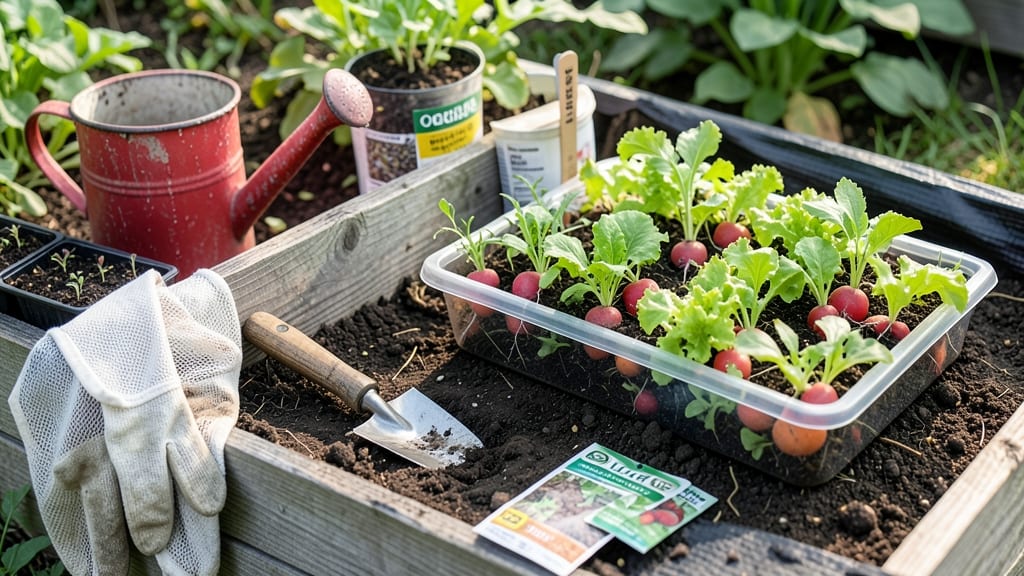
Direct seed planting saves money and creates stronger plants right from the start—no transplant shock, no weak roots from potting. 🌱 I learned the hard way that burying seeds too deep or crowding them too close leads to leggy, weak seedlings (or worse, no seedlings at all).
The secret is matching depth and spacing to each plant’s needs—beans need light to germinate, while carrots hate competition.
Start with loose, weed-free soil and the right tools: a rake for smoothing, a seed seeder for even spacing, and a watering can with a gentle spray. Most seeds need to be planted twice as deep as their width—so a ¼-inch seed goes ½-inch down.
For spacing, think "room to grow": carrots need 2 inches apart, while beans can handle 4-6 inches. Mark rows with sticks or string if you’re new to this.
After planting, keep the soil consistently moist (not soggy) until germination—usually 7-14 days. A light layer of mulch or straw helps retain moisture and blocks weeds. Once sprouts appear, thin them to the recommended spacing (check seed packets!) to give roots room to stretch.
You’ll end up with vigorous, healthy plants that outperform store-bought seedlings.
This method works for lawns, veggie patches, and flower beds—just adjust for your climate. Cool-season crops like lettuce thrive in early spring or fall, while warm-season beans and peppers wait until soil hits 60°F.
The key is patience: direct seeding takes longer to establish, but the payoff is worth it. Ready to try?
📚 In This Guide
- What you need
- Instructions
- Tips and common mistakes
- Wrapping up and next steps
What you need
- ● High-quality grass seed: Choose a blend suited to your climate (e.g., tall fescue, Kentucky bluegrass, or perennial ryegrass). Aim for 5–10 lbs per 1,000 sq ft, depending on your grass type and soil condition.
- ● Topsoil or compost: ¼–½ inch layer to improve seed-to-soil contact and nutrient availability.
- ● Starter fertilizer: A low-nitrogen (10-10-10 or 20-20-20) blend to kickstart root growth. Apply ½ lb per 100 sq ft.
- ● Water: A garden hose with a gentle spray nozzle or a watering can for consistent moisture.
- ● Broadcast spreader: For even seed distribution. Calibrate it to match your seed quantity (e.g., set for ½ lb per 1,000 sq ft for fine seeds).
- ● Rake (bow or stiff-bristle): To level soil and create a fine, firm seedbed with ¼-inch grooves for seeds to nestle into.
- ○ Lawn roller (optional): A lightweight (50–100 lb) roller to press seeds into soil gently (skip if soil is already moist).
- ○ Soil test kit (optional): To check pH and nutrient levels before planting. Aim for a pH of 6.0–7.0 for most grasses.
- ○ Mulching fabric or straw (optional): To retain moisture and protect seeds from birds. Use ¼-inch thick layers only.
- ● Weather: Plant when soil temps are 50–65°F (check with a soil thermometer) and forecast calls for consistent rain or daily watering for 10–14 days.
- ● Soil prep: Remove debris, loosen compacted soil, and repair low spots. Test for even moisture—soil should be damp but not soggy.
- ● Timing: Choose a cool-season (early spring/fall) or warm-season (late spring/summer) window based on your grass type.
How to master direct seed planting for a thick, healthy lawn
Here’s the method I’ve used to grow lawns that stay lush and green—no thin patches or weak grass here.
🌱 Step 1: Prepare the Soil for Optimal Seed Contact
Start by removing all debris, rocks, and weeds from the planting area. Use a rake to create a fine, level seedbed—this ensures seeds make direct contact with the soil. A smooth surface prevents seeds from settling too deep or getting buried under uneven spots. I like to go over the area twice with a stiff-bristle rake, first to loosen the top layer and then to smooth it out.
For compacted soil, aerate lightly with a core aerator to create small holes. This helps seeds establish roots faster. After aerating, lightly rake again to fill any deep holes and create a consistent texture. The goal is a firm but crumbly surface—like a well-tended garden bed—so seeds can settle at the perfect depth without sinking too far.
💧 Step 2: Sow Seeds at the Correct Depth and Spacing
Most grass seeds germinate best when planted at a depth of about ¼ inch—roughly the width of a dime. Scatter seeds evenly by hand or use a broadcast spreader set to the recommended rate for your grass type. I find that walking in a crisscross pattern helps cover the area uniformly without missing spots.
Don’t over-seed—follow the package guidelines for spacing. Too many seeds in one spot lead to weak, crowded grass that struggles to establish. After sowing, lightly rake the area again to press seeds into the soil and ensure good contact. This step is critical: seeds need darkness and moisture to germinate, so covering them lightly keeps them from drying out or washing away.
☀️ Step 3: Water Gently and Consistently for Germination
Water immediately after planting to settle the seeds into the soil. Use a fine mist or gentle rain setting on your hose to avoid dislodging them. Keep the soil surface evenly moist—not soggy, not dry—for the first 10-14 days. You’ll know you’re doing it right when the top inch of soil stays damp but doesn’t pool water.
Water lightly twice daily if the weather is hot or windy, or once daily if it’s cooler. The key is to keep the soil moist enough for seeds to sprout without drowning them. Avoid overhead watering if possible—it can wash seeds away or create uneven moisture levels. A soaker hose or sprinkler with a gentle spray works best.
⏰ Step 4: Monitor for Germination and Adjust Care
Grass seeds typically germinate in 7-21 days, depending on the type and weather conditions. Watch for the first signs of green shoots—this is your cue that the seeds have taken hold. Once you see 50% germination, reduce watering slightly to prevent fungal growth, but keep the soil moist enough to support root development.
After the grass reaches 2-3 inches tall, gradually reduce watering frequency but increase depth. This encourages deep root growth. Avoid walking on the new lawn until the grass is fully established—usually after 4-6 weeks. Thin patches or weak spots? You might need to overseed those areas later, but with the right depth and spacing, you’ll minimize this issue entirely.
Tips & tricks for perfect direct seed planting
Took me a while to figure these out, so here's how to avoid the most common mistakes and get that dream lawn.
Soil Prep Secret: After raking, run your fingers over the surface—it should feel like fine sandpaper, not rough or clumpy. If you find hard spots, aerate those areas first. I’ve learned the hard way that skipping this step means seeds either get buried too deep or stay exposed to birds and wind. For large areas, rent a core aerator—it’s worth the investment for even seed contact.
Depth Check: That ¼-inch depth is non-negotiable. Use a dime as your guide—seeds need darkness to germinate but not so deep they suffocate. After sowing, do a quick check by pressing your thumb into the soil. If you can’t see the seeds anymore, you’ve gone too deep. Lightly rake again if needed—this small step makes all the difference in germination rates.
Watering Wisdom: The twice-daily watering in hot weather is crucial, but timing matters too. Water in the early morning so the soil has all day to dry slightly before evening. This prevents fungal issues while keeping seeds moist. I set a reminder on my phone for 6 AM and 6 PM—consistency is key during those first 10-14 days when seeds are most vulnerable.
Germination Cues: When you see 50% germination, that’s your signal to adjust care. The new shoots will look delicate—almost like tiny green hairs. At this stage, switch to deeper watering (about ½ inch per week) to encourage roots to grow downward. I’ve seen lawns fail at this stage because people either overwater or suddenly stop watering entirely when they see the first green.
Pro Tips for Direct Seed Planting
- Took me a while to figure these out, so here's how to avoid the most common mistakes and get that dream lawn.
- Soil Prep Secret: After raking, run your fingers over the surface—it should feel like fine sandpaper, not rough or clumpy.
- Depth Check: That ¼-inch depth is non-negotiable.
Frequently asked questions
Got questions about direct seed planting? You’re not alone! Here are some of the most common queries—and their straightforward answers—to help you get started with confidence.
What’s the ideal depth for planting grass seeds?
For most grass types, aim to plant seeds ¼ to ½ inch deep. This ensures they stay moist while still allowing sunlight to reach them. Shallow planting (like ⅛ inch) works for fine grasses in dry climates, but deeper planting risks smothering the seeds.
How far apart should I space seeds when planting?
Spacing depends on your grass type, but a general rule is 10–20 seeds per square foot. For cool-season grasses, use 12–15 seeds; for warm-season, 8–10 seeds works well. Over-seeding can lead to competition, while under-seeding may leave bare spots.
Can I direct seed in hot or cold weather?
Timing is key! Plant cool-season grasses in early fall or spring (50–65°F soil temps), and warm-season grasses in late spring or early summer (65–75°F). Avoid extreme heat or frost—seeds need consistent moisture and moderate temps to germinate.
What if my seeds aren’t germinating after planting?
Check these first:
- Moisture: Keep soil consistently damp (not soggy) for 10–14 days.
- Depth: Too deep? Seeds may not break through.
- Sunlight: Ensure seeds get 4–6 hours of sun daily.
- Soil contact: Press seeds gently into soil for better rooting.
Is direct seeding better than sod for lawns?
It depends! Direct seeding is cheaper and faster for large areas but takes 4–6 weeks to establish. Sod offers instant coverage but costs more. Choose seeding for budget-friendly, long-term growth; opt for sod if you need a quick, weed-free lawn.
Wrapping up and next steps
Direct seed planting is your secret weapon for a lush, resilient lawn—when you nail the depth and spacing! By following precision techniques, you’ll skip the hassle of sod and enjoy faster germination, fewer weeds, and roots that run deep. 🌱
Ready to transform your yard? Grab your seeds, tools, and confidence—then take the first step this weekend! Start small with a test patch, track your progress, and soon, you’ll be the envy of the neighborhood with that perfectly green carpet underfoot.