
Planting
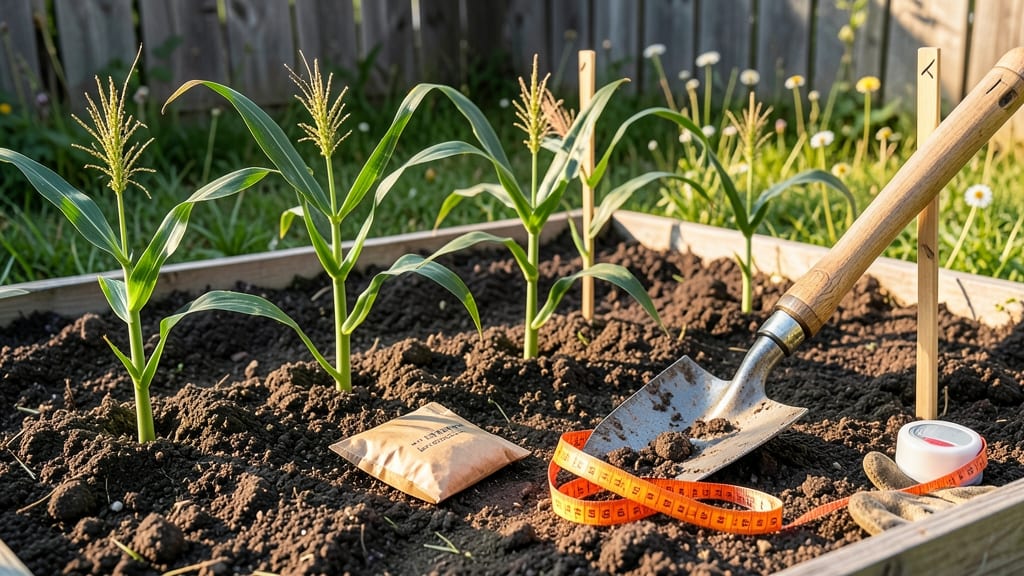
Perfect corn seed spacing is the secret to those towering stalks you've always dreamed of. 🌽 I learned the hard way—crowded rows mean weak ears, while plants too far apart waste space.
The right spacing turns a garden corner into a mini cornfield that feeds a family (and maybe even your neighbors). Start with 4-inch spacing between seeds in rows 30-36 inches apart. Plant seeds 1-1.5 inches deep in loose, well-drained soil—think of it like tucking them into a cozy nest.
Warmer climates (zones 7+) can handle slightly wider spacing, while cooler zones (3-6) benefit from tighter rows to capture heat. By midsummer, you'll see 12-foot stalks with ears heavy enough to make your kitchen counter groan.
The key is balance—enough plants to fill the space, but not so many they compete for sunlight and nutrients. This works for both sweet corn and field corn varieties. Just remember: patience pays off, and by harvest time, you'll be the envy of the block.
📚 In This Guide
- What you need
- Instructions
- Tips and common mistakes
- Wrapping up and next steps
What you need
- ● Corn seeds: High-quality, certified seeds (quantity depends on planting area—check seed packet for recommended rates, e.g., 12,000–15,000 seeds/acre for optimal spacing).
- ● Planting equipment: Hand planters: For small gardens (e.g., a hand corn planter or dibble stick).
- ● Mechanical planters: For larger fields (e.g., precision planters with adjustable row units for 24–36-inch spacing).
- ● Marking tools: Stakes or flags (for hand-marking rows, spaced 24–36 inches apart).
- ● String or twine (to create straight guidelines for rows).
- ● Measuring tape (50+ feet for accuracy).
- ● Soil prep tools: Garden hoe or cultivator (to loosen soil and create furrows).
- ● Rake (for smoothing seedbeds).
- ● Water source: Hose with nozzle or watering can (for post-planting hydration).
- ● Seedling protectors: Biodegradable seedling collars or mesh tubes (to deter pests and maintain spacing).
- ● Fertilizer: Starter fertilizer (e.g., 10-10-10) to mix with soil or apply post-planting.
- ● Mulch: Straw or grass clippings (to retain moisture and suppress weeds).
- ● GPS or spacing apps: For large-scale planting (e.g., FieldView or John Deere Operations Center for precision guidance).
- ● Seed treatment: Fungicide or insecticide (to boost early growth and disease resistance).
Precision planting: how to space corn seeds for maximum yield
Perfect spacing is the secret to strong corn stalks and heavy ears. Here's how I do it every season.
🌱 Step 1: Prepare the Soil and Mark Your Rows
Corn thrives in loose, well-drained soil with plenty of organic matter. Before planting, till the soil to a depth of 6-8 inches to break up compaction and encourage root growth. I like to add a 2-inch layer of compost and work it in thoroughly—this feeds the roots as they establish.
Use a garden rake to create straight, parallel rows 30-36 inches apart. For a 4-row planting (like my setup), mark the center of each row with a small stake or twine stretched between stakes. This ensures consistent spacing that makes thinning easier later. Corn's wide leaves cast deep shade, so proper row spacing prevents competition for sunlight.
🌱 Step 2: Plant Seeds at the Correct Depth and Spacing
Corn seeds are large, so they need 1-1½ inches of soil coverage for proper germination. I use my finger to make small holes 4-6 inches apart along each row—closer spacing increases competition, while wider gaps reduce yield. For a 4-row planting, stagger the seeds slightly between rows to create a more uniform stand.
Drop 2-3 seeds per hole and cover lightly with soil. The extra seeds act as insurance against poor germination or pests. After planting, gently firm the soil around the seeds with your hand to ensure good seed-to-soil contact. This prevents air pockets that can delay sprouting.
☀️ Step 3: Thin Seedlings to the Optimal Stand
When seedlings reach 4-6 inches tall (about 2-3 weeks after planting), it's time to thin. Use sharp scissors or your fingers to snip the thinnest seedlings at soil level, leaving the strongest plant 8-12 inches apart in the row. I always thin on a cloudy day to reduce stress on the remaining plants.
Thinning may seem cruel, but crowded corn plants compete for nutrients and sunlight, resulting in weak stalks and poor ear development. You'll know your spacing is right when plants have room to grow 12-18 inches apart at maturity—this allows air circulation and reduces disease risk.
💧 Step 4: Maintain Spacing Through the Growing Season
As corn grows, watch for signs of overcrowding: yellowing leaves, stunted growth, or stalks leaning toward each other. If you notice these, thin again to 12-inch spacing by removing the weakest plants. I usually do this when tassels begin to form, around 6-8 weeks after planting.
Proper spacing also affects pollination. Corn is wind-pollinated, so plants need room for pollen to travel between tassels. If rows are too close, you'll see poor ear development or barren stalks. After thinning, water deeply at the base to help roots recover from the disturbance.
✂️ Step 5: Monitor and Adjust for Late-Season Spacing
By the time corn reaches knee-high (about 3 feet tall), you should have a uniform stand with 12-inch spacing between plants. If any gaps remain, consider filling them with additional seeds or transplants if your season allows. I often save a few extra seeds just for this purpose.
Watch for signs of stress like lodging (stalks falling over) or excessive leaf drop. These can signal overcrowding even if spacing looks correct. In such cases, remove every other plant to restore balance. Proper spacing now ensures you'll harvest plump, well-developed ears instead of small, underfed ones.
Tips & tricks for perfect corn planting
These simple strategies will help you avoid common mistakes and maximize your corn harvest.
Soil Prep Secret: In Step 1, I can't stress enough how important that 6-8 inch till depth is—it's not just about breaking up soil, but creating a loose environment where roots can spread freely. If your soil is particularly dense or clay-heavy, consider adding an extra 1-inch layer of compost beyond the standard 2 inches to improve drainage and nutrient availability. This extra effort pays off with stronger stalks that can support heavier ears.
Planting Precision: When making those 4-6 inch holes in Step 2, I've found using a small garden trowel with marked measurements makes the job much easier. The key is consistency—every hole should be the same depth (1-1½ inches) and spacing (4-6 inches). I like to make a quick sketch of my planting plan first to visualize the layout before I start. This helps me avoid those frustrating gaps that appear when you're working by eye alone.
Thinning Technique: The 2-3 weeks timing for thinning in Step 3 is crucial, but what's equally important is how you do it. I recommend thinning in stages: first remove the weakest seedlings, then wait another week before making final cuts to 8-12 inch spacing. This gradual approach gives your corn more time to establish its root system before facing competition. And remember—always thin on cloudy days to reduce stress on the remaining plants.
Seasonal Adjustments: In Step 4, when dealing with the 6-8 week tasseling period, watch for your local climate patterns. In cooler regions, you might need to extend your thinning window slightly. If you notice tassels forming later than expected, don't rush the thinning process—wait until you see those pollen sacs beginning to emerge before making your final adjustments to 12-inch spacing.
Pro Tips for Corn Seed Spacing
- These simple strategies will help you avoid common mistakes and maximize your corn harvest.
- Soil Prep Secret: In Step 1, I can't stress enough how important that 6-8 inch till depth is—it's not just about brea...
- Planting Precision: When making those 4-6 inch holes in Step 2, I've found using a small garden trowel with marked me...
Frequently asked questions
Got questions about getting your corn seed spacing just right? You’re not alone! Here are some of the most common concerns—and straightforward answers—to help you plant with confidence.
What’s the ideal corn seed spacing for maximum yield?
The gold standard is 30–36 inches between rows and 2–4 inches between seeds in the row, depending on your corn type (dent, sweet, or popcorn). Tighter spacing (2–3 inches) works for sweet corn, while field corn often uses 4+ inches. Always check your seed packet for variety-specific recommendations!
When is the best time to plant corn seeds with proper spacing?
Corn thrives in warm soil—aim to plant after the last frost when soil temps hit 50–60°F (10–15°C). For most regions, this is mid-April to early June. If you’re in a short-season area, prioritize early planting. Pro tip: Use a soil thermometer to avoid cold-soil stress!
Can I adjust spacing if my seeds are planted too close?
Yes, but act fast! If seedlings are too crowded (under 2 inches apart), thin them to 3–4 inches once they’re 4–6 inches tall. For rows, if you missed spacing, consider interplanting with shallow-rooted crops (like beans) or use a hill-drop method for sweet corn to spread plants naturally.
Does corn seed spacing change for different varieties (sweet vs. field corn)?
Sweet corn
(like Silver Queen) benefits from closer spacing (2–3 inches) to boost ear size and shade out weeds. Field corn (for grain/silage) typically uses 4+ inches to reduce competition. Popcorn often falls in the middle at 3–4 inches. Always match spacing to your corn’s mature plant width!
What tools or equipment make corn seed spacing easier?
For precision, try a hand-held seed planter (like the EarthWay Speed Planter) or a garden seeder for rows. For larger plots, a no-till planter with adjustable row units ensures consistency. Even a stake-and-string guide works for DIY gardeners—just mark your spacing and follow the line!
Wrapping up and next steps
Mastering corn seed spacing is your ticket to a thriving harvest—every inch counts! 🌽 By following precision planting techniques, you’ll maximize yield, minimize competition, and set your crop up for success. Whether you’re a seasoned farmer or a curious beginner, the right spacing ensures healthier plants and bigger rewards.
Ready to put your knowledge into action? Grab your tools, mark those rows, and get planting! Your future harvest starts with the seeds you sow today. 💪