
Lawn
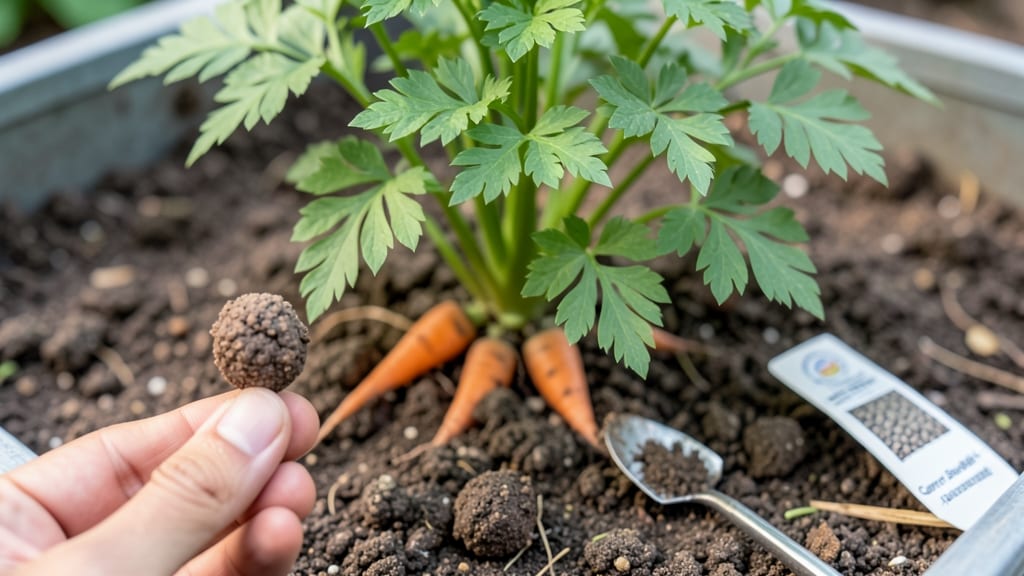
Planting carrot seed pellets instead of traditional seeds cuts your planting time in half while giving you straighter, more uniform rows. 🌱 I’ve tried both methods, and these little pellets—each packed with 10-15 seeds—eliminate the mess of tiny seeds blowing away or uneven germination.
The result? A lawn that fills in faster and crowds out weeds before they take hold.
No fancy tools required—just a simple rake, a measuring tape, and a little patience. The pellets go in at about ¼-inch deep, spaced 2-3 inches apart in rows 12-18 inches apart.
Water gently afterward, and keep the soil consistently moist (not soggy) until sprouts appear in 7-14 days. The biggest mistake? Planting too deep or skipping soil prep, which slows germination.
What you’ll end up with is a carpet of bright green foliage that grows 2-3 inches per week in ideal conditions. The uniformity means no patchy spots, and the weed suppression kicks in as soon as the carrots start shading the ground.
Once established, they’ll even handle light foot traffic better than traditional lawns.
Works in full sun to partial shade, though full sun gives the fastest growth. For best results, plant in early spring or late summer when soil temps are cool. If you’ve ever struggled with thin lawns or weed battles, this method changes the game—literally overnight.
📚 In This Guide
- What you need
- Instructions
- Tips and common mistakes
- Wrapping up and next steps
What you need
- ● Carrot seed pellets – 1–2 lbs (coverage: ~5,000 sq. ft. per pound). Look for organic, non-GMO pellets for best results.
- ○ Lawn spreader – A broadcast or drop spreader (calibrated for precision). Optional but highly recommended for even distribution.
- ● Rake or lawn drag – A plastic or metal rake with fine teeth to lightly cover seeds after spreading.
- ● Water source – A hose with a gentle spray nozzle or drip irrigation system for consistent moisture.
- ○ Lawn soil test kit – Optional but highly advised to check pH (ideal: 6.0–7.0). Adjust with lime or sulfur if needed.
- ● Knee pads or gardening gloves – For comfort during prep and planting.
- ● String line or measuring tape – To mark planting zones for uniformity.
- ○ Organic starter fertilizer – Optional (e.g., fish emulsion or compost tea) to boost germination.
- ○ Weed barrier fabric – Optional for areas with persistent weeds (lay down before seeding).
- ● Notebook & pen – To track planting dates, weather, and progress!
Step-by-step instructions for planting carrot seed pellets
Here's how to get those pellets in the ground right—for thick, weed-competing carrot rows in weeks.
🌱 Step 1: Prepare Your Soil for Perfect Germination
Carrot seed pellets need loose, stone-free soil to grow straight and strong. Work the top 6 inches of soil until it's crumbly and free of clumps. I like to add a handful of compost to each foot of row—this improves moisture retention and gives seedlings the nutrients they need to break through quickly.
Run a rake over the bed to create a smooth, level surface. Any low spots will trap water and cause rot, while high spots create air pockets that dry out seeds. Press down lightly with your hands until the soil feels firm but not packed—like a well-trodden garden path. This ensures good seed-to-soil contact for consistent germination.
💧 Step 2: Plant Pellets at the Correct Depth and Spacing
Carrot seed pellets are pre-coated for easy handling, but planting depth matters. Use your finger to make a hole about ¼ inch deep—just enough to cover the pellet without burying it too deeply. I space mine 1-2 inches apart in rows that are 12-15 inches apart for easy thinning later.
Drop one pellet into each hole and cover lightly with soil. Press gently to secure but don't compact—you want the pellet to stay in place while still allowing moisture to reach it. If you're planting in dry conditions, water the row immediately after planting to settle the soil around the pellets.
☀️ Step 3: Water Gently and Maintain Even Moisture
Keep the soil consistently moist but never soggy during germination. I water lightly every 2-3 days until the first green shoots appear—about 7-14 days depending on your climate. The key is to avoid washing away the pellets or creating a crust on the soil surface.
Use a fine-mist spray nozzle or a watering can with a gentle flow. You'll know you've got it right when the soil looks dark and damp but doesn't glisten with excess water. Once the seedlings are 1 inch tall, you can water more deeply to encourage root growth.
✂️ Step 4: Thin Seedlings for Maximum Yield
When seedlings reach 2 inches tall, it's time to thin. I use a small pair of scissors to snip unwanted plants at soil level—this prevents disturbing the roots of the ones you're keeping. Leave the strongest seedlings spaced 2-3 inches apart in the row.
Thinning might seem wasteful, but crowded carrots grow stunted and forked. The seedlings you remove can be transplanted to another spot if you're careful to keep their roots intact. Once thinned, water the remaining plants well to help them recover from the stress.
🪴 Step 5: Maintain Soil Moisture and Protect from Pests
Carrots need 1-1.5 inches of water weekly, but they hate soggy soil. I use a soaker hose to deliver water slowly at the base of the plants, keeping the foliage dry. Mulch with 1-2 inches of straw to retain moisture and suppress weeds that compete with your carrots.
Watch for carrot rust flies and aphids—they love young seedlings. If you spot any, I recommend a light spray of neem oil or insecticidal soap. With consistent care, you'll have harvest-ready carrots in about 60-80 days, depending on the variety.
Tips & tricks for precision carrot seed pellet planting
These simple strategies will help you grow carrots that are straight, strong, and ready to harvest in record time.
Soil Preparation Secret: Before planting, sift your soil through a ½-inch mesh screen to remove any rocks or clumps larger than a pea. This prevents the pellets from getting stuck or growing unevenly. I also like to mix in a thin layer of horticultural sand if my soil is heavy clay—this improves drainage and helps carrots grow straight downward. The goal is soil that's loose enough to let roots penetrate easily but firm enough to hold the pellets in place.
Planting Depth Visual: For that perfect ¼-inch depth, I use my pinky finger as a guide—press the tip of your finger into the soil until it reaches your first knuckle. This ensures consistent coverage without burying the pellets too deeply, which can cause them to rot. If your soil is dry, lightly mist the hole before dropping in the pellet to help it settle properly.
Watering Timing: The 2-3 day watering schedule works best when you water in the early morning. This gives the soil time to absorb moisture before the heat of the day evaporates it. I set a reminder on my phone for planting day, then again every 3 days until germination. A spray bottle with a fine mist attachment is perfect for this—it gives you control to water just the row without disturbing the pellets.
Thinning Technique: When thinning seedlings at 2 inches tall, I wait until after a light rain or watering session. The moist soil makes it easier to gently pull seedlings without tearing roots. For extra-large gardens, use a small hand trowel to create a trench between rows—this gives you more space to work and keeps the remaining plants from getting muddy. Always thin on a cloudy day to reduce stress on the plants.
Pro Tips for Carrot Seed Pellets
- These simple strategies will help you grow carrots that are straight, strong, and ready to harvest in record time.
- Soil Preparation Secret: Before planting, sift your soil through a ½-inch mesh screen to remove any rocks or clumps larger than a pea.
- Planting Depth Visual: For that perfect ¼-inch depth, I use my pinky finger as a guide—press the tip of your finger into the soil until it reaches your first knuckle.
Frequently asked questions
Got questions about carrot seed pellets? You’re not alone! Here are some common queries—and straightforward answers—to help you get the most out of your lawn project.
What’s the best time of year to plant carrot seed pellets?
For optimal germination, plant carrot seed pellets in early spring (after the last frost) or late summer (before the first frost). Avoid extreme heat or cold—ideal soil temps are 50–75°F (10–24°C). If you’re in a warm climate, fall planting works too! Just ensure the ground isn’t waterlogged.
How long does it take for carrot seed pellets to sprout?
With the right conditions, you’ll see sprouts in 7–14 days. Keep the soil consistently moist (not soggy!) and in indirect sunlight until they’re about 2 inches tall. Patience pays off—thin seedlings once they’re 3–4 inches high to avoid overcrowding.
Can I use carrot seed pellets in shady areas?
While carrot seed pellets thrive in full sun (6+ hours/day), they tolerate partial shade (3–6 hours of sun). For deep shade (<3 hours), consider mixing them with shade-tolerant grasses like fine fescue. Test a small patch first to gauge performance!
Do I need to fertilize after planting?
Nope! Carrot seed pellets are pre-treated with nutrients, so skip fertilizer for 4–6 weeks post-planting. After establishment, use a low-nitrogen lawn fertilizer (like 10-10-10) in early spring and fall. Over-fertilizing can stress young seedlings.
What should I do if weeds start popping up before my carrots sprout?
Act fast! Hand-pull weeds when the soil is moist, or spot-treat with a vinegar-based herbicide (avoid harsh chemicals near seedlings). Once your carrot grass reaches 3 inches, it’ll outcompete weeds naturally. Pre-emergent herbicides? Wait until germination is complete!
Are there alternatives to carrot seed pellets for weed control?
Yes! Other clover-based or winter ryegrass blends also suppress weeds, but carrot seed pellets stand out for their fast germination (5–7 days) and drought tolerance. For organic options, try buckwheat hulls or corn gluten meal (applied pre-planting).
Wrapping up and next steps
Carrot seed pellets offer a game-changing way to achieve a lush, weed-resistant lawn with minimal effort—thanks to their precision planting and fast germination. Whether you're tackling a small patch or a full yard, these tiny powerhouses make lawn care simpler, more effective, and eco-friendly. 🌱
Ready to transform your outdoor space? Start by gathering your supplies, following the steps with confidence, and watch your lawn thrive in weeks! For even better results, consider testing different pellet sizes or mixing with other grass seeds to customize your perfect green carpet.