
Lawn
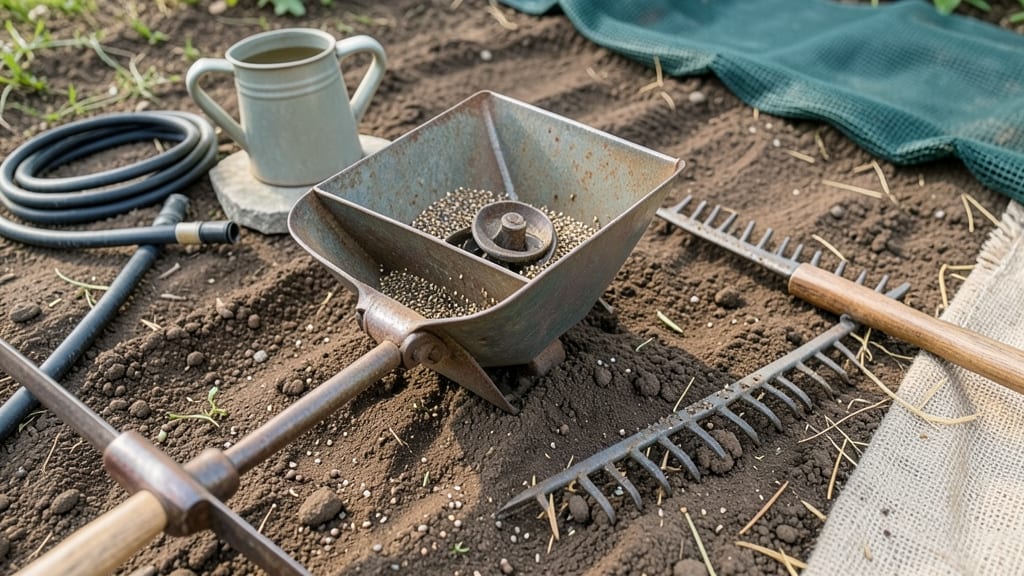
The best way to put grass seed down properly means the difference between a thick, lush lawn and patchy disappointment. 🌱 I’ve learned that even spread and firm contact with the soil are non-negotiable—skimp on either, and you’ll spend next spring fixing mistakes.
The secret isn’t just throwing seed; it’s creating the perfect conditions for those tiny sprouts to take hold.
Start with bare soil, free of rocks and debris, then lightly rake to create a fine, crumbly texture—think of it as making a cozy bed for your seeds.
Use a broadcast spreader for large areas or a hand spreader for smaller patches, moving in two directions (like a crosshatch) to ensure no gaps. After spreading, go over the area with a lawn roller or even a board to press the seed into the soil without burying it.
This step is what most beginners miss.
Watering is where the magic happens—or where it all falls apart. Keep the soil consistently moist for the first 2-3 weeks, watering lightly but frequently (think misting, not soaking). You’ll see those first green blades in about 7-14 days, but they’re fragile.
Once they’re 3-4 inches tall, you can ease up on watering and start mowing—just set the blade high to avoid scalping.
Common mistakes? Overwatering (which washes seeds away) or letting the soil dry out (which kills germination). And don’t forget: shade and foot traffic are the enemies of new grass.
If you follow these steps, you’ll have a lawn that’s the envy of the neighborhood by summer. Now, let’s get those seeds in the ground!
📚 In This Guide
- What you need
- Instructions
- Tips and common mistakes
- Wrapping up and next steps
What you need
- ● High-quality grass seed: Choose a blend suited to your climate and lawn type (e.g., cool-season for northern regions, warm-season for southern). Aim for 5–10 lbs per 1,000 sq ft, depending on seed type and coverage needs.
- ● Lawn starter fertilizer: A low-nitrogen (10-10-10 or similar) blend to encourage root growth. Use ½ lb per 1,000 sq ft.
- ● Peat moss or compost: ¼-inch layer to improve seed-to-soil contact and moisture retention.
- ● Water (hose with a gentle spray nozzle or sprinkler): Essential for keeping seeds moist during germination.
- ● Broadcast spreader (drop or rotary): For even distribution. Calibrate it to match your seed’s spread rate (check manufacturer guidelines).
- ● Rake (bow or leaf rake): Use a fine-toothed rake to level soil and lightly cover seeds (¼-inch max).
- ● Garden hose with adjustable nozzle: A fine mist setting is ideal for watering seeds without displacing them.
- ● Knee pads or work gloves: Because comfort matters when you’re on your hands and knees!
- ● Straw or erosion control blanket: Lightly spread over seeds to protect from wind and retain moisture (remove once sprouts appear).
- ● Soil test kit: To check pH and nutrient levels before seeding. Aim for a pH of 6.0–7.0 for most grasses.
- ○ Lawn roller (lightweight): Optional for firming soil post-seeding (use sparingly to avoid compacting seeds).
- ● String line or spray paint: To mark seed spread patterns for overlapping rows.
Step-by-step instructions for spreading grass seed like a pro
Here's the method I swear by for lush, even coverage that turns bare spots into thick lawns.
🌱 Step 1: Prepare the Soil for Perfect Seed Contact
Start by removing all debris, rocks, and weeds from the area. I use a rake to pull up weeds and a stiff-bristled brush to clear out stubborn debris—this ensures the seed makes direct contact with the soil. The goal is a smooth, level surface with no obstacles blocking the seed from reaching the dirt.
Next, loosen the top ¼ inch of soil with a rake or a garden fork. This creates a seed bed where the seed can settle just below the surface. Press down lightly to firm the soil—you want it compact enough to hold the seed in place but loose enough for roots to penetrate easily. If your soil is very hard, I recommend aerating first to break up compaction.
🌿 Step 2: Spread a Thin Layer of Starter Fertilizer
Using the ½ pound of starter fertilizer, spread it evenly over the prepared area with a broadcast spreader. This step is critical because it gives your grass seed the nutrients it needs to germinate quickly and establish strong roots. I like to work in small sections—about 5 feet by 5 feet at a time—to ensure even coverage.
Lightly rake the fertilizer into the top ¼ inch of soil so it blends in but doesn’t get buried too deep. You’ll see a fine, even layer of granules mixed into the soil. This ensures the seed won’t have to compete with the fertilizer for space and can access nutrients right away.
💧 Step 3: Distribute Grass Seed Evenly for Uniform Germination
Fill your broadcast spreader with the 5 pounds of grass seed and set it to the recommended setting for your seed type. Walk in a crisscross pattern—first in one direction, then perpendicular—to avoid missing spots or creating thick patches. I move slowly, overlapping each pass by about 6 inches to guarantee consistent coverage.
After spreading, lightly rake the seed into the soil with a stiff-bristled rake, pressing it just enough to ensure firm contact. You’ll see the seed settle into the soil without being buried too deep. This step is where the magic happens—proper seed-to-soil contact is what turns a thin layer of seed into a thick, even lawn.
☀️ Step 4: Water Gently but Thoroughly for Germination
Within 30 minutes of seeding, water the area gently but deeply to settle the seed into the soil. Use a fine mist setting on your sprinkler or a gentle watering can to avoid displacing the seed. The goal is to keep the soil consistently moist—like a well-wrung sponge—for the first 2-3 weeks.
Water lightly every 2-3 days to maintain moisture without creating puddles. You’ll know you’re doing it right when the top ¼ inch of soil stays damp but not soggy. Overwatering can wash away seed or cause it to rot, while underwatering leaves it dry and dormant. Consistency is key here!
✂️ Step 5: Monitor and Maintain for a Thick, Healthy Lawn
Once the grass reaches about 3 inches tall, it’s time to mow for the first time. Set your mower blade to 3 inches to avoid scalping the new growth. This encourages deeper root development and a stronger lawn. I also recommend leaving grass clippings on the lawn—they act as a natural fertilizer and help retain moisture.
Continue watering deeply 2-3 times per week during the first growing season, adjusting for rainfall. You’ll see the most dramatic growth in the first 4-6 weeks, so stay patient and consistent. Avoid walking on the new grass until it’s fully established—usually after 4-6 weeks of growth—to prevent damage to the delicate seedlings.
Tips & tricks for perfect grass seed application
Here's what nobody tells you about getting that flawless, even coverage that actually grows into a thick lawn.
The Soil Prep Secret: Don't just loosen the top ¼ inch of soil—focus on creating tiny furrows with your rake. These little channels help the seed settle just below the surface where it needs to be, while still allowing light and air to reach it. I find using a stiff-bristled rake creates perfect micro-texture for seed-to-soil contact. This is where most lawns fail—they either bury the seed too deep or leave it exposed to birds and wind.
Fertilizer Distribution Technique: When spreading that ½ pound of starter fertilizer, work in those 5x5 foot sections but don't rush! Use the back-and-forth motion of your broadcast spreader while walking perpendicular to your last pass. This creates a lattice pattern that ensures no spot gets missed. The key is to see the granules disappear into the soil—you should barely see them after raking, just like a fine dusting of flour on a cake.
Seed Spreading Strategy: That 6-inch overlap when spreading your 5 pounds of seed makes all the difference. Think of it like painting a wall—if you miss a spot, you'll see it. I mark my lawn into quadrants and work one at a time, always starting from the farthest corner. This prevents stepping on freshly seeded areas and keeps your spreader filled consistently. The goal is to see a uniform, almost invisible layer of seed—like a whisper of green across the soil.
Watering Timing Tip: Those crucial 30 minutes between seeding and watering can't be emphasized enough. I set a timer as soon as I finish spreading—any longer and the seed dries out before it can germinate. For the first watering, I use a gentle rain setting on my sprinkler and keep it running until water appears at the edge of the seeded area. This ensures the seed is properly settled without washing away.
Pro Tips for Best Way To Put Grass Seed Down
- Here's what nobody tells you about getting that flawless, even coverage that actually grows into a thick lawn.
- The Soil Prep Secret: Don't just loosen the top ¼ inch of soil—focus on creating tiny furrows with your rake.
- Fertilizer Distribution Technique: When spreading that ½ pound of starter fertilizer, work in those 5x5 foot sections but don't rush!
Frequently asked questions
Got questions about seeding your lawn? You’re not alone—here are the most common ones to help you get it right the first time!
What’s the best time of year to put down grass seed?
The ideal window is early fall (late August to October) or early spring (March to May). Cooler temps and consistent moisture help seeds germinate faster. Avoid extreme heat or drought—seeds need patience!
How long does it take for grass seed to grow?
Most seeds sprout in 7–21 days, depending on type, weather, and care. Cool-season grasses (like fescue) germinate quicker (5–10 days) than warm-season (like Bermuda, which takes 14–28 days). Stay patient—thin spots may fill in gradually!
Do I need to water before putting grass seed down?
Yes! Moisten the soil 1–2 days before seeding (about 1 inch deep) to help seeds make contact. After spreading, water lightly but frequently (2–3 times daily) to keep soil damp until germination. A sprinkler on a timer works great!
Can I just broadcast seed without preparing the soil?
Not ideal! Skipping soil prep (raking, removing debris, or aerating) can lead to poor germination or patchy growth. At minimum, loosen the top ¼ inch of soil and rake to create a smooth, seed-friendly surface. For compacted lawns, aerate first!
Will my pets or wildlife eat the new grass seed?
Birds, squirrels, and pets love fresh seed. To protect your investment, cover seeds lightly with straw or a breathable netting after watering. Remove pets from the area until germination (about 3 weeks) to avoid trampling.
What if my lawn has weeds? Should I seed over them?
Nope! Weeds compete for nutrients and sunlight. Kill weeds first with a pre-emergent herbicide (for grass types) or manually pull them, then wait 1–2 weeks before seeding. For stubborn weeds, consider a post-emergent treatment after grass is established (6+ weeks).
Can I overseed in hot or dry weather?
Seeding in heat (above 85°F) or drought stresses seeds and reduces success. If you must overseed in summer, choose drought-tolerant varieties (like buffalo grass) and water daily to keep soil cool. Early morning watering helps too!
Wrapping up and next steps
Putting down grass seed the right way transforms your bare patches into a lush, vibrant lawn—but it’s all about the details! Whether you’re prepping the soil, choosing the best seed, or ensuring even coverage, every step matters.
With patience and precision, you’ll soon enjoy a healthy, green space that’s the envy of the neighborhood. 🌱
Ready to take the next step? Grab your tools, mark your calendar for follow-up watering, and watch your lawn thrive!