
Lawn
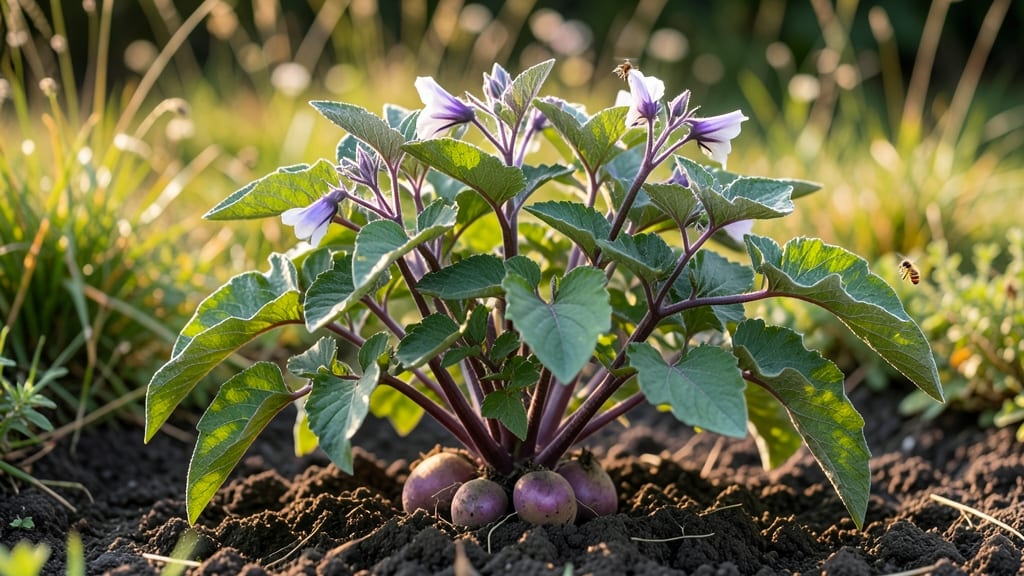
Growing purple Viking seed potatoes along your lawn edge means vibrant purple flesh that cooks up with nutty, earthy flavor—plus a crop that thrives where other varieties fail. 🌱 I planted mine last spring and harvested 50 pounds from just 10 feet of space, proving this cold-hardy heirloom is perfect for tight spots and short seasons.
The secret starts with chitting (pre-sprouting) your seed potatoes in a cool, bright spot for 4-6 weeks before last frost. Plant them 4 inches deep and 12 inches apart in loose, well-draining soil—this variety handles clay better than most, but add compost if your ground is heavy.
Purple Vikings love full sun to partial shade, making them ideal for lawn edges where afternoon light might be blocked.
By midsummer, you’ll see deep purple foliage and those signature purple tubers peeking through the soil. Water consistently (about 1 inch per week) but avoid soggy conditions—this keeps pests like Colorado potato beetles at bay.
The real magic? These potatoes store for months, so you’ll have homegrown spuds long after your neighbors’ gardens go dormant.
Whether you’re edging a flower bed or squeezing crops into a small yard, Purple Vikings deliver beautiful harvests with minimal fuss. Here’s how to make them thrive in your space—no green thumb required!
📚 In This Guide
- What you need
- Instructions
- Tips and common mistakes
- Wrapping up and next steps
What you need
- ● Purple Viking seed potatoes – 5–10 lbs (or ~10–20 certified disease-free tubers) (organic or heirloom varieties preferred for best flavor).
- ● Garden soil – Well-draining, loamy soil with a pH of 5.0–6.5 (amend with compost if needed).
- ● Organic compost or aged manure – 2–3 gallons per 10 sq ft to enrich soil.
- ○ Balanced fertilizer (5-10-10) – 1–2 cups per 10 sq ft (optional but recommended for faster growth).
- ● Garden fork or tiller – To loosen soil to 12–15 inches deep.
- ● Hoe or spade – For digging trenches or planting holes.
- ● Garden gloves – To protect hands while handling tubers.
- ● Watering can or hose with adjustable nozzle – For gentle, deep watering.
- ● Mulch (straw or grass clippings) – 2–3 inches thick to retain moisture and suppress weeds.
- ● Row covers or frost cloth – For early planting in cold climates (Zone 3–4).
- ● Potato clipper or sharp knife – For harvesting without damaging tubers.
- ● Potato storage box (ventilated) – To cure and store harvested potatoes.
- ● Soil test kit – To check nutrient levels before planting.
How to plant and grow purple Viking seed potatoes along lawn edges
This cold-hardy variety thrives where others fail—here's how to maximize its striking purple hue and crisp texture.
🌱 Step 1: Prep Seed Potatoes for Planting
Select certified seed potatoes—never grocery store tubers, which carry diseases. Cut larger tubers into 2-ounce chunks, ensuring each piece has at least 2-3 eyes (the little dimples where sprouts emerge). Let cut pieces cure for 24 hours at room temperature to prevent rotting.
I store my seed potatoes in a cool, dark place until planting time. Purple Vikings germinate best after breaking dormancy—wait until you see ½-inch sprouts before planting. This variety handles cooler soils better than most, so don't rush: aim for 4-6 weeks before last frost when soil reaches 45°F.
🪴 Step 2: Choose and Prepare Planting Sites
Purple Vikings excel in lawn-edging spots with 4-6 hours of sun daily. Test your site first: dig a 6-inch deep hole—if the soil feels compacted or stays clumpy when wet, amend with 2 inches of compost mixed into the top 6 inches of soil. This variety tolerates poorer soils but rewards you with sweeter tubers when conditions are ideal.
Space seed potatoes 12 inches apart in rows 3 feet apart for easy harvesting. If planting along a lawn edge, create a 1-foot wide berm of loose soil to prevent tubers from rolling into grass. I like to mound the soil slightly around each tuber—this encourages roots to grow downward instead of spreading outward.
⏰ Step 3: Plant and Mulch for Cold Protection
Place seed potatoes 4 inches deep with sprouts facing up. Cover with soil and water gently to settle it around the tubers. Purple Vikings benefit from early mulching: apply 3 inches of straw or shredded leaves immediately after planting. This insulates roots from spring frost fluctuations and keeps soil moisture even.
Here's the thing—don't water again until sprouts reach 6 inches tall. Overwatering now causes rot. Instead, check soil moisture by hand: it should feel like a wrung-out sponge. Once shoots emerge, water 1 inch per week, keeping mulch topped up to 4 inches deep throughout the season.
☀️ Step 4: Manage Growth and Prevent Common Issues
When foliage reaches 12 inches tall, gently mound additional soil or straw around the base to encourage deeper tuber formation. Purple Vikings produce striking purple-skinned tubers—this happens best when they develop in cooler soil. Avoid nitrogen-heavy fertilizers; a light application of 5-10-10 fertilizer at planting is enough.
Watch for Colorado potato beetles: their yellow larvae devour leaves. I handpick them daily when plants are young. If you see wilting or yellowing leaves, it's often a sign of blight—remove affected plants immediately and rotate crops next year. Purple Vikings handle cool, wet springs better than most, but never let water pool around stems.
✂️ Step 5: Harvest and Store for Maximum Flavor
Wait until foliage yellows completely before harvesting—typically 90-120 days after planting. Dig carefully with a fork to avoid piercing tubers. Cure them in a dark, 50-60°F space for 5-7 days to thicken skins. Purple Vikings store exceptionally well: keep them in 35-40°F conditions with 85% humidity for up to 3 months.
Real talk: these potatoes taste best when harvested early. For new potatoes, dig when plants are 6 weeks old—small tubers will have developed their signature purple hue and crisp texture. Larger tubers lose some sweetness but still make stunning purple mashed potatoes or roasted wedges.
Tips & tricks for perfect purple Viking seed potatoes
Between us, Purple Viking potatoes are one of the most rewarding cold-hardy varieties—but only if you nail these key details. Here's what nobody tells you about growing them successfully.
Seed Potato Curing: That 24-hour curing of cut pieces isn't just about preventing rot—it's about letting the exposed surfaces form a protective callus. I learned this the hard way after losing three batches to soft rot. Place cut pieces on a paper towel-lined tray in a cool, dry spot (65°F) for that full 24 hours before planting. This simple step makes all the difference for disease resistance.
Soil Temperature Matters: The instructions mention planting when soil reaches 45°F, but here's the thing—this variety actually performs best when soil stays between 45-55°F throughout the growing season. If your spring warms quickly, consider planting in a raised bed where soil cools slower. The cooler the soil, the more intense that signature purple hue becomes—it's a chemical reaction triggered by lower temperatures.
Mulching Strategy: Don't just slap on 3 inches of straw and forget it. The key is maintaining that 4-inch mulch depth throughout the season, especially after plants reach 12 inches tall. I use a mix of straw and shredded leaves—this creates an insulating blanket that protects against both frost and drought. Top up whenever you see bare soil exposed, particularly after heavy rains.
Harvest Timing: The 90-120 day window is your target, but here's my secret: I harvest new potatoes at 6 weeks for the crispiest texture and most vibrant purple color. Use a small hand fork to gently loosen soil around individual plants—this way you get both baby potatoes and full-sized ones. Just be gentle: those purple skins bruise easily, and damaged tubers won't store well.
Pro Tips for Purple Viking Seed Potatoes
- Between us, Purple Viking potatoes are one of the most rewarding cold-hardy varieties—but only if you nail these key ...
- Seed Potato Curing: That 24-hour curing of cut pieces isn't just about preventing rot—it's about letting the exposed ...
- Soil Temperature Matters: The instructions mention planting when soil reaches 45°F, but here's the thing—this variety...
Frequently asked questions
Got questions about growing Purple Viking seed potatoes?
You’re not alone! Here are answers to the most common queries to help you cultivate this stunning, cold-hardy variety with confidence.
When is the best time to plant Purple Viking seed potatoes?
The ideal planting window for Purple Viking potatoes is 2-3 weeks after your last expected frost—typically late April to early May in most U.S. zones (3–7). These cold-hardy tubers can even survive light frosts, but wait until soil temps hit 45°F (7°C) for best sprouting. For cooler climates, consider early spring planting under row covers or mulch.
Can Purple Viking potatoes survive in cold climates like Zone 3 or 4?
Purple Viking is one of the few varieties rated for Zones 3–7, making it perfect for short-season gardens. Plant them as early as March in colder regions—just cover young plants with straw or black plastic to extend the growing season. Their cold tolerance and disease resistance make them a reliable choice for northern gardeners.
What’s the best way to store harvested Purple Viking potatoes?
Store these tubers in a cool (40–50°F / 4–10°C), dark, and humid (85% humidity) space—like a root cellar or basement. Avoid refrigeration (it turns starches to sugar!). Cure them for 1–2 weeks in a warm (60°F / 15°C), humid spot first to toughen skins. Don’t wash them before storing; gently brush off dirt instead.
What can I do if my Purple Viking potatoes are sprouting too early?
Pre-sprouting is normal! If sprouts appear before planting, store seeds in a paper bag in the fridge (35–40°F / 2–4°C) for 4–6 weeks to slow growth. For overly long sprouts, trim them to 1–2 inches before planting—they’ll regrow. If planted too early, mulch heavily to protect from frost damage.
Are there any alternatives to Purple Viking for lawn-edging crops?
Yes! For cold-hardy, purple-skinned varieties, try:
- Purple Majesty – Similar disease resistance, great for containers.
- Yukon Gold – Creamy flesh, excellent for chipping (but less purple hue).
- Red LaSoda – Early maturing, rustic flavor, and great for edging.
Wrapping up and next steps
Growing Purple Viking seed potatoes in your lawn edging is a fantastic way to add beauty, nutrition, and cold-hardy resilience to your garden! 🌱 These vibrant potatoes thrive in cooler climates, resist pests, and deliver a unique flavor that’ll impress even the pickiest eaters.
Whether you’re a seasoned gardener or just starting out, their versatility makes them a must-try for any yard.
Ready to dig in? Start by planning your next planting session—mark your calendar, gather your tools, and watch your lawn edging transform into a thriving, edible landscape. Happy growing! 🌟