
Lawn
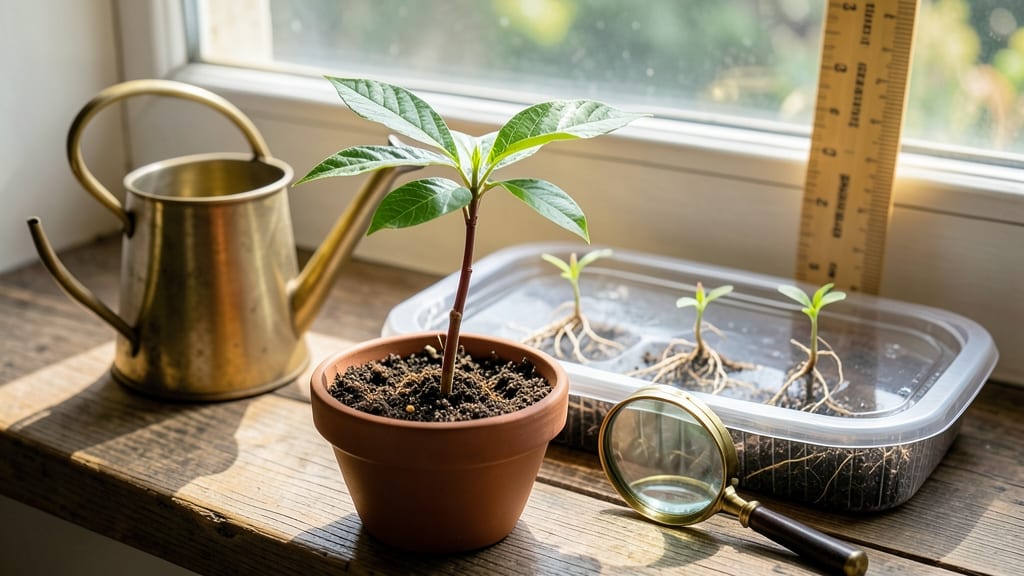
Mango seed growth stages begin with a tiny white radicle breaking through the shell—often after weeks of waiting. 🌱 I’ve watched seeds take 20 days or longer to crack open, but once they do, the transformation happens fast.
That first sprout is fragile, and keeping it alive depends on warmth, moisture, and patience you might not expect.
The next 3 weeks bring the real magic: cotyledons unfurl like tiny green leaves, followed by true leaves that look like miniature mango foliage. You’ll need a humid environment (think clear plastic domes) and bright indirect light—direct sun at this stage can scorch those delicate sprouts.
Overwatering is the silent killer here, so let the top inch of soil dry between waterings.
By week 6, your seedling should stand 4-6 inches tall with sturdy stems and multiple leaves. This is when you can start gradual hardening—moving it outside for short periods to toughen up before transplanting.
The roots will be shallow but spreading, so a small pot with drainage is key to preventing rot.
Common pitfalls? Damping off (a fungal kill) and leggy growth from weak light. If your seedling stretches toward the window, it’s begging for better conditions. The good news? Mango seeds are tough—they’ll remind you that gardening rewards persistence, not perfection.
📚 In This Guide
- What you need
- Instructions
- Tips and common mistakes
- Wrapping up and next steps
What you need
- ● Mango seeds: 3–5 fresh, plump seeds (harvested from ripe, organic mangoes for best results). Pro tip: Avoid seeds from store-bought mangoes treated with fungicides!
- ● Well-draining potting mix: 2–3 bags (1–2 cubic feet each) of a blend like 50% coconut coir + 30% perlite + 20% vermiculite (or a seed-starting mix).
- ● Small pots or seed trays: 4–6 biodegradable pots (3–4 inches in diameter) or a shallow tray with drainage holes.
- ● Spray bottle: 8–16 oz for gentle watering (avoid over-saturating seeds!).
- ● Plastic wrap or humidity dome: 1 sheet (to retain moisture during germination).
- ● Grow lights or sunny windowsill: A full-spectrum LED grow light (12–16 hours/day) or a south-facing window (6+ hours of sunlight).
- ● Fertilizer: A balanced liquid fertilizer (5-5-5 or 10-10-10, diluted to half-strength) for seedlings.
- ● Heating mat: A seedling heat mat (70–80°F) to speed up germination in cooler climates.
- ● pH tester: To ensure your soil pH is 6.0–6.5 (ideal for mango seedlings).
- ● Humidity tray: A shallow tray with pebbles + water to create a mini greenhouse effect.
- ● Pruning shears: Small, sharp scissors for trimming leggy seedlings later.
- ● Journal/notebook: To track growth stages, watering dates, and milestones!
Step-by-step guide to growing mango trees from seed
Watch your kitchen scrap transform into a lush tropical sapling in just six weeks.
🌱 Step 1: Extract and Prepare the Seed
Crack open a ripe mango and remove the large, flat seed inside. Rinse it thoroughly to remove any fruit residue—this prevents mold. I like to soak the seed in warm water for 24 hours to soften the outer shell slightly, making it easier to handle. This step also helps the seed absorb moisture before planting.
After soaking, gently scrape off any remaining fruit pulp with a knife or your fingernail. The seed should feel smooth and clean. Place it on a paper towel and let it dry for 1-2 hours—this prevents rot when you plant it. Real talk: If you skip drying, your seed might develop mold before it even sprouts.
🌱 Step 2: Plant the Seed in a Moistened Growing Medium
Fill a small pot (about 3-4 inches deep) with a well-draining mix—50% potting soil and 50% perlite or sand works perfectly. Moisten the mix until it’s damp but not soggy. You’ll know it’s right when a handful of soil holds together but doesn’t drip water.
Plant the seed 1 inch deep, with the flat side down. This mimics its natural orientation in the ground. Cover it lightly with soil and press down gently to remove air pockets. Water the pot until moisture seeps out the drainage hole—this ensures the seed stays hydrated without drowning.
☀️ Step 3: Provide Warmth and Humidity for Germination
Mango seeds need warmth (75-85°F) to germinate, so place the pot in a sunny window or under a grow light if natural light is weak. I’ve found that a seedling heat mat speeds up germination to 2-4 weeks, but patience is key—some seeds take longer.
Cover the pot with a clear plastic bag or humidity dome to trap moisture. Check daily for condensation—if the inside fogs up, your humidity is perfect. Mist the soil lightly if it feels dry to the touch, but avoid overwatering. The goal is to keep the soil evenly moist, not soaked.
🌿 Step 4: Care for the Sprout Once It Emerges
When the first true leaves (not the initial seed leaves) appear, remove the plastic cover immediately. This prevents damping-off, a fungal disease that kills young seedlings. Place the pot in bright, indirect light for the first week—direct sun can scorch delicate new growth.
Water when the top inch of soil feels dry, using room-temperature water. I like to water at the base of the plant to avoid wetting the leaves, which reduces disease risk. Fertilize lightly with a balanced liquid fertilizer (5-5-5) once the seedling has 3-4 leaves, but only at half-strength.
⏰ Step 5: Transplant and Encourage Strong Growth
After 6 weeks, your sapling should be 6-12 inches tall with a sturdy stem. Transplant it into a larger pot (8-10 inches deep) with fresh potting mix. Handle the roots gently—mango seedlings are sensitive to disturbance. Water thoroughly after transplanting to help the roots settle.
Gradually introduce it to direct sunlight over 1-2 weeks to harden it off. By this stage, you’ll see the first signs of real mango tree potential—thicker stems and broader leaves. Keep the soil moist but well-draining, and avoid overwatering. This is the moment that matters: proper care now determines how fast your tree matures.
Tips & tricks for perfect mango seed growth
Turning that mango pit into a thriving sapling takes patience—and these tricks help you skip the common pitfalls.
Soaking Secret: The 24-hour soak in warm water isn't just about softening—it kickstarts the seed's metabolism. I like to use a glass of water so I can monitor the seed's progress. If you notice any dark spots developing during soaking, rinse it immediately and restart the process. This early warning system prevents mold from ruining your seed before it even sprouts.
Germination Temperature Tip: While the instructions mention 75-85°F, I've found that placing the pot on top of a refrigerator (not inside) creates that perfect warm spot without needing special equipment. Just make sure the top isn't cold to the touch. The goal is consistent warmth—fluctuations can delay germination by weeks.
True Leaves Watch: When those first true leaves appear in Step 4, resist the urge to remove the plastic cover too soon. I've seen damping-off strike within hours of uncovering. Wait until you see at least 2-3 true leaves (not the initial seed leaves) before removing the cover. These leaves will be smaller but distinctly different in shape from the first two seed leaves.
Transplant Timing: The 6-week mark is ideal, but don't be discouraged if your seedling needs a little more time. I've had some take up to 8 weeks to reach 6 inches. The key is the stem's thickness—it should feel sturdy when you gently pinch it. Thin, rubbery stems need more time before transplanting to avoid root damage.
Pro Tips for Mango Seed Growth Stages
- Turning that mango pit into a thriving sapling takes patience—and these tricks help you skip the common pitfalls.
- Soaking Secret: The 24-hour soak in warm water isn't just about softening—it kickstarts the seed's metabolism. I like...
- Germination Temperature Tip: While the instructions mention 75-85°F, I've found that placing the pot on top of a refr...
Frequently asked questions
Got questions about growing mango seeds? You’re not alone! Here are answers to the most common queries—whether you're troubleshooting, curious about timing, or looking for alternatives.
How long does it take for a mango seed to sprout?
A mango seed typically sprouts within 14–30 days if kept in warm, moist conditions. Some seeds germinate faster (7–10 days), while others may take up to 6 weeks. Patience is key—consistent moisture and warmth (70–85°F) speed up the process.
Can I speed up the germination process?
Yes! Soak the seed in water for 24–48 hours before planting to soften the shell. Place it in a warm, dark spot (like a paper towel-lined bag) and mist it daily. Avoid direct sunlight until sprouts appear—this mimics tropical conditions and encourages faster growth.
What should I do if my mango seed isn’t sprouting?
If your seed stays dormant after 6 weeks, it may be non-viable or under stress. Check for these issues:
- Moisture: Is the soil too dry or waterlogged?
- Temperature: Is it below 60°F?
- Pests: Are insects or mold present?
How do I care for a mango seedling after it sprouts?
Once sprouted, place your seedling in bright, indirect light (no harsh sun yet!). Keep soil moist but not soggy, and fertilize lightly with a balanced, water-soluble fertilizer (diluted to half strength) every 4–6 weeks. Transplant to a pot with drainage holes when it’s 4–6 inches tall.
Will a mango tree grown from seed produce fruit?
Yes, but it may take 3–5 years (or longer) to bear fruit—and the quality won’t match grafted trees. Seed-grown mangoes are unpredictable in taste, size, and ripening time. For reliable fruit, consider grafting later or buying a nursery-grown sapling.
Wrapping up and next steps
Growing a mango seed into a sapling is a rewarding journey of patience and care! 🌱 From the first sprouts to a sturdy young plant, each stage teaches you the magic of nature’s growth cycle.
Whether you’re a gardening enthusiast or a curious beginner, your efforts will soon bloom into a thriving mango tree—just imagine the tropical treats ahead!
Ready to take the next step? Plant your seeds today and watch your green thumb flourish. Need extra tips? Explore pruning techniques or soil care to keep your sapling strong—your future mango harvest starts now! 🌿✨