
Propagation
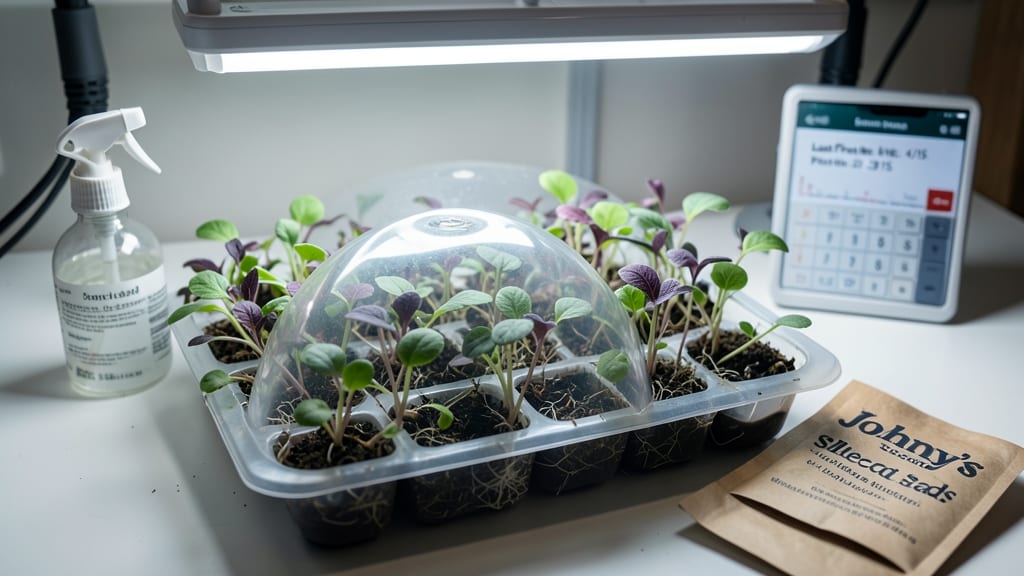
My Johnny seeds seed starting calculator saved my first batch of violas from bolting before they bloomed. 🌱 The secret isn’t just counting backward from frost—it’s matching Johnny seeds’ fast germination (5-10 days) with your local climate quirks like humidity and indoor light intensity.
Start by noting your last frost date and Johnny seeds’ ideal transplant age (4-6 weeks). Plug those into a simple formula: (Last frost date – Transplant age) = Start date.
For violas, I add 2 extra weeks to account for their temperature sensitivity—they need consistent 60-65°F soil to avoid leggy seedlings. You’ll end up with stocky, vibrant seedlings ready for outdoor planting, not wimpy stretches begging for sunlight.
The calculator also handles spacing—Johnny seeds need 12-18 inches apart at maturity, so plan your trays accordingly to avoid overcrowding. For other fast growers like lettuce or radishes, tweak the transplant age but keep the light and temperature rules strict. Here’s how to build your own version—no math degree required!
📚 In This Guide
- What you need
- Instructions
- Tips and common mistakes
- Wrapping up and next steps
What you need
- ● Johnny Seeds Seed Starting Calculator (accessible via their website or app)
- ● Seeds – Choose your Johnny Seeds variety (e.g., heirloom tomatoes, peppers, or herbs). Quantities depend on your garden size, but start with 50–100 seeds per variety for testing.
- ● Seed Starting Mix – 5–10 lbs of a sterile, lightweight mix (e.g., Black Gold Seedling Mix or Pro-Mix BX). Avoid garden soil—it’s too dense!
- ● Containers – Options: Seed trays (with drainage holes) – 1–2 trays (1020-cell trays work well for small seeds).
- ● Biodegradable pots – 50–100 pots (2–3 inches deep) for transplanting.
- ● Repurposed containers – Clean yogurt cups, egg cartons, or 6-pack soda trays (sterilize with 1 part bleach to 9 parts water).
- ● Grow Lights or Sunny Window – 12–16 hours of light/day. Use a full-spectrum LED grow light (e.g., SPYDERMAN Grow Light) if natural light is insufficient.
- ○ Heat Mat (Optional but Helpful) – For slow-germinating seeds (e.g., peppers, tomatoes). Aim for 70–85°F soil temp.
- ● Misting Bottle or Spray Nozzle – For gentle watering (avoid soaking).
- ● Humidity Dome or Plastic Wrap – To retain moisture until germination.
- ● Fertilizer – A balanced, water-soluble fertilizer (e.g., Jack’s Classic 20-20-20) at ½-strength once seedlings sprout.
- ● Timer – To track light cycles and watering schedules.
- ○ Thermometer – Soil and air (optional but recommended for precision).
- ● Label Maker or Popsicle Sticks – To label seeds by variety and date.
- ● Pruning Shears or Scissors – For transplanting (if not using biodegradable pots).
- ● Internet/Device Access – To use the Johnny Seeds calculator (or print hard copies of your schedule).
- ● Patience & a Notebook – Track germination dates, soil temps, and adjustments!
- ● Seedling Heat Mat – For faster germination of cold-sensitive seeds.
- ● pH Meter – To test soil pH (ideal range: 6.0–7.0 for most seeds).
- ● Fungicide (e.g., Neem Oil or Mycorrhizal Inoculant) – Prevents damping-off disease.
- ● Grow Tent or Vertical Rack – Maximizes space for high-density seedling setups.
- ● Camera or Phone Stand – For documenting progress (because seedling selfies are mandatory! 📸).
How to use a seed starting calculator for flawless germination
Precision timing transforms guesswork into reliable results—here's how to use it like a pro.
📅 Step 1: Input Your Last Frost Date
Start by entering your official last frost date—this is the average date when nighttime temperatures reliably stay above 32°F. Johnny Seeds' calculator uses this as your hard deadline for transplanting seedlings outdoors. I always verify this with my local cooperative extension service because microclimates can shift frost dates by 1-2 weeks even within the same county.
If you're in Zone 7b, for example, you might see April 15 listed, but hilltops or low-lying areas could experience frost until May 1. The calculator won't account for these variations, so adjust manually if your garden sits in an unusual spot. This ensures your seedlings mature exactly when they need to—no rushing, no waiting too long.
⏰ Step 2: Select Your Target Planting Window
Most vegetables thrive when transplanted 4-6 weeks before their ideal outdoor planting window. The calculator lets you adjust this range based on your crop's days to maturity and cold tolerance. For example, basil needs 60-90 days to reach harvest, while kale can handle 30-50 days in cooler weather.
I always cross-check with Johnny Seeds' planting charts—some crops like peppers need 8-10 weeks indoors because they're slow to germinate and mature. The calculator's default settings often underestimate this for heat-loving plants. Pro tip: For tomatoes, I add 2 extra weeks to the indoor count to account for their finicky germination.
🌱 Step 3: Adjust for Germination Specifics
Enter your seeds' days to germination—this is where the calculator shines. A fast germinator like radish (3-5 days) needs a very different indoor timeline than carrots (14-21 days). The tool then backtracks from your transplant date to show exactly when to start seeds for perfect timing.
Here's the thing—some packets list minimum germination times, but real-world conditions (like cooler basement storage) can stretch this to 2-3 times longer. I always err on the side of earlier starting for seeds with variable germination, like onions or leeks, because waiting too long means weaker seedlings that struggle to catch up.
☀️ Step 4: Factor in Your Grow Light Setup
The calculator's light adjustment tool accounts for whether you're using natural light, grow lights, or a hybrid setup. If you're relying on a south-facing window, seedlings will need 2-3 weeks extra indoors because they'll grow slower without 14+ hours of light daily. I test my setup by measuring light intensity with a light meter—anything below 2,000-3,000 foot-candles means I need to supplement.
For grow lights, the calculator assumes 12-16 hours/day, but I've found LED arrays (which run cooler) let me keep lights on 18 hours/day without stressing seedlings. The tool doesn't account for this, so I manually adjust the "light quality" slider to high for LEDs to compensate. Watch for etiolation—those long, leggy stems mean your light's too far away or weak.
⚠️ Step 5: Validate with Real-World Checkpoints
Once the calculator spits out your start date, I always schedule 3 key checkpoints: the germination date, the true leaves stage (when the first real leaves appear, not cotyledons), and the transplant date. For peppers, I mark week 4 to check for damping-off—if more than 20% of seedlings collapse, I know my humidity's too high and adjust watering immediately.
I also use the calculator's backup dates—those ±3-day windows—to account for germination surprises. If your marigolds pop up 5 days late, you can still transplant them successfully because the calculator builds in that buffer. The goal is strong, stocky seedlings, not perfect timing. You'll see them ready when roots fill the cell and stems are thick as pencils—that's your real cue, not just the date.
Tips & tricks for perfect seed starting timing
Precision timing isn't just about dates—it's about creating the ideal conditions for your seeds to thrive. Here's how to get the most out of Johnny Seeds' calculator while avoiding common pitfalls.
Microclimate Adjustments: The calculator's frost date is based on averages, but your garden might experience frost 1-2 weeks later in shaded areas or frost pockets. I always check my local cooperative extension service for precise data, then add 5-7 days to the transplant window if my garden sits in a cold microclimate. This extra buffer ensures your seedlings won't face unexpected cold snaps that could stunt their growth.
Light Quality Matters: While the calculator accounts for 12-16 hours of light, remember that LED grow lights can actually be used for 18 hours/day without stressing seedlings. I've found that adjusting the "light quality" slider to "high" in the calculator compensates for this extended photoperiod. The key is monitoring for etiolation—if seedlings stretch toward the light with weak stems, they're not getting enough intensity, not just duration.
Germination Buffer Strategy: Some seed packets list minimum germination times, but real-world conditions can double or triple these estimates. For seeds like onions or leeks that germinate unpredictably, I recommend starting 10-14 days earlier than the calculator suggests. This accounts for cooler storage temperatures or moisture fluctuations that can delay germination. The calculator's ±3-day backup windows help here, but I've found extending this to ±7 days for variable seeds gives better results.
Transplant Readiness Check: The calculator's output date is just a starting point—actual transplant readiness depends on seedling strength. I look for three key indicators: roots filling the cell, stems as thick as pencils, and true leaves (not just the initial seed leaves). For peppers, I also check for damping-off at week 4—if more than 20% of seedlings collapse, I know to reduce humidity immediately. These visual cues often override the calculator's suggested dates when seedlings are ready.
Pro Tips for Johnny Seeds Seed Starting Calculator
- Precision timing isn't just about dates—it's about creating the ideal conditions for your seeds to thrive. Here's how...
- Microclimate Adjustments: The calculator's frost date is based on averages, but your garden might experience frost 1-...
- Light Quality Matters: While the calculator accounts for 12-16 hours of light, remember that LED grow lights can actu...
Frequently asked questions
Got questions about using the Johnny Seeds Seed Starting Calculator? You’re not alone! Here are some of the most common queries—and their answers—to help you get started with confidence.
How accurate is the Johnny Seeds Seed Starting Calculator?
The calculator is highly reliable for most common seeds, as it uses data from Johnny Seeds’ extensive trials and industry standards. However, germination times can vary slightly based on seed age, soil conditions, and environmental factors (like humidity or temperature). For best results, adjust by ±3–5 days if your seeds are older or your climate is extreme.
What if I don’t have a last frost date for my area?
No problem! The calculator includes a built-in USDA Plant Hardiness Zone lookup—just enter your ZIP code, and it’ll auto-fill your last frost date. If you’re outside the U.S., check local agricultural extension services or weather websites for your region’s frost dates. Pro tip: For tropical or desert climates, use average soil temperature as a guide instead.
Can I use this calculator for seeds I buy elsewhere?
While Johnny Seeds provides tailored data for their products, the calculator works for any seed if you manually input the days to germination and optimal soil temperature from the seed packet. For heirloom or rare seeds, cross-reference with trusted sources like Seed Savers Exchange or university extension guides.
What should I do if my seeds aren’t germinating on schedule?
First, check these basics:
- Moisture: Keep soil consistently damp (not soggy) with a spray bottle.
- Temperature: Use a seedling heat mat if your home runs cool.
- Light: Place trays near a sunny window or under grow lights after sprouts emerge.
- Depth: Double-check planting depth—some seeds (like parsley) need light to germinate!
Should I start seeds indoors or outdoors based on the calculator’s results?
The calculator assumes indoor starting for most seeds, but you can adjust for direct sowing by:
- Adding 2–4 weeks to the count if transplanting outdoors later.
- Using the “Outdoor Planting Date” feature to see when to move seedlings to the garden.
- For cold-hardy crops (like peas or spinach), ignore the calculator and sow 4–6 weeks before last frost outdoors.
Wrapping up and next steps
Mastering seed starting timing doesn’t have to be a guess—with Johnny Seeds’ Seed Starting Calculator, you’re now equipped to plan like a pro! 🌱 Whether you're a seasoned gardener or just beginning, precise timing ensures healthier seedlings and a more bountiful harvest.
Ready to put your newfound knowledge into action?
🚀 Your Next Step: Start Planting!
- Gather your seeds, soil, and tools.
- Use the calculator to map out your planting schedule.
- Watch your garden thrive with confidence!
You’ve got this—happy growing! 🌿