
Propagation
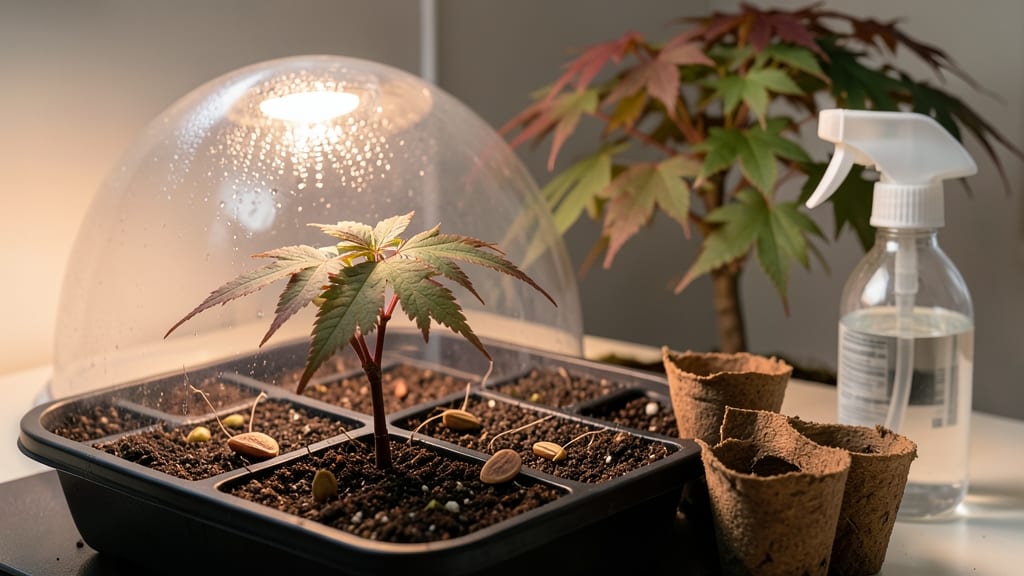
Japanese maple seed germination requires a cold shock to break dormancy—skipping this step means waiting years for sprouts (or giving up). 🌱 I’ve germinated dozens of these finicky seeds by mimicking nature’s timing, and the results are worth the patience: tiny seedlings that grow into stunning trees with delicate foliage. The secret lies in stratification—a fancy term for tricking seeds into thinking winter’s over. You’ll need a mix of moist peat moss or coconut coir, a sealed container, and a fridge for 6-8 weeks. No fancy equipment, just science. Most seeds will sprout within 60 days of planting, not the years some gardeners wait. What you’ll end up with is a dense, healthy seedling ready for transplanting in spring. The foliage stays vibrant, and the growth habit is strong—no leggy, weak stems here. This method works for Acer palmatum varieties, including the popular ‘Bloodgood’ and ‘Emperor I’. For beginners, this is doable but not foolproof—grafting or cuttings might be easier. Still, the reward of growing a Japanese maple from seed is unmatched. Let’s get those seeds sprouting!
📚 In This Guide
- What you need
- Instructions
- Tips and common mistakes
- Wrapping up and next steps
What you need
- ● Japanese maple seeds: 10–20 fresh, plump seeds (harvested from mature trees in late fall for best results).
- ● Stratification medium: Moist peat moss or coco coir (1 small bag, ~1 quart).
- ○ Vermiculite (optional but recommended for aeration, 1 small bag).
- ● Plastic storage bag: 1 gallon-sized with a ziplock seal (for cold stratification).
- ● Small plastic container: With a lid (e.g., a 6-inch nursery tray or yogurt cup for post-stratification).
- ● Spray bottle: With dechlorinated water (or rainwater).
- ○ Fine-mesh sieve: (Optional, for sifting stratification mix).
- ● Refrigerator: With a consistent 34–40°F (1–4°C) setting (or a seed fridge if available).
- ○ Thermometer: (Optional but helpful for monitoring temps).
- ○ Gloves: (Optional, to protect hands from peat moss).
- ● Plant labels: (For tracking seed varieties and dates).
- ● Grow lights or sunny windowsill: (For post-stratification light exposure).
- ● Patience: Japanese maple seeds require 60–90 days of cold stratification—no shortcuts!
- ● Space: A cool, dark spot (like a fridge) for stratification, then bright indirect light afterward.
- ● Time: ~2–3 months total (stratification + germination).
Step-by-step instructions for Japanese maple seed germination
Here's how I break down the process into clear, foolproof stages—no more waiting months for uncertain results.
🌱 Step 1: Collect and Prepare Fresh Seeds
Japanese maple seeds must come from healthy, mature trees—green samaras (winged seeds) ripen in late summer to early fall. Collect them when they've turned brown but haven't yet fallen. Store them in a paper envelope in the fridge for 4-6 weeks to complete natural stratification, or skip this step if you're using store-bought seeds that already underwent cold treatment.
Remove seeds from the samaras by gently pulling them apart. Soak them in lukewarm water for 24 hours to soften the tough outer shell. This step is critical—it mimics natural rain cycles and prevents the seed from drying out during germination. After soaking, pat them dry with a paper towel and place them in a sealed container with a damp paper towel to maintain moisture.
❄️ Step 2: Cold Stratify for 60 Days
Japanese maple seeds require a 60-day cold period to break dormancy. Place the sealed container in your refrigerator's crisper drawer, where temperatures stay consistently between 34-40°F. Check the seeds weekly—if the paper towel dries out, mist it lightly with water and reseal the container.
This cold treatment mimics winter conditions in the tree's native habitat. You'll know stratification is working when the seeds begin to swell slightly or develop a small root (radicle). Don't rush this process—skipping cold stratification results in seeds that either fail to sprout or produce weak, leggy seedlings that won't survive transplanting.
☀️ Step 3: Sow in Sterile, Well-Draining Medium
Fill small pots or seed trays with a mix of 50% peat moss and 50% perlite to create a light, airy medium that prevents rot. Japanese maple seedlings hate soggy conditions—this blend ensures excess moisture drains quickly. Moisten the mix until it's damp but not wet, then press it down lightly to remove air pockets.
Plant seeds ¼ inch deep, spacing them 1 inch apart in the tray. Cover them lightly with additional mix and mist the surface gently with water until evenly moist. Place the tray in a warm spot (65-70°F) with indirect light—direct sun will dry out the delicate seeds too quickly.
🌿 Step 4: Provide Warmth and Monitor for Sprouts
Germination typically begins in 4-8 weeks, but some seeds may take up to 12 weeks—patience is key. Keep the soil consistently moist (not wet) by misting daily or using a humidity dome. You'll see the first sign of success when tiny green shoots push through the soil, followed by the first true leaves in 2-3 weeks after sprouting.
Once seedlings reach 2-3 inches tall and develop their first set of true leaves, they're ready to transition to brighter light. Move them to a spot with filtered sunlight (east or west window) to prevent leaf scorch. Avoid full sun until they've hardened off—young Japanese maple seedlings are sensitive to intense light.
🪴 Step 5: Transplant and Harden Off
When seedlings have 4-5 true leaves and are 4-6 inches tall, they're ready for individual pots. Choose containers with drainage holes and fill them with a mix of 60% potting soil and 40% perlite. Gently remove seedlings from the tray, being careful not to disturb the roots, and plant them at the same depth they were growing in the tray.
Harden off seedlings by placing them outside in a sheltered spot for 2-3 hours daily, gradually increasing exposure over 10-14 days. Watch for signs of stress like wilting or yellowing leaves—these indicate they're not ready for full outdoor conditions. Once they tolerate a full day outside without issues, they're ready for permanent planting in the garden.
Tips & tricks for perfect Japanese maple seed germination
These insider tricks will help you maximize your germination success rate—because patience and precision are everything with these delicate seeds.
Stratification Timing: The 60-day cold stratification period in Step 2 is non-negotiable for Japanese maple seeds. I've seen people try to rush this process, but it's essential for breaking dormancy. Place your container in the refrigerator's crisper drawer where temperatures stay consistently between 34-40°F—this mimics winter conditions perfectly. If your fridge runs hotter, consider using a seed stratification fridge or even a DIY setup with a Styrofoam cooler and ice packs.
Soil Mix Secrets: The 50% peat moss and 50% perlite mix in Step 3 is crucial for preventing rot while ensuring proper drainage. I recommend sterilizing your mix by baking it in the oven at 200°F for 30 minutes before use to eliminate any potential pathogens. This extra step prevents damping-off disease, which can wipe out your seedlings before they even get a chance to grow.
Germination Monitoring: During the 4-12 week germination window in Step 4, consistency is key. I use a small spray bottle with a fine mist setting to keep the soil consistently moist without oversaturating it. Place your tray on a heating mat set to 70°F if your home tends to be cooler—this subtle warmth can help speed up the germination process slightly without risking overheating.
Harden Off Gradually: The 10-14 day hardening process in Step 5 is where many people rush and end up with stressed seedlings. Start with just 2-3 hours of outdoor exposure on day one, then gradually increase by 30 minutes each day. I like to place my seedlings on a shaded patio or under a tree where they can acclimate to outdoor conditions without the harsh afternoon sun. Watch for any wilting or yellowing leaves—these are clear signs they need more time to adjust.
Pro Tips for Japanese Maple Seed Germination
- These insider tricks will help you maximize your germination success rate—because patience and precision are everythi...
- Stratification Timing: The 60-day cold stratification period in Step 2 is non-negotiable for Japanese maple seeds. I'...
- Soil Mix Secrets: The 50% peat moss and 50% perlite mix in Step 3 is crucial for preventing rot while ensuring proper...
Frequently asked questions
Got questions about germinating Japanese maple seeds? You’re not alone—this process can feel tricky! Here are answers to the most common queries to set you up for success.
How long does it take for Japanese maple seeds to germinate?
With proper stratification (chilling), germination typically takes 4–8 weeks. Some seeds may sprout faster (3–4 weeks), while others need up to 3 months—patience is key! Monitor moisture and warmth (65–75°F) to speed things along.
Can I skip the cold treatment (stratification)?
Absolutely not—Japanese maple seeds require cold stratification to break dormancy. Without it, seeds may rot or stay dormant for years. Use the fridge (32–40°F) for 60–90 days, then transition to warmth. Skipping this step = failed germination!
What’s the best soil mix for germinating seeds?
Use a light, sterile, and well-draining mix like:
- 50% peat moss or coco coir
- 30% perlite or vermiculite
- 20% sand (for aeration)
My seeds are moldy—what went wrong?
Mold usually means too much moisture or poor airflow. Fix it by:
Prevent future issues with a sterilized mix and a fan for airflow.
Will my seedling look like a Japanese maple right away?
Nope! Seedlings start as simple, grass-like leaves and may take 3–5 years to develop the iconic lobed maple foliage. Early stages resemble other plants—patience pays off as they mature. Slow growth is normal!
Wrapping up and next steps
Growing a Japanese maple from seed is a rewarding journey—just remember, patience and precision are your best friends! 🌱 With the right chill stratification and consistent care, you’ll see those tiny sprouts emerge in about 60 days.
Once your seedlings are thriving, the next logical step? Transplant them into pots or your garden and watch your little tree grow into a stunning centerpiece.
Don’t let the process intimidate you—every gardener starts somewhere. Happy planting, and may your Japanese maple bring you years of beauty! 🌿